
How to Declutter Your Home Without Feeling Stressed
Most decluttering advice starts with pulling everything out of a closet and piling it onto the bed, which sounds productive right up until you’re standing in a mountain of your own belongings three hours later, more overwhelmed than when you started. In my experience, that approach is exactly why so many people quit decluttering halfway through and end up right back where they started, except now with a bigger mess to clean up first.
I’ve noticed that the people who actually finish decluttering their homes, and keep it that way, almost never use the dramatic all-at-once method. They use small, low-stakes systems that don’t require a free weekend or a total emotional reckoning with every item they own. Decluttering doesn’t have to feel like an event. It can feel like a habit, something woven quietly into a normal week instead of a project that takes over your entire house.
A mistake many homeowners make is treating decluttering as a single finish-line event rather than an ongoing practice. This mindset is a big part of why decluttering feels so stressful in the first place — you’re setting yourself up to either “win” completely or feel like you failed, with no comfortable middle ground. That’s why many professional organizers recommend smaller, repeatable systems instead of one exhausting purge.
This guide walks through ten practical, low-stress ways to declutter your home — approaches that work whether you have a spare hour on a Saturday or just fifteen minutes between other tasks during the week. If you’re anything like me, you don’t want decluttering to feel like punishment. You want it to feel manageable, even a little satisfying. That’s exactly what this list is built around.
Table of Contents
- Start With One Drawer — Beginning small builds momentum without triggering overwhelm.
- Ten Minute Timer Method — Short, timed sessions make decluttering feel low-stakes and finishable.
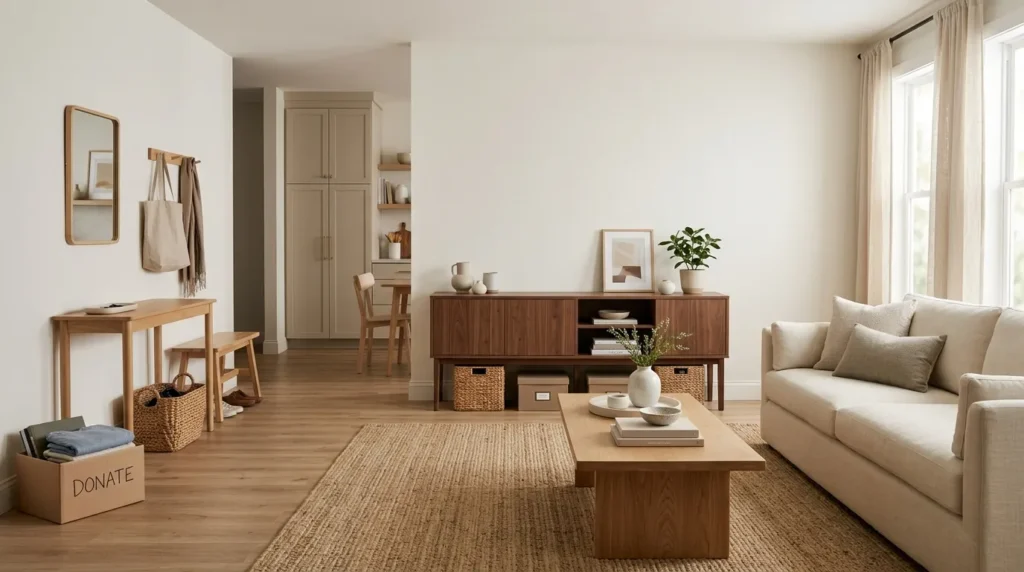
- One In One Out — A simple rule that prevents clutter from building back up.
- Emotional Object Boxes — A dedicated space for sentimental items removes decision pressure.
- Room By Room Focus — Tackling one space at a time avoids house-wide chaos.
- Donate Without Guilt — Reframing donation makes letting go feel easier.
- Digital Clutter Reset — Clearing digital spaces reduces mental clutter alongside physical clutter.
- Simple Storage Zones — Designated homes for items prevent clutter from reappearing.
- Progress Over Perfection — Letting go of the “perfect” system keeps momentum realistic.
- Maintain With Weekly Resets — A short recurring habit keeps clutter from rebuilding.
1. Start With One Drawer
Quick Benefits
- Builds momentum without triggering overwhelm
- Provides a quick, visible sense of progress
- Requires almost no time commitment
- Works even on your busiest days
- Reduces the pressure of “starting big”
Why It Works
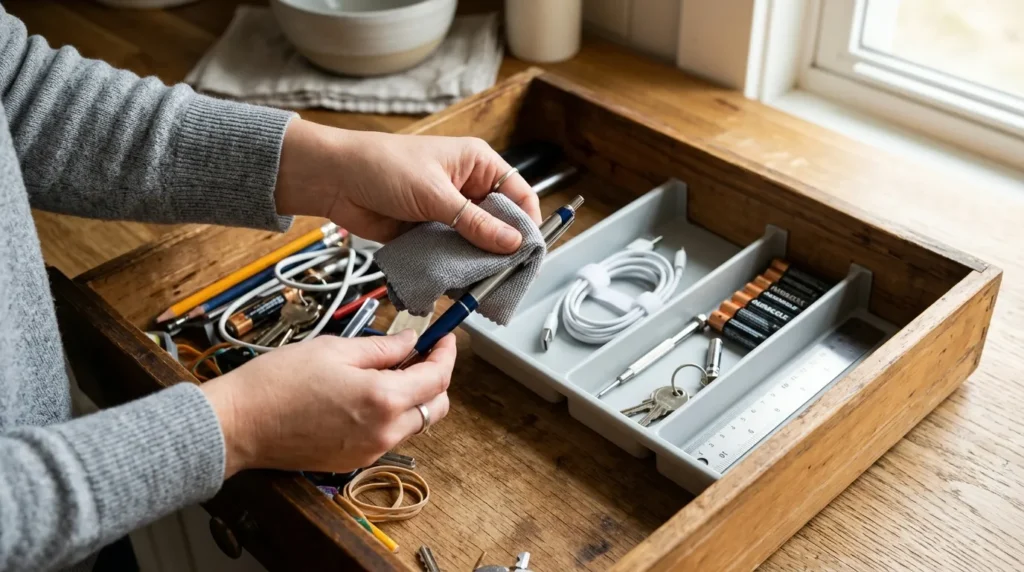
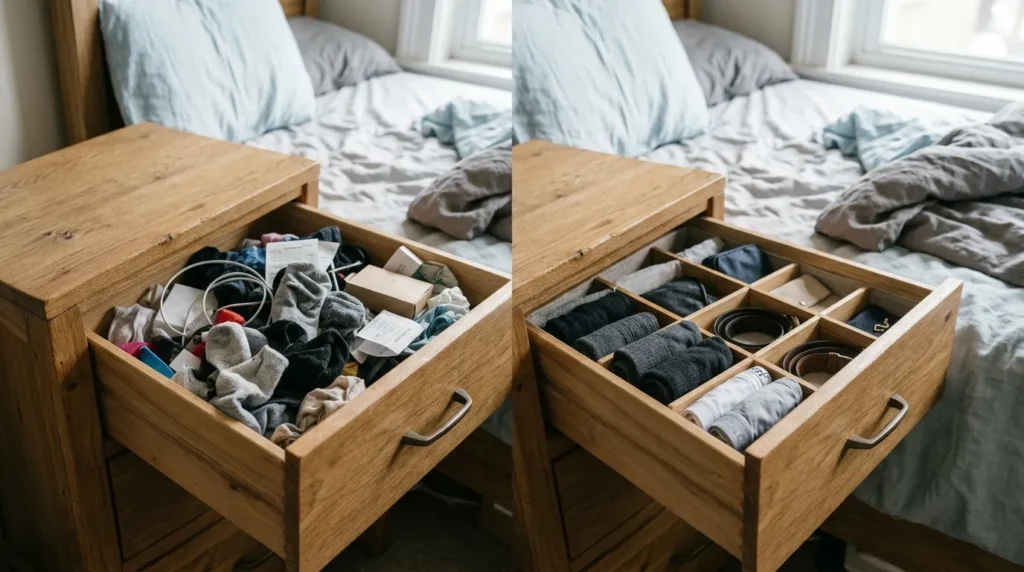
A mistake many homeowners make when they decide to declutter is starting with the biggest, most emotionally loaded space in the house — the garage, the closet, the attic. That’s a recipe for burnout before you’ve even made real progress. One simple trick I always suggest instead is starting with a single, low-stakes drawer, like a junk drawer or a bathroom cabinet. Small wins build the confidence and momentum needed to tackle bigger spaces later.
How To Style It
Choose one small, contained space — a single drawer, one shelf, or a small basket — and set aside just ten to fifteen minutes to sort through it completely. Remove everything, wipe down the empty space, and only return items you actually use or genuinely want to keep. Finishing one small space completely, rather than starting several half-finished projects, is what creates the sense of accomplishment that keeps you going.
2. Ten Minute Timer Method
Quick Benefits
- Makes decluttering feel finite and manageable
- Prevents decision fatigue from long sessions
- Fits easily into a busy schedule
- Reduces the mental barrier to starting
- Can be repeated daily without burnout
Why It Works
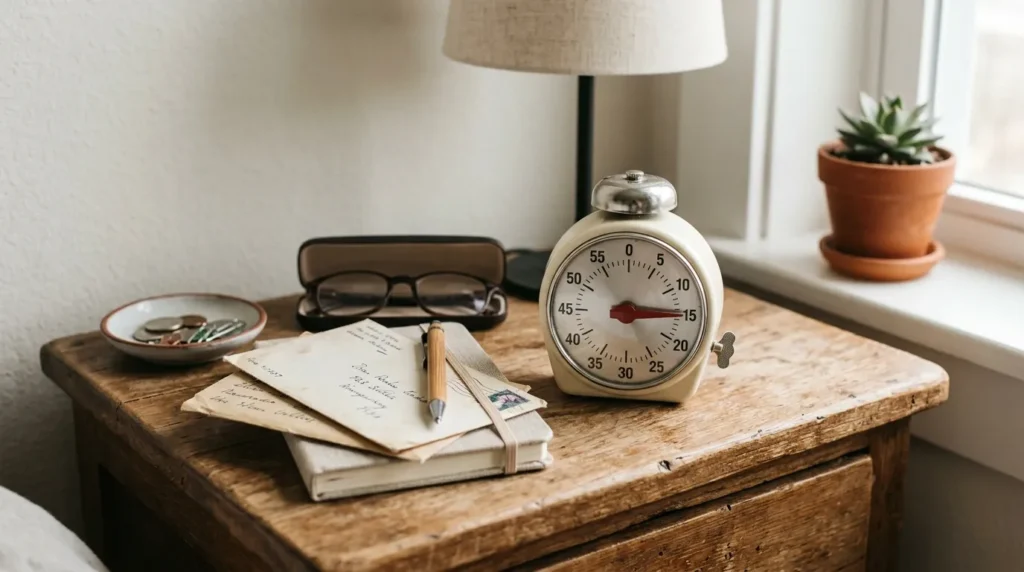
One thing that works especially well for people who feel paralyzed by decluttering is setting a literal timer. Knowing a task will end in ten minutes, no matter what, removes the dread of an open-ended project that could consume your entire day. I’ve noticed that people consistently accomplish more in short, timed sessions than they do in vague, unstructured “I’ll declutter today” attempts, simply because the boundary keeps decision fatigue from setting in.
How To Style It
Set a timer for ten minutes, choose one small area, and work until the timer goes off, then stop, even if you feel like continuing. This method works particularly well for spaces that feel overwhelming, since it caps the emotional and physical effort required. Doing this once a day for a week can meaningfully declutter a home without ever requiring a single large block of dedicated time.
3. One In One Out

Quick Benefits
- Prevents clutter from rebuilding after a purge
- Requires no ongoing large effort
- Naturally limits future accumulation
- Easy to apply to any category of item
- Builds long-term mindful buying habits
Why It Works
A mistake many homeowners make is decluttering thoroughly once, only to find their home just as full a year later. That’s why many professional organizers recommend the one-in-one-out rule as a maintenance strategy: for every new item that enters your home in a given category, like clothing or kitchen tools, one similar item leaves. This keeps clutter from silently rebuilding after all your initial hard work.
How To Style It
Apply the rule loosely at first — when you buy a new sweater, choose one existing sweater to donate or discard before putting the new one away. Keep a small donation box or bag in a closet so the “out” item has an immediate, easy place to go rather than sitting in limbo. This approach works especially well for categories that tend to accumulate quickly, like clothing, books, and kitchen gadgets.
4. Emotional Object Boxes
Quick Benefits
- Removes pressure to decide on sentimental items immediately
- Prevents emotional exhaustion during decluttering sessions
- Keeps meaningful items contained and organized
- Allows decisions to be revisited later, calmly
- Reduces guilt associated with letting go
Why It Works
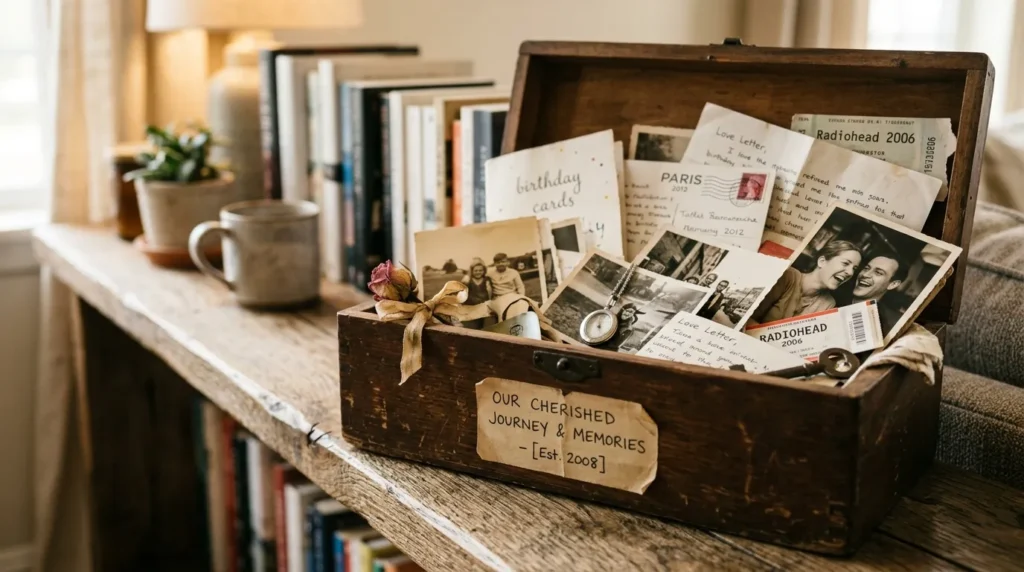
I’ve seen this idea transform decluttering sessions that would otherwise stall out completely: creating a designated “emotional object” box. Sentimental items — old cards, childhood toys, a relative’s belongings — are almost always the hardest to make decisions about, and forcing an immediate decision is one of the biggest sources of decluttering stress. Setting them aside in a contained space removes that pressure without requiring you to keep everything indefinitely.
How To Style It
Designate one clearly labeled box or bin specifically for sentimental items you’re not ready to decide on yet, and set a size limit — once it’s full, decide what’s necessary to keep and what to gently let go before adding more. Revisit the box every few months, when you’re in a calmer, more reflective mindset rather than in the middle of an active decluttering session. This approach respects the emotional weight of these items instead of forcing rushed decisions.
5. Room By Room Focus
Quick Benefits
- Prevents house-wide overwhelm and chaos
- Provides clear, visible completion points
- Makes progress easy to track over time
- Avoids piles spreading into multiple rooms
- Allows realistic scheduling around daily life
Why It Works
That’s why many professional organizers recommend tackling one room, or even one section of a room, at a time rather than attempting a whole-house declutter in a single stretch. Working across the entire house simultaneously tends to create piles in every room at once, which is exhausting to look at and genuinely difficult to finish. A room-by-room approach keeps the visible mess contained and the sense of progress much clearer.
How To Style It
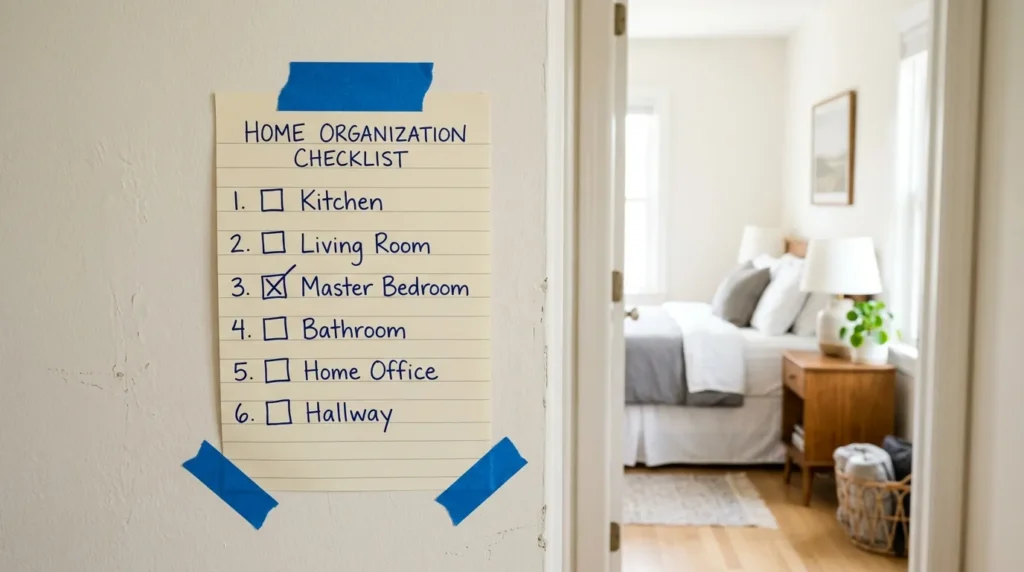
Choose your next room only after the current one feels genuinely complete, rather than jumping between spaces when motivation dips. Break larger rooms into smaller zones if needed — a bedroom might be tackled as closet, dresser, and nightstand as three separate sessions rather than one overwhelming block. Keep a simple list of rooms to track progress, checking each one off as it’s finished for a visible sense of accomplishment.
6. Donate Without Guilt
Quick Benefits
- Makes letting go emotionally easier
- Gives unused items a genuine second life
- Removes the pressure of selling everything
- Speeds up the entire decluttering process
- Reduces landfill waste through reuse
Why It Works
A mistake many homeowners make is deciding to sell everything they declutter instead of donating it, which sounds financially responsible but often stalls the entire process. Listing, photographing, and coordinating pickups for dozens of items takes real time and energy, and in my experience, most of that effort yields relatively little money compared to the stress it adds. Donating removes that friction and lets you finish faster.
How To Style It
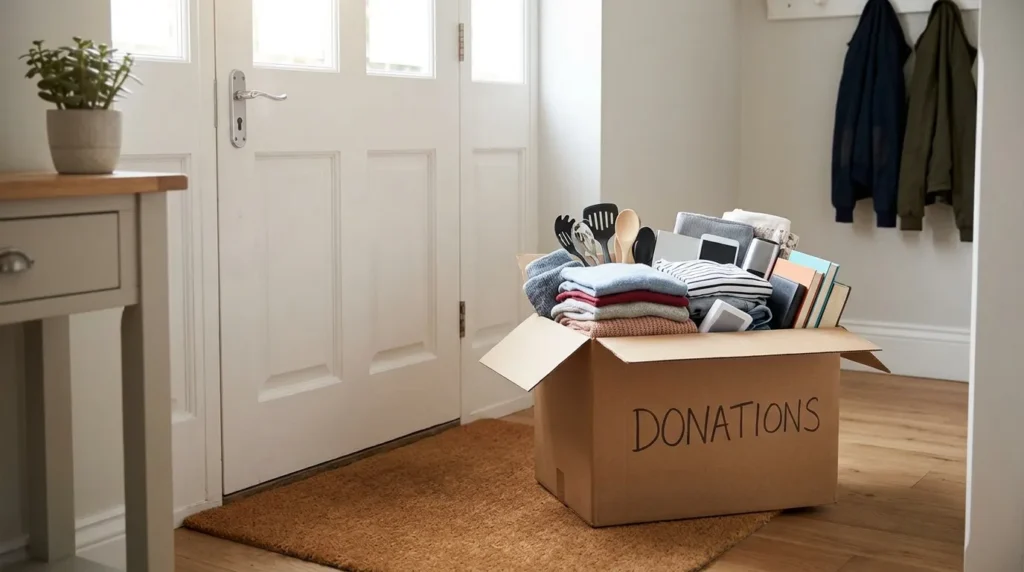
Reserve selling for a small number of higher-value items only, and donate everything else without a second thought. Research a local donation center or charity you feel genuinely good about supporting, which makes the act of letting go feel more like giving than losing. Schedule a donation drop-off or pickup in advance, ideally before you even start decluttering, so finished items have somewhere to go immediately rather than sitting in bags by the door for weeks.
7. Digital Clutter Reset

Quick Benefits
- Reduces mental clutter alongside physical clutter
- Improves focus and reduces daily friction
- Requires no physical sorting or lifting
- Can be done in short sessions anywhere
- Often overlooked but genuinely impactful
Why It Works
One thing that works especially well alongside physical decluttering, but is often overlooked entirely, is addressing digital clutter. A phone with thousands of unsorted photos, an inbox with tens of thousands of unread emails, and a desktop covered in random files all create a quieter, but very real, version of the same overwhelmed feeling that physical clutter causes. Clearing digital spaces contributes to the same sense of calm and order.
How To Style It
Set aside a short session to delete duplicate or blurry photos and organize the rest into a few simple folders by year or event. Unsubscribe from email lists you no longer read, and set up simple folders or labels for the messages you do want to keep. Clear your phone’s home screen down to only the apps you use regularly, moving the rest into a single folder, which reduces visual clutter every time you unlock your phone.
8. Simple Storage Zones
Quick Benefits
- Prevents clutter from reappearing after sorting
- Makes putting things away effortless
- Reduces daily decision fatigue
- Keeps frequently used items easy to find
- Works in any size home
Why It Works
I’ve noticed that clutter often isn’t really about having too many things — it’s about things not having a clear, designated home. Without a specific place for an item, it ends up wherever is most convenient in the moment, which is exactly how counters and tables accumulate clutter even after a thorough decluttering session. Simple, designated storage zones solve this at the root.
How To Style It
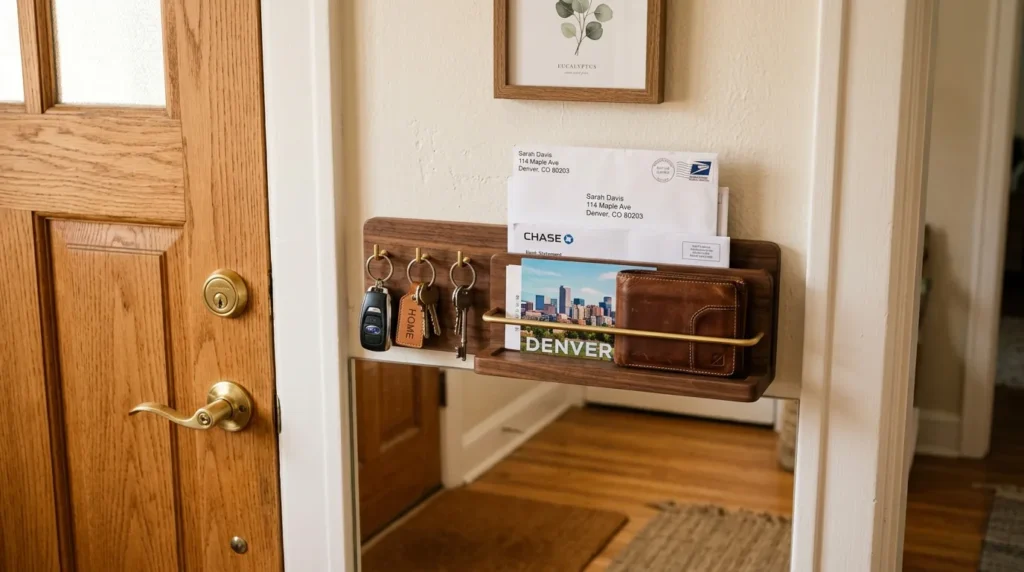
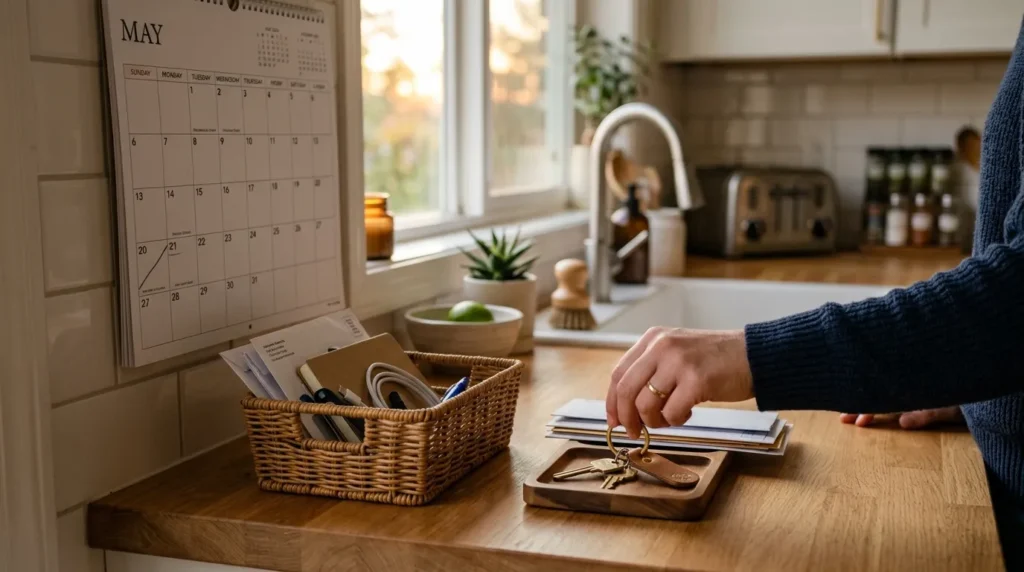
For each category of frequently used items — keys, mail, chargers, shoes — designate one specific spot near where you actually use them, like a small tray by the door for keys and mail. Keep the system simple enough that putting things away takes less effort than leaving them out, since even a slightly inconvenient system will get abandoned over time. Involve everyone in the household in learning the new zones, since a system only one person follows tends to break down quickly.
9. Progress Over Perfection
Quick Benefits
- Keeps motivation realistic and sustainable
- Reduces all-or-nothing thinking
- Makes small wins feel genuinely worthwhile
- Prevents burnout from unrealistic standards
- Supports long-term consistency over intensity
Why It Works
A mistake many homeowners make is holding out for the “perfect” decluttering system, complete with matching bins and a fully color-coded closet, before feeling like their efforts count. That’s why many professional organizers recommend releasing the idea of a perfect end state entirely. A slightly imperfect, functional system that you’ll actually maintain is far more valuable than an elaborate one that falls apart after two weeks.
How To Style It
Give yourself permission to use whatever storage containers you already have on hand rather than waiting to buy a matching set before starting. Celebrate a partially finished closet or a single organized drawer as genuine progress, rather than waiting until the whole house is “done” to feel any sense of accomplishment. Revisit and adjust your systems over time as you learn what actually works for your household, rather than expecting to get it perfectly right on the first attempt.
10. Maintain With Weekly Resets
Quick Benefits
- Prevents clutter from rebuilding gradually
- Keeps maintenance sessions short and manageable
- Builds a sustainable long-term habit
- Reduces the need for future large purges
- Fits easily into an existing routine
Why It Works
That’s why many professional organizers recommend a short, recurring reset rather than treating decluttering as a one-time event you never have to think about again. A home naturally accumulates small clutter over the course of a normal week, and a brief weekly reset catches it before it builds into the kind of overwhelming mess that requires another big decluttering push down the line.
How To Style It
Set aside fifteen to twenty minutes at the same time each week, such as Sunday evening, to do a quick sweep through common areas, returning items to their designated storage zones. Use this time to address the small pile that’s inevitably accumulated on a counter or table rather than letting it sit until it becomes a bigger project. Treat this reset as maintenance rather than deep decluttering, since its short, low-effort nature is exactly what makes it sustainable long term.
Frequently Asked Questions
How do I start decluttering when I feel completely overwhelmed?
Start with the smallest possible space, like a single drawer, rather than a whole room or closet. Setting a timer for just ten minutes also helps, since it removes the pressure of an open-ended task and lets you build momentum through small, finishable wins.
What is the fastest way to declutter without feeling stressed?
Working in short, timed sessions and focusing on one small zone at a time tends to feel far less stressful than attempting a large, all-at-once purge. Donating items instead of trying to sell everything also speeds up the process significantly.
How do I declutter sentimental items without feeling guilty?
Creating a dedicated box for sentimental items you’re not ready to decide on removes the pressure of an immediate decision. Revisiting that box later, when you’re in a calmer mindset, tends to make those choices feel less emotionally loaded.
How often should I declutter to keep my home from feeling cluttered again?
A short weekly reset, combined with an ongoing one-in-one-out habit for categories like clothing and kitchen items, tends to prevent the kind of large buildup that requires another big decluttering session. Little and often works better than occasional large purges.
Should I sell or donate items I no longer want?
For most items, donating is faster and less stressful than selling, since listing, photographing, and coordinating pickups takes significant time for relatively little return. Reserving selling for a small number of higher-value items tends to be the more sustainable approach.
What if my family doesn’t want to declutter with me?
Focus on your own belongings and shared spaces you’re responsible for first, rather than pushing others to declutter their personal items on your timeline. Modeling a simple, low-stress system often encourages others to gradually adopt it on their own.
How do I keep clutter from coming back after a big declutter session?
Designated storage zones for frequently used items, combined with a short weekly maintenance reset, are the two most effective ways to prevent clutter from rebuilding. Without a plan for what happens after the initial purge, most spaces slowly fill back up over time.
Final Thoughts
Decluttering doesn’t have to mean an exhausting, emotionally draining weekend that leaves your whole house in disarray before it gets better. Every idea in this list, from the ten-minute timer method to a simple weekly reset, works because it treats decluttering as a manageable habit rather than an overwhelming event. None of these approaches require a free weekend or a total household overhaul. Most start with just ten or fifteen minutes and one small, contained space.
Start with one or two ideas and gradually build a rhythm that keeps your home feeling calm without demanding constant effort. Maybe that means finally tackling that one junk drawer today, or setting up a simple donation box by the door for the next few weeks. Small, consistent habits compound into a home that feels lighter, without the stress of a dramatic overhaul.
Your home doesn’t need a perfect system to feel less cluttered — it just needs a rhythm you can actually stick with.
Related Articles
- Small Living Room Layouts
- Neutral Home Styling Guide
- Simple Storage Solutions for Small Homes
- Modern Bedroom Ideas with Neutral Colors
- Weekend Home Reset Routine