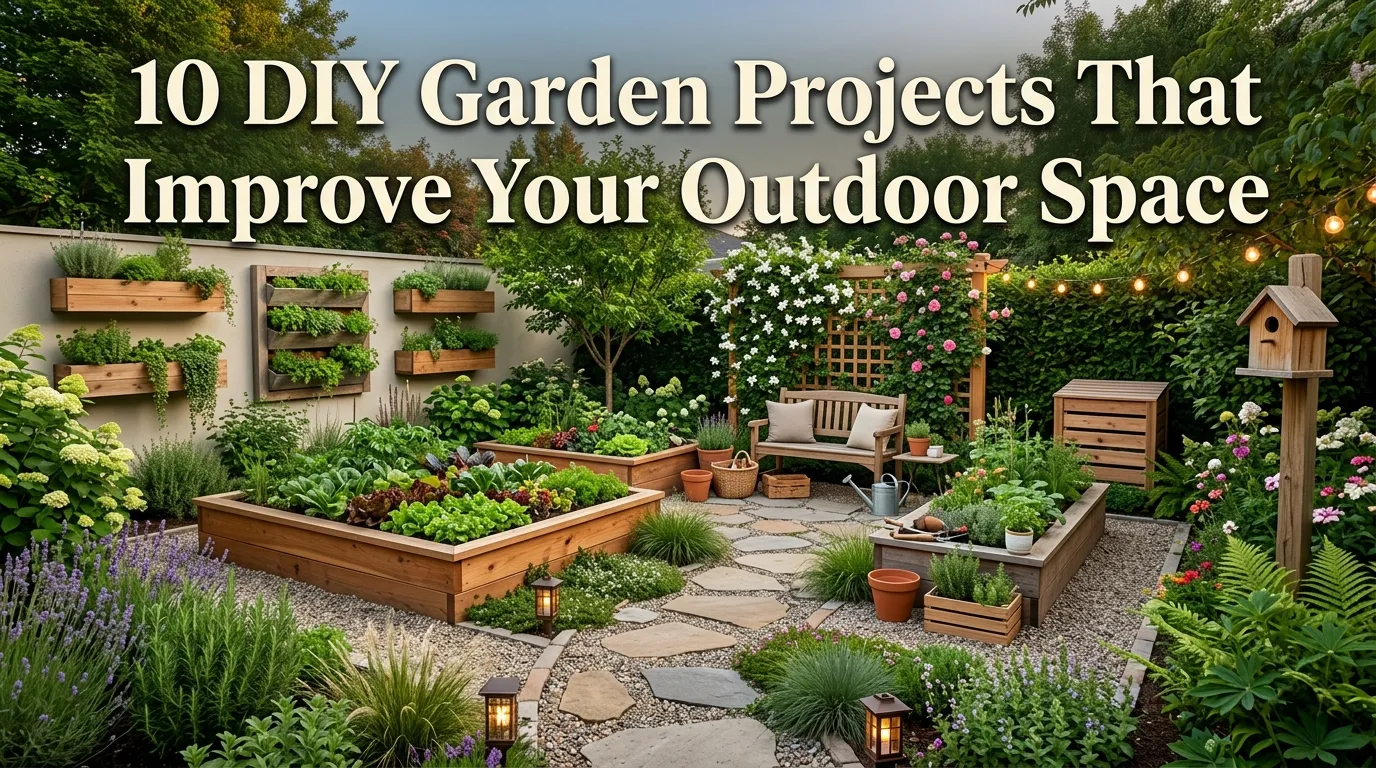
10 DIY Garden Projects That Improve Your Outdoor Space
There’s a particular kind of pride that comes from looking at a raised bed, a trellis, or a stone path in your garden and knowing you built it yourself. In my experience, DIY garden projects tend to hold up better and feel more meaningful than anything you could simply buy and place, because they’re built to fit your specific space instead of being a generic, mass-produced solution.
I’ve noticed that a lot of homeowners assume garden DIY projects require advanced carpentry skills or a fully stocked workshop. Most of the projects that make the biggest visual difference are actually simple, straightforward builds — a few cuts of lumber, some basic hardware, and an afternoon of steady work. The payoff is almost always disproportionate to the effort involved, especially compared to buying pre-made garden furniture or structures.
A mistake many homeowners make is trying to tackle their whole outdoor space in one weekend, which usually leads to rushed, unfinished-looking results. The gardens that improve the most dramatically tend to get there through a handful of well-executed individual projects, tackled one at a time over a season, rather than one exhausting all-at-once overhaul.
This guide walks through ten DIY garden projects that consistently improve an outdoor space — practical, achievable builds covering structure, storage, pathways, and planting that work whether you have a sprawling backyard or a modest patio garden. If you’re anything like me, you want projects that are genuinely doable on a weekend, not ones that require a contractor. That’s exactly what this list is built around.
Table of Contents
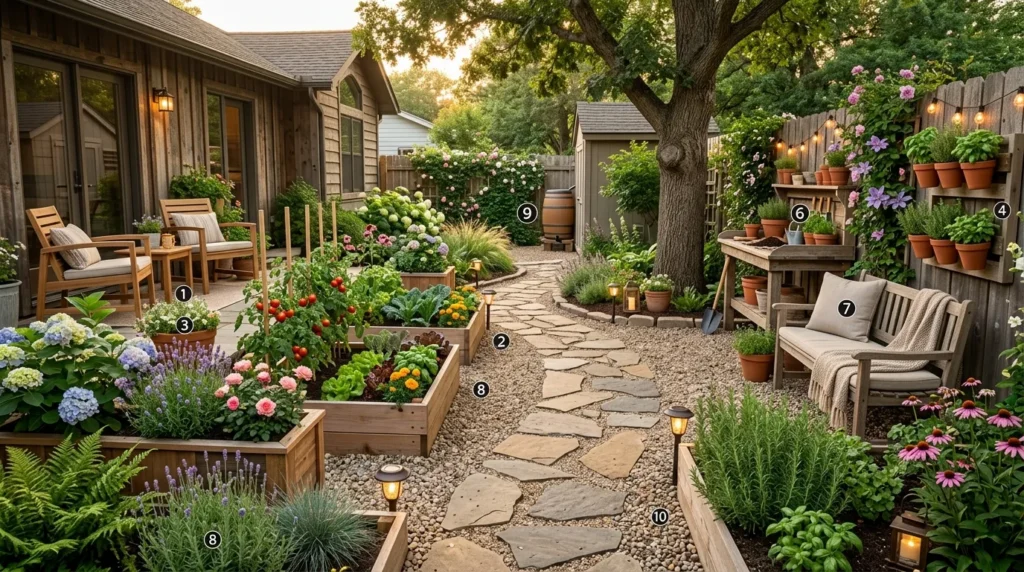
- Raised Garden Bed — A simple wood-framed bed improves soil quality and organization instantly.
- Pallet Vertical Planter — Repurposed pallets create space-saving vertical growing space.
- Stone Border Edging — Defined borders give garden beds a clean, finished look.
- DIY Trellis Structure — A simple trellis supports climbing plants and adds vertical interest.
- Repurposed Container Planters — Upcycled containers add character and reduce waste.
- Garden Stepping Stones — Hand-poured stones create a personal, functional pathway.
- DIY Potting Bench — A dedicated workstation organizes tools and makes planting easier.
- Solar Lantern Pathway — Simple solar lighting extends garden use into the evening.
- Wood Compost Bin — A contained compost system improves soil health sustainably.
- Hanging Herb Planter — A vertical herb display saves space and keeps herbs within reach.
1. Raised Garden Bed
Quick Benefits
- Improves soil quality and drainage instantly
- Reduces bending and kneeling while gardening
- Keeps planting areas clearly organized
- Extends the growing season in cooler climates
- Simple enough for a first-time builder
Why It Works
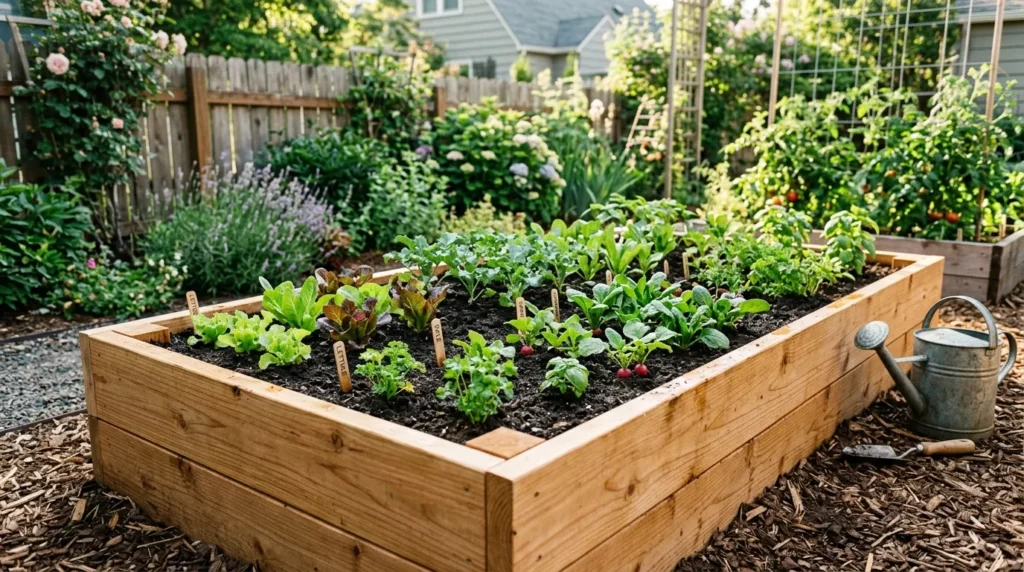
One simple trick I always suggest for anyone wanting to improve their garden’s productivity is building a raised bed instead of fighting with existing, often poor-quality native soil. A raised bed lets you control the soil composition entirely from the start, which almost always leads to healthier plants and a better harvest. It also brings a clean, organized structure to a garden that might otherwise feel a little scattered.
How To Style It
Build a simple rectangular frame using untreated cedar or pine boards, screwed together at the corners, sized to whatever fits your available space — a common approach is four feet wide so you can reach the center from either side without stepping in. Line the bottom with landscape fabric to prevent weeds from below, then fill with a mix of topsoil, compost, and aged manure. Space multiple beds with wide enough paths between them, at least eighteen inches, for comfortable movement with a wheelbarrow.
2. Pallet Vertical Planter
Quick Benefits
- Saves significant floor space
- Repurposes free or low-cost materials
- Adds rustic, farmhouse-style character
- Works well for herbs and small plants
- Simple to build with basic tools
Why It Works
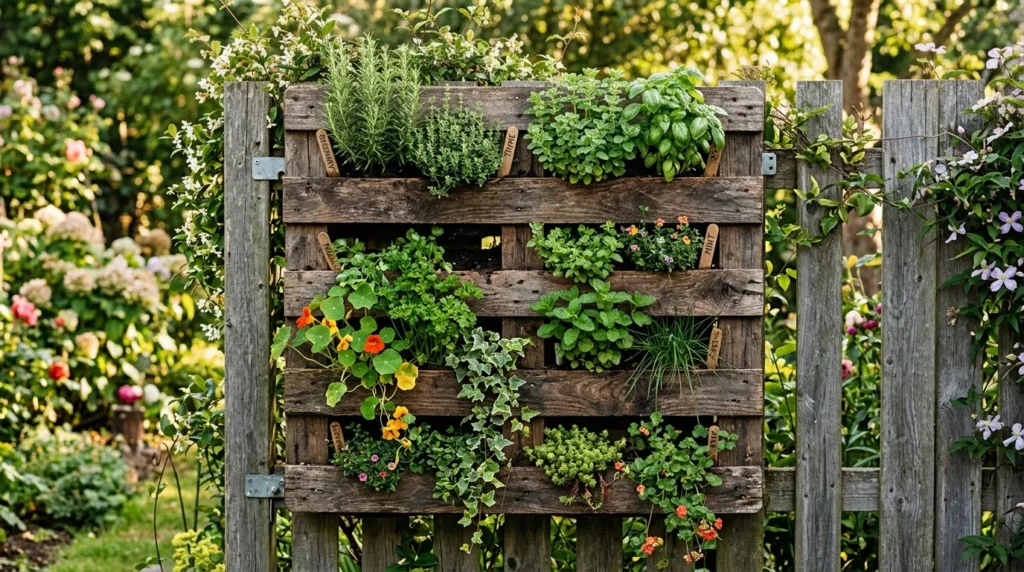
A mistake many homeowners make with small garden spaces is trying to fit in the same horizontal planting layout used in larger yards. That’s why many gardeners recommend a pallet vertical planter instead — it takes advantage of underused vertical space while giving discarded wood pallets a genuinely useful second life. I’ve noticed this project consistently gets compliments for both its function and its rustic, collected look.
How To Style It
Choose a pallet in good structural condition, sand down any rough edges, and staple landscape fabric across the back and bottom of each slat opening to hold soil in place. Lean the pallet against a sturdy wall or fence at a slight angle for a few weeks to let the soil settle before standing it fully upright. Fill each pocket with compact-growing plants like herbs, strawberries, or small succulents, which handle the shallow soil depth better than larger vegetables.
3. Stone Border Edging
Quick Benefits
- Gives garden beds a clean, finished look
- Prevents grass and mulch from mixing
- Adds texture and structure to plantings
- Relatively quick to install in a weekend
- Works with almost any garden style
Why It Works
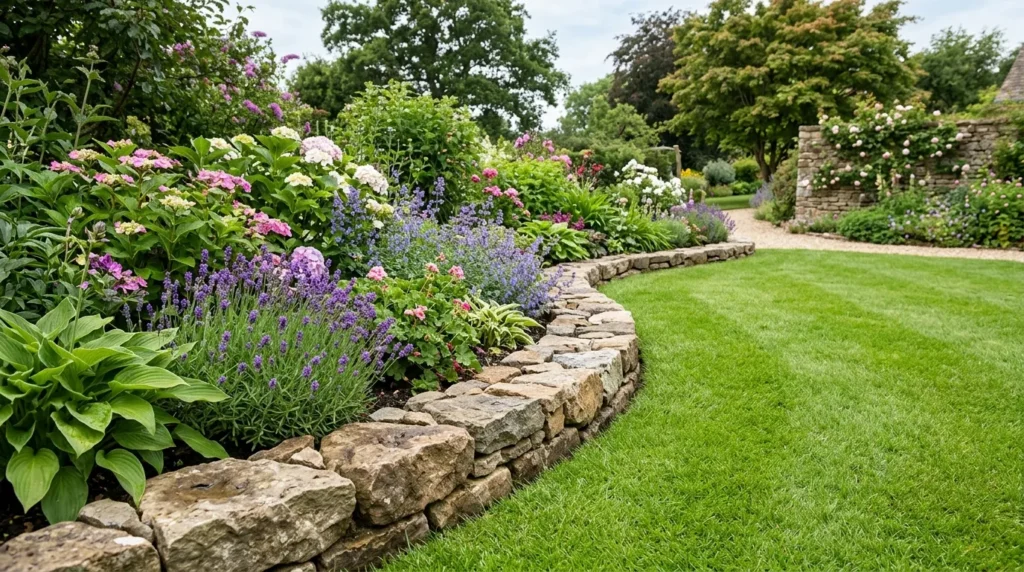
I’ve seen this idea transform gardens that felt slightly messy or undefined into ones that look intentional and well-maintained: simple stone border edging. Without a clear boundary, garden beds tend to blur into the surrounding lawn or mulch, which makes even a well-planted garden look a little unkempt. A defined stone edge instantly signals structure and care, even before any additional landscaping work is done.
How To Style It
Dig a shallow trench along the edge of your garden bed, deep enough to bury about a third of your chosen stones for stability. Use natural fieldstone or fieldstone-style pavers for an organic, farmhouse-appropriate look rather than perfectly uniform manufactured edging. Curve the border gently rather than laying it in a strictly straight line, which tends to look more natural and less rigid against organic plantings.
4. DIY Trellis Structure
Quick Benefits
- Supports climbing plants and vines
- Adds vertical visual interest to flat gardens
- Increases growing capacity without more ground space
- Creates natural privacy screening over time
- Customizable to any garden style
Why It Works
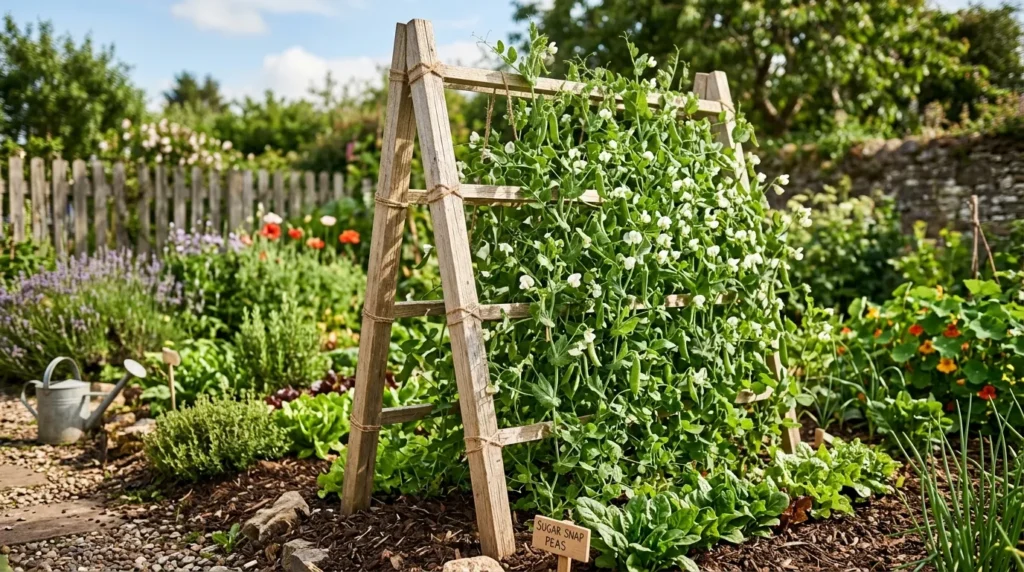
That’s why many gardeners recommend building a simple trellis for any garden that includes climbing plants, like peas, beans, clematis, or climbing roses. Without vertical support, these plants sprawl across the ground, taking up far more space and often struggling with rot from soil contact. A trellis solves this practically while also adding architectural height and interest to an otherwise flat garden bed.
How To Style It
Build a simple A-frame or flat lattice trellis using untreated wood stakes and garden twine or wire mesh, sized to the height of your intended climbing plant at full maturity. Anchor the trellis securely into the ground before planting, since adjusting it later can disturb established root systems. Position it toward the back of a garden bed so taller climbing plants don’t shade out shorter plantings in front.
5. Repurposed Container Planters
Quick Benefits
- Adds character and personal style
- Reduces waste through creative reuse
- Costs little to nothing to implement
- Works well for small-space gardening
- Easy to customize to any aesthetic
Why It Works
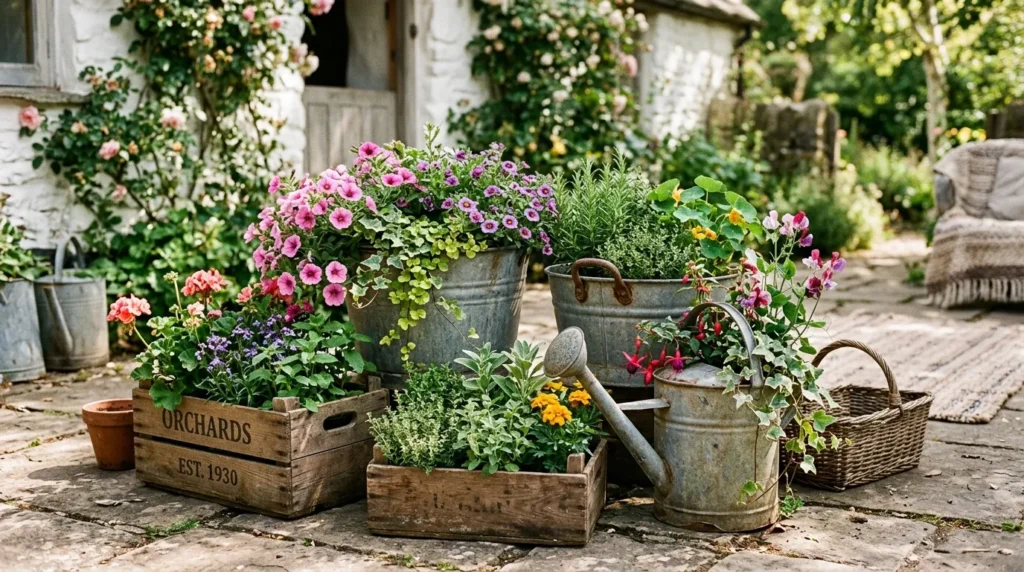
One thing that works especially well for adding personality to a garden is repurposing everyday containers as planters instead of buying uniform, mass-produced pots. Old metal buckets, wooden crates, worn watering cans, and even vintage drawers all make charming, characterful planters. In my experience, a garden filled with a mix of repurposed containers almost always feels more personal and collected than one filled with matching store-bought pots.
How To Style It
Drill drainage holes in the bottom of any repurposed container before planting, since standing water is one of the fastest ways to kill container plants. Group a mix of repurposed containers together, varying in height and material, for a layered, collected look rather than spacing them evenly apart. Line wooden crates or baskets with landscape fabric before adding soil to extend their lifespan against moisture damage.
6. Garden Stepping Stones
Quick Benefits
- Creates a personal, one-of-a-kind pathway
- Reduces soil compaction in planting beds
- Simple project suitable for all skill levels
- Inexpensive compared to professional paving
- Great project to involve family members in
Why It Works
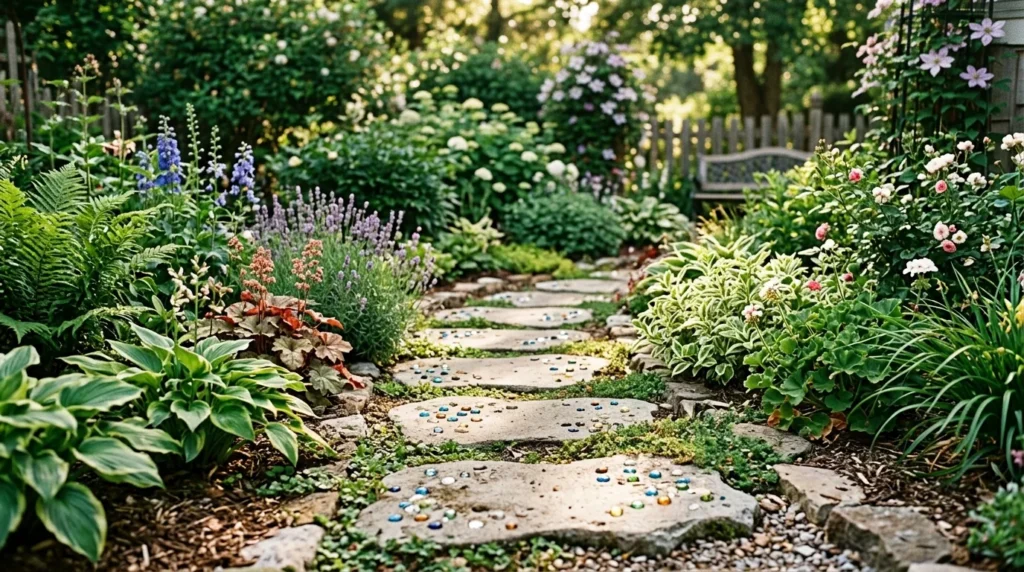
A mistake many homeowners make is leaving garden paths as bare dirt or grass, which compacts over time and can turn muddy after rain. Hand-poured stepping stones solve this practically while adding a genuinely personal touch, especially if you press in decorative elements like glass beads, shells, or handprints during the pouring process. I’ve noticed this is one of the most memorable garden projects for families with kids, since the stones become a lasting keepsake.
How To Style It
Mix quick-setting concrete according to package instructions and pour into simple mold shapes, like a plastic tub lid or a purchased stepping stone mold, on a flat, level surface. Press in decorative elements while the concrete is still wet, and smooth the surface before it fully sets. Space finished stones according to natural walking stride, roughly twenty-four inches apart, and let them cure fully before placing them along your path.
7. DIY Potting Bench
Quick Benefits
- Organizes tools and supplies in one place
- Makes planting and repotting far more comfortable
- Reduces mess on patios and porches
- Customizable to your exact storage needs
- Adds a functional, farmhouse-style focal point
Why It Works
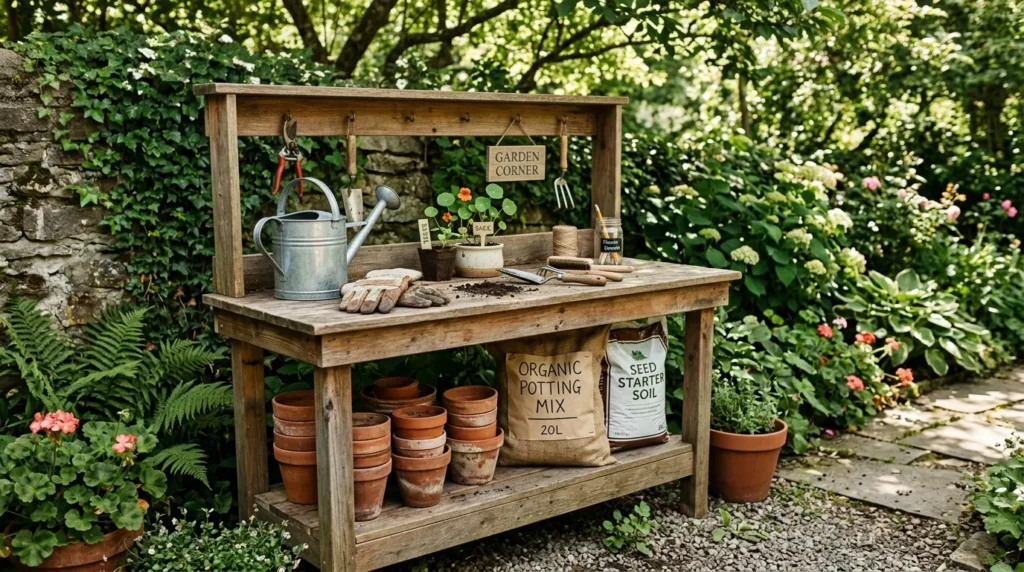
I’ve seen this idea transform chaotic, tool-scattered garden corners into organized, genuinely enjoyable workspaces: building a simple potting bench. Working at a proper standing-height surface, with storage for pots, soil, and tools within reach, makes gardening tasks noticeably more comfortable than crouching on the ground or working on an unstable surface. It also keeps the surrounding garden looking tidier by containing the mess to one dedicated spot.
How To Style It
Build a simple frame using untreated lumber, sized to standing counter height, with an open shelf below for storing bags of soil and larger tools. Add a small lip or raised edge around the work surface to contain spilled soil, and consider a section of hardware cloth or a sink basin built into the surface for rinsing pots and roots. Position the finished bench in a shaded spot near your garden beds or water source for maximum convenience.
8. Solar Lantern Pathway
Quick Benefits
- Extends garden use into the evening
- Requires no electrical wiring
- Simple installation in under an hour
- Adds a warm, inviting glow after dark
- Low maintenance once installed
Why It Works
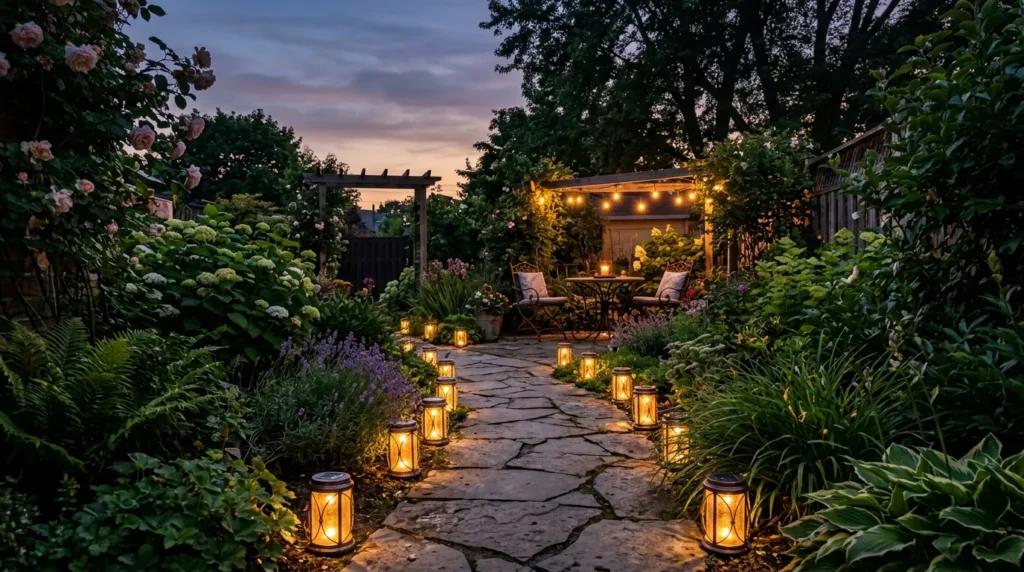
A garden that goes dark and unused after sunset is missing out on some of its most peaceful hours. One simple trick I always suggest for extending a garden’s usability is installing solar lantern lighting along the main pathway, since it requires no wiring or professional installation and charges automatically during the day. The soft, warm glow it provides in the evening genuinely changes how often people actually spend time outside after dark.
How To Style It
Push solar path lights into the ground at even intervals along your main walkway, angling the solar panel toward the sky for maximum daily charging. Choose warm-toned LED lights rather than cool blue-white ones, which tend to feel harsher and less inviting in an evening garden setting. Supplement path lights with a few taller solar lanterns near seating areas for a layered lighting effect throughout the space.
9. Wood Compost Bin
Quick Benefits
- Improves soil health sustainably over time
- Reduces household and garden waste
- Simple structure achievable in one weekend
- Saves money on store-bought soil amendments
- Fits into almost any garden layout
Why It Works
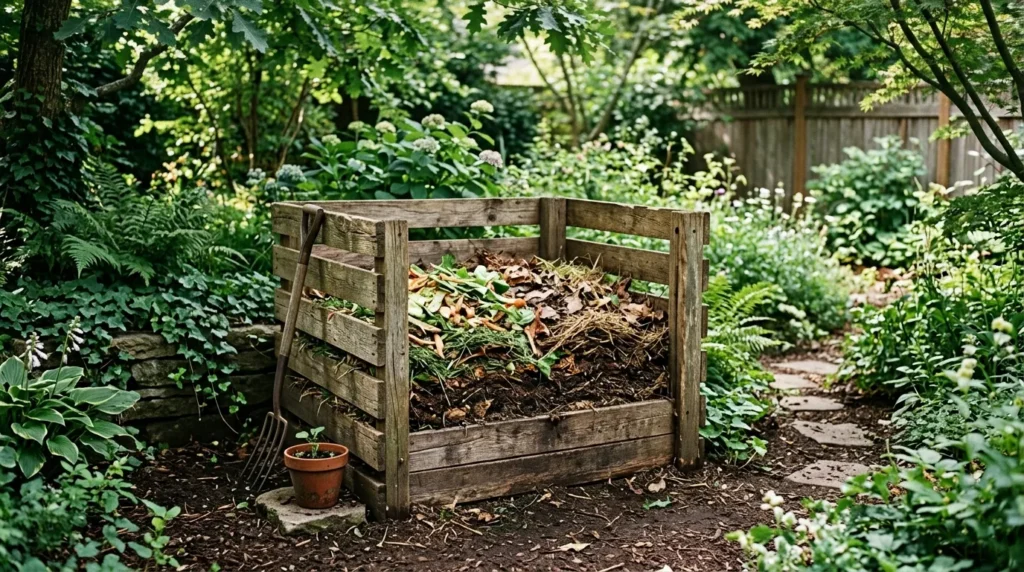
That’s why many gardeners recommend building a simple compost bin as one of the most valuable long-term garden projects — it turns kitchen scraps and yard waste into genuinely useful soil amendment, reducing both household waste and the need to purchase compost separately. A contained wood bin also keeps the composting process tidier and less visually chaotic than an open pile.
How To Style It
Build a simple three-sided bin using untreated wood pallets or slats, leaving the front open or fitted with a removable panel for easy access when turning the compost. Position the bin in a partially shaded spot with good drainage, away from the main seating areas of the garden. Layer green materials, like kitchen scraps, with brown materials, like dried leaves or straw, turning the pile every few weeks to speed decomposition.
10. Hanging Herb Planter
Quick Benefits
- Saves valuable ground and counter space
- Keeps herbs within easy reach while cooking
- Adds vertical greenery to small spaces
- Simple project using basic materials
- Works well on patios, porches, or fences
Why It Works
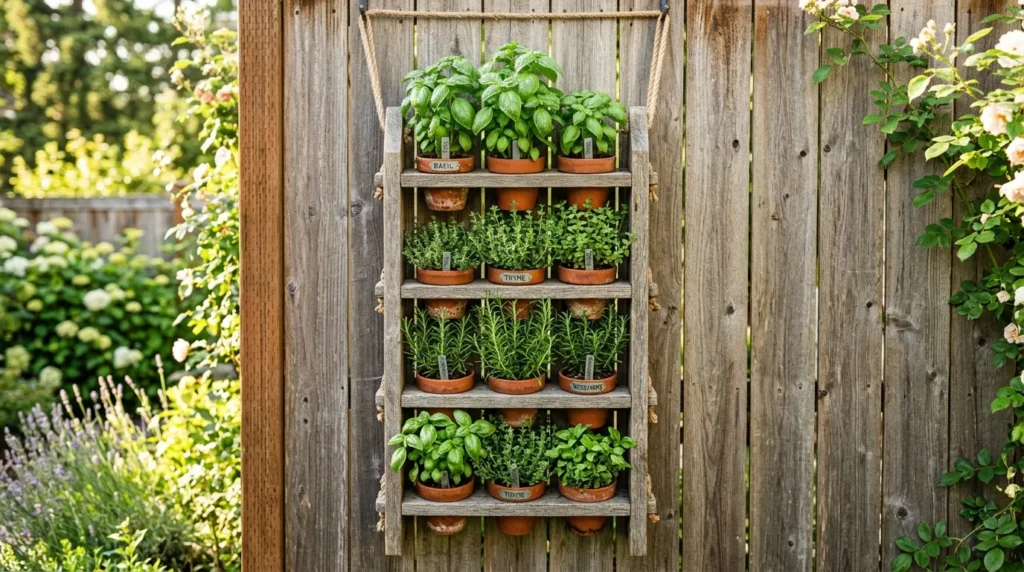
One thing that works especially well for anyone with limited garden space but a love of fresh cooking herbs is a hanging herb planter. Suspended at eye or reach level, it keeps herbs easily accessible without consuming any valuable ground space, and the vertical arrangement adds visual interest to an otherwise bare wall or fence section near the kitchen door.
How To Style It
Build a simple wood frame with several small pots or planting pockets attached, or repurpose a wooden ladder or shutter frame with hanging planter pots. Choose sturdy hanging hardware rated for the combined weight of soil and mature plants, and position the finished planter somewhere it will get adequate sunlight for the herb varieties you’ve chosen. Group herbs by watering needs, keeping thirstier plants like basil separate from drought-tolerant varieties like rosemary and thyme.
Frequently Asked Questions
Do I need advanced carpentry skills for these garden projects?
No. Most of these projects, including raised beds, trellises, and compost bins, use simple, straight cuts and basic hardware, making them achievable for beginners with a basic set of tools and a weekend of time.
Which DIY garden project makes the biggest visual difference?
Stone border edging and raised garden beds tend to make the most immediate visual impact, since they add clean structure and definition to garden beds that might otherwise look a little scattered or undefined.
What is the most budget-friendly DIY garden project?
Repurposed container planters and pallet vertical planters are among the most budget-friendly options, often using free or low-cost materials like old containers or discarded pallets rather than requiring new lumber purchases.
How long do most of these garden projects take to complete?
Most of these projects, including a raised bed, a trellis, or a solar lantern pathway, can be completed in a single weekend. A compost bin and stepping stone path may take slightly longer due to curing or settling time.
What tools do I need to get started with DIY garden projects?
A basic tool kit covering a saw, drill, screws, a level, and a tape measure covers most of these projects. Specialty tools are rarely required, though a post hole digger is useful for trellis and border installations.
Can these projects work in a small backyard or patio garden?
Yes. Vertical projects like pallet planters, trellises, and hanging herb planters are especially well-suited to small spaces, since they maximize growing area without requiring much ground footprint.
Is untreated wood safe to use for garden beds and planters?
Untreated cedar or pine is generally considered safe and is a popular choice specifically because it avoids the chemicals found in pressure-treated lumber, which some gardeners prefer to avoid near edible plants.
Final Thoughts
Improving your outdoor space doesn’t require hiring a landscaper or overhauling everything at once — it comes down to a handful of well-executed DIY projects, tackled one at a time. Every idea in this list, from a simple raised bed to a hand-poured stepping stone path, works because it adds genuine structure and function to a garden, not just decoration layered on top. None of these projects require advanced skills or a fully stocked workshop. Most start with basic lumber, a few tools, and a single weekend.
Start with one or two projects and gradually build an outdoor space that reflects real use and care. Maybe that means finally building the raised bed you’ve been planning, or setting up a simple compost bin to put your kitchen scraps to good use. Small, consistent projects compound into a garden that feels genuinely improved, season after season.
Your outdoor space doesn’t need a full landscaping overhaul to feel transformed — it just needs a few well-built projects done right.
Related Articles
- Garden Decor Ideas That Feel Peaceful and Relaxing
- Small Balcony Ideas That Feel Bigger Than They Are
- DIY Wall Art Ideas That Add Modern Charm
- DIY Accent Wall Ideas
- Neutral Home Styling Guide