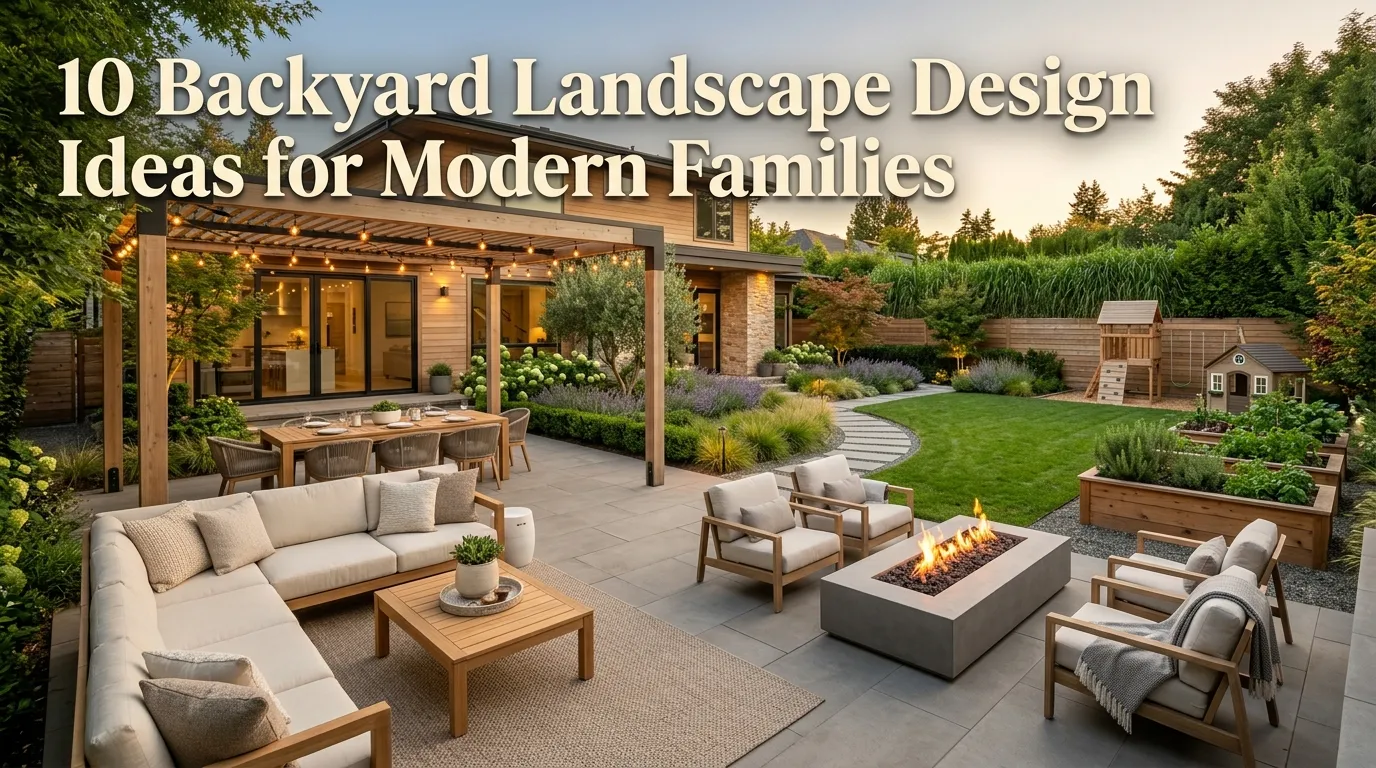
10 Backyard Landscape Design Ideas for Modern Families
There’s a particular kind of backyard that works as hard as the family living in it — one that hosts a birthday party on Saturday, a quiet morning coffee on Sunday, and a kids’ obstacle course made of pool noodles somewhere in between. In my experience, that kind of backyard doesn’t happen by accident. A mistake many homeowners make is designing a backyard around one single use — an entertaining space, or a play area, or a garden — and then wondering why the rest of the yard feels underused or awkward.
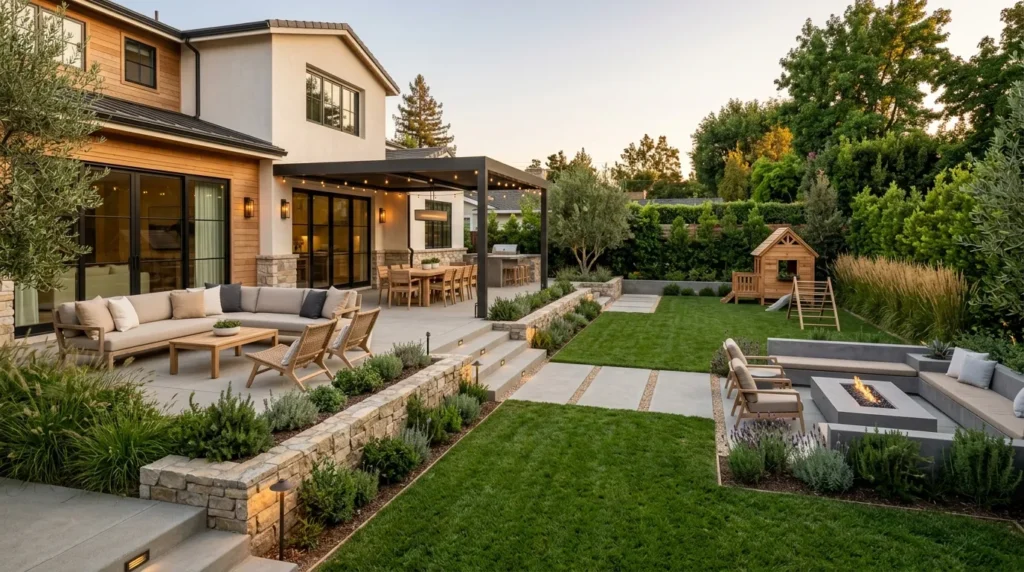
I’ve noticed that the backyards getting saved and shared the most right now share a common thread: they’re divided into distinct zones, each with its own purpose, connected by simple paths and consistent materials. That’s what makes a modern family backyard feel intentional instead of like a random collection of furniture and turf. It’s not about having the biggest yard — some of the most functional family backyards I’ve seen are modest in size but carefully planned, with every section pulling its weight.
One thing that works especially well is thinking of your backyard the way you’d think about the inside of your home: a living room for gathering, a dining space for meals, a play zone for kids, and quiet corners for downtime. That’s why many designers recommend starting with a rough zone map before buying a single plant or piece of furniture — it prevents the common trap of filling a yard with disconnected purchases that never quite come together.
This guide walks through ten practical ways to design a backyard that works for the whole family, from low-maintenance plantings to lighting that extends usable hours into the evening. Each idea includes real styling and planning guidance you can use whether you’re starting from a blank slate or reworking an existing yard. If you’re anything like me, you want a backyard that looks good in photos but, more importantly, actually gets used every week. That’s exactly what these ideas are built for.
Table of Contents
- Multi-Zone Backyard Layout — Dividing your yard into purposeful, connected spaces.
- Low-Maintenance Native Plants — Beautiful landscaping that doesn’t demand your weekends.
- Outdoor Dining Space — Creating a real reason to eat meals outside.
- Kid-Friendly Play Area — Designing a play zone that grows with your family.
- Fire Pit Gathering Spot — Extending outdoor time into cooler evenings.
- Privacy Hedges and Screens — Creating a sense of retreat in close neighborhoods.
- Pathway and Paver Design — Guiding movement and defining zones underfoot.
- Raised Garden Beds — Adding function and beauty with an easy-care garden.
- Outdoor Lighting Design — Extending usable backyard hours into the evening.
- Multi-Purpose Lawn Space — Keeping open grass flexible for games and gatherings.
1. Multi-Zone Backyard Layout
Quick Benefits
- Makes even a small yard feel more functional and spacious
- Prevents one activity from disrupting another
- Creates natural flow between different family uses
- Increases how often the whole yard actually gets used
- Adds long-term flexibility as your family’s needs change
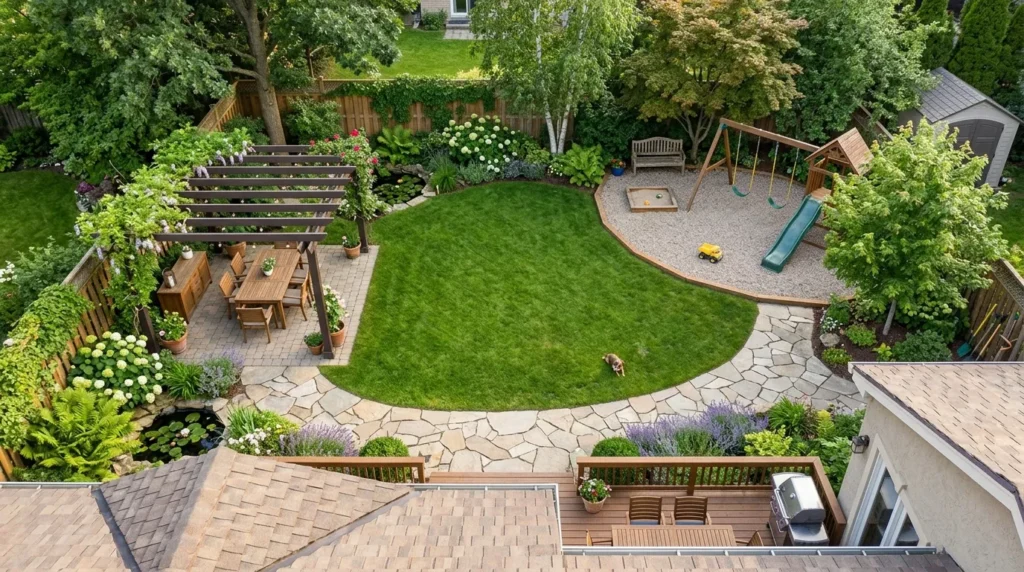
Why It Works A mistake many homeowners make is treating the backyard as one open, undefined space rather than a series of connected rooms. In my experience, backyards that are divided into distinct zones — a dining area, a play area, a lounge space, a garden — feel significantly larger and more useful than yards of the same size left open and unstructured. This is the same principle interior designers use indoors: defined zones with a clear purpose make a space easier to use and far more comfortable to be in.
How To Style It Start by sketching a rough map of how your family actually spends time outside: where meals happen, where kids play, where adults relax. Use materials like pavers, gravel, or plant borders to visually separate each zone without needing walls or fences. Keep sightlines open between zones so a parent cooking at an outdoor grill can still see kids playing nearby. Even a small yard benefits from this approach — two or three clearly defined zones almost always outperform one large, undefined space.
2. Low-Maintenance Native Plants
Quick Benefits
- Requires significantly less water and upkeep than non-native plants
- Supports local pollinators and backyard biodiversity
- Reduces long-term landscaping costs
- Thrives in your specific climate with minimal intervention
- Frees up weekend time for actually using the yard
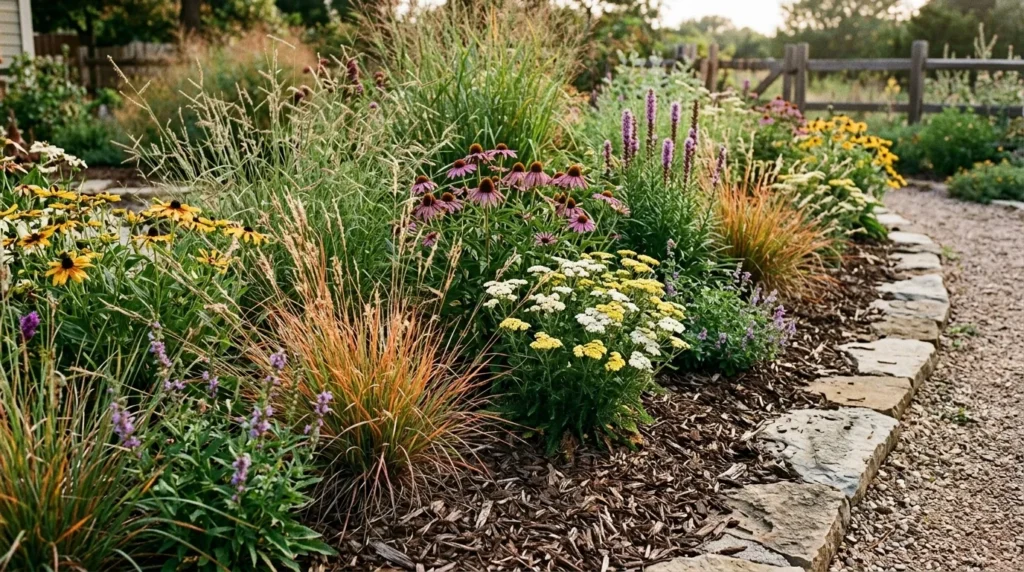
Why It Works One thing that works especially well for busy families is choosing plants that are already suited to the local climate, rather than fighting to keep imported, high-maintenance species alive. I’ve seen this idea transform yards that used to demand constant watering and replanting into landscapes that largely take care of themselves once established. Native plants have adapted to local rainfall, soil, and temperature patterns over generations, which means they typically need less fertilizer, less water, and less troubleshooting than non-native alternatives.
How To Style It Research native plant species for your specific region through a local extension office or native plant society, since the best choices vary significantly by climate zone. Group plants with similar water needs together to simplify irrigation. Mix textures and bloom times so something is visually interesting across multiple seasons, not just a single burst in spring. Native grasses, flowering perennials, and regionally appropriate shrubs typically require far less intervention once their root systems are established, usually within the first one to two seasons.
3. Outdoor Dining Space
Quick Benefits
- Creates a genuine reason to eat meals outside regularly
- Extends usable living space beyond the interior of the home
- Works for both everyday meals and larger gatherings
- Adds real value and function to warmer months
- Pairs naturally with a grill or outdoor kitchen setup
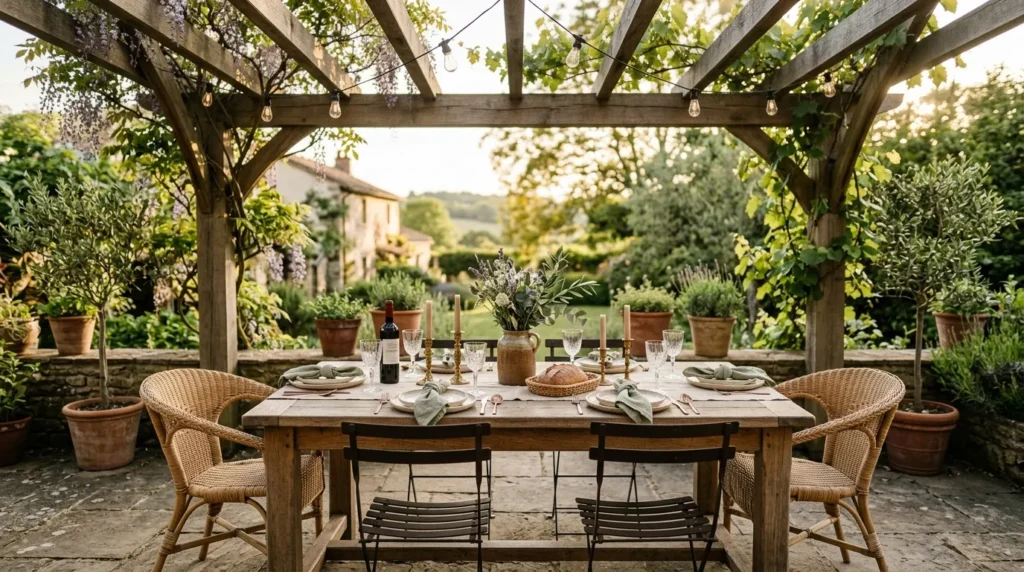
Why It Works An outdoor dining space only gets used regularly when it’s genuinely comfortable and convenient, not an afterthought table pushed into a corner. In my experience, families are far more likely to eat outside consistently when the dining area is shaded, close to the kitchen or grill, and furnished with seating that’s actually comfortable for more than twenty minutes. That’s why many designers recommend placing the dining zone close to the home’s exterior door, minimizing the friction of carrying food back and forth.
How To Style It Choose a table sized for your typical group, plus a few extra seats for guests, and prioritize a shade structure — a pergola, umbrella, or mature tree canopy — since an unshaded table often goes unused in peak summer heat. Weather-resistant materials like teak, eucalyptus, or powder-coated aluminum hold up well with minimal maintenance. Add a few string lights or a lantern for evening meals, and keep the surrounding area clear enough for easy movement between the table and the kitchen.
4. Kid-Friendly Play Area
Quick Benefits
- Gives children a dedicated space designed for their needs
- Keeps play equipment contained rather than scattered across the yard
- Can be designed to grow and adapt as kids get older
- Improves visibility for parents supervising from other zones
- Adds genuine daily value for families with young children
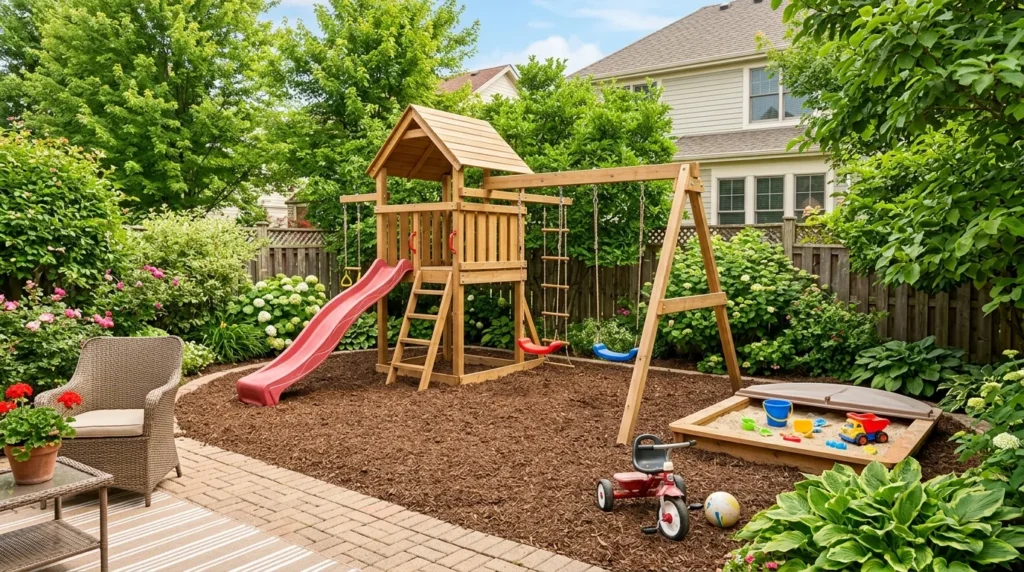
Why It Works A mistake many homeowners make is letting play equipment sprawl across the entire yard rather than containing it within a defined zone. I’ve noticed that a dedicated play area — even a modest one — keeps the rest of the backyard usable for adults while still giving kids a space that’s clearly theirs. In my experience, this also makes supervision easier, since one glance toward a defined play zone tells a parent everything they need to know, rather than scanning an entire open yard.
How To Style It Define the play area with a soft ground cover like mulch, rubber matting, or a durable turf alternative to cushion falls and reduce mud. Position it within sightline of the dining or lounge zone so supervision feels natural rather than effortful. Choose equipment that can adapt over time — a swing set that later becomes a hammock stand, or a sandbox that eventually converts to a small garden bed — to get more long-term value as children grow.
5. Fire Pit Gathering Spot
Quick Benefits
- Extends usable outdoor time into cooler evenings
- Creates a natural gathering point for family and guests
- Adds warmth and ambiance without major construction
- Works in both small and large backyard footprints
- A relatively affordable, high-impact focal point
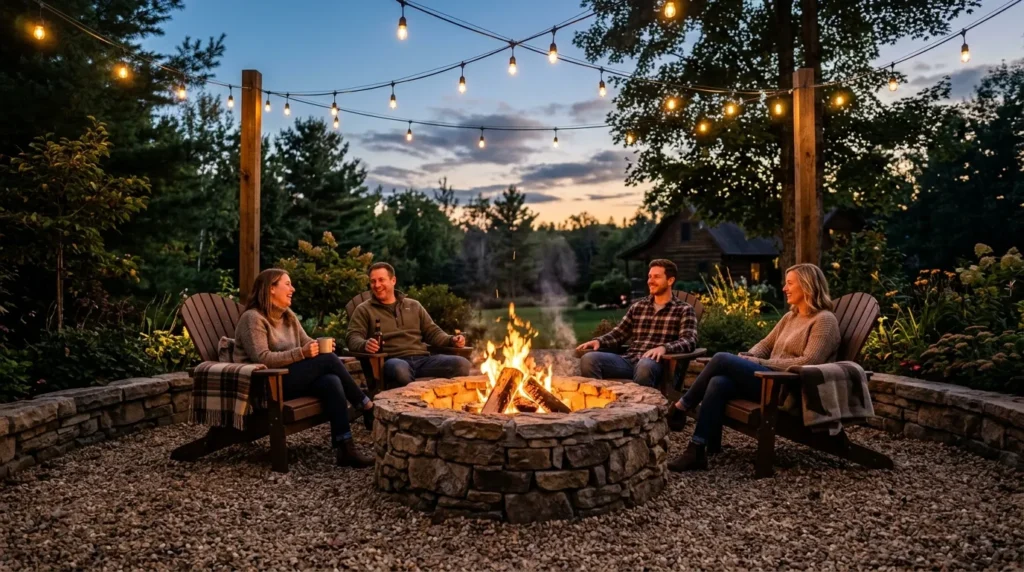
Why It Works A fire pit does something few other backyard features can: it gives people a reason to stay outside after the sun goes down. I’ve seen this idea transform how often a family actually uses their backyard, especially in shoulder seasons when evenings start to cool down. One simple trick I always suggest for families who want more outdoor time is adding a fire feature specifically because it changes the yard from a daytime-only space into something usable well into the evening, without needing significant additional lighting or heating investment.
How To Style It A simple in-ground or above-ground fire pit surrounded by built-in or movable seating creates a natural conversation zone. Choose a fire pit style — wood-burning, gas, or propane — based on your local regulations and how much hands-on maintenance you want. Surround the area with a durable, heat-safe material like gravel, pavers, or stone rather than mulch or turf, both for safety and easy cleanup. Add a few Adirondack chairs or a built-in stone bench for casual, low-commitment seating.
6. Privacy Hedges and Screens
Quick Benefits
- Creates a sense of retreat in yards close to neighbors
- Softens hard fence lines with natural greenery
- Reduces street or neighbor noise over time
- Adds year-round structure with evergreen varieties
- Increases how relaxed and enclosed a backyard feels
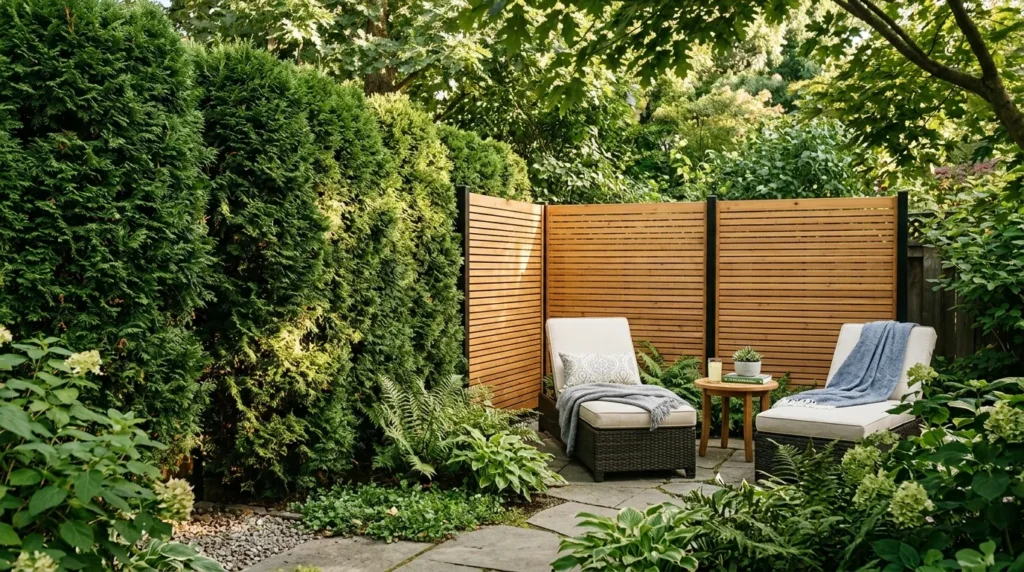
Why It Works That’s why many designers recommend privacy landscaping as one of the first investments in a family backyard, especially in closer-set suburban neighborhoods. A yard that feels overlooked or exposed is far less likely to get used for relaxed, everyday family time. In my experience, a well-placed hedge or screening planting does more to make a backyard feel like a retreat than almost any furniture or hardscaping choice, because it addresses the underlying sense of being watched or on display.
How To Style It Evergreen shrubs like arborvitae, boxwood, or holly provide year-round privacy and structure, while ornamental grasses or bamboo add a softer, more textured screen. Plant along property lines or around specific zones — like a lounge area — rather than trying to screen the entire yard at once. For faster results while plants mature, pair new hedging with a simple lattice or slatted wood screen, which provides privacy immediately while the greenery fills in over one to three growing seasons.
7. Pathway and Paver Design
Quick Benefits
- Guides movement naturally between backyard zones
- Reduces mud, wear patterns, and dead grass from foot traffic
- Adds structure and visual definition underfoot
- Works with a wide range of budgets and materials
- Ties the whole backyard design together cohesively
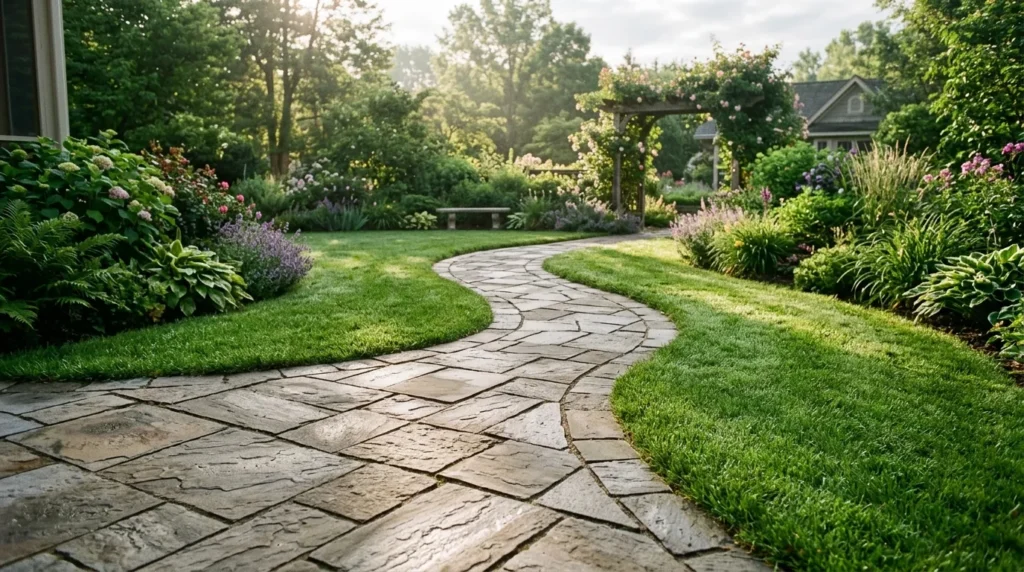
Why It Works A mistake many homeowners make is skipping defined pathways entirely, relying on grass to handle all foot traffic between zones. Over time, this creates worn, muddy paths in exactly the spots people walk most, undermining an otherwise well-designed yard. In my experience, a simple paver or gravel pathway connecting the major zones — patio, play area, garden — does a huge amount of quiet, functional work while also visually tying the whole design together.
How To Style It Use a consistent material across major pathways — natural stone, poured concrete, or gravel — to create cohesion throughout the yard, even if individual zones use different secondary materials. Curve pathways gently rather than running them in a straight, rigid line, which tends to feel more natural and inviting. Widen paths near gathering areas like a dining or fire pit zone to accommodate movement and seating overflow, and keep secondary paths to play or garden areas slightly narrower and more casual.
8. Raised Garden Beds
Quick Benefits
- Adds function and visual interest with manageable upkeep
- Easier on the back than traditional in-ground gardening
- Great for involving kids in hands-on growing projects
- Improves soil quality and drainage control
- Works well even in yards with poor native soil
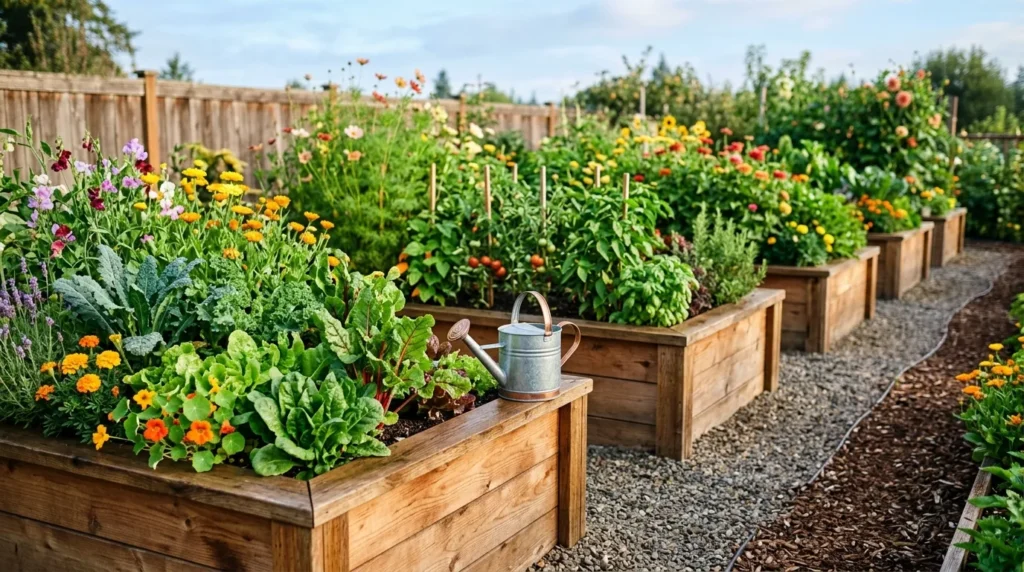
Why It Works Raised garden beds solve several problems at once, which is why I’ve noticed them becoming a staple in modern family backyard design. They allow you to control soil quality directly rather than working around whatever’s naturally present, they reduce the physical strain of traditional gardening, and they create a clear, contained space that’s genuinely fun for kids to help with. In my experience, families with raised beds tend to actually use them consistently, compared to in-ground garden plots that often get overwhelmed by weeds and neglected by midsummer.
How To Style It Cedar or composite raised beds resist rot better than untreated pine and require less frequent replacement. Position beds in a spot that gets adequate sunlight for what you plan to grow — most vegetables need six or more hours of direct sun daily. Keep bed widths to around four feet or less so every part is reachable without stepping inside, and consider a mix of one or two dedicated to a kids’ section with fast-growing, low-maintenance options like cherry tomatoes or sunflowers.
9. Outdoor Lighting Design
Quick Benefits
- Extends usable backyard hours well into the evening
- Adds ambiance and warmth to gathering spaces
- Improves safety along pathways and steps
- Highlights key landscaping features after dark
- Relatively affordable relative to its overall impact
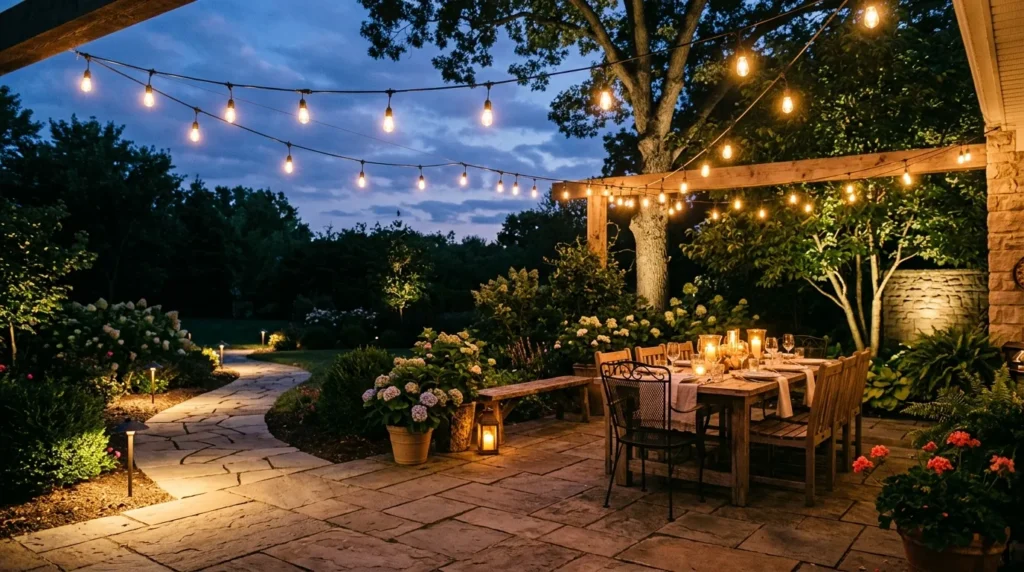
Why It Works A backyard that goes dark the moment the sun sets is a backyard that’s only getting used for half its potential hours. In my experience, layered outdoor lighting — pathway lights, string lights over a dining area, and subtle uplighting on key trees or features — is one of the highest-return investments in a family backyard, because it directly increases how many hours per day the space actually gets used. One simple trick I always suggest is thinking about lighting in layers rather than a single bright floodlight, which tends to feel harsh rather than inviting.
How To Style It Use warm-toned (2700K–3000K) string lights over dining or lounge areas for ambient overhead glow, low-voltage path lights to guide movement safely after dark, and subtle uplighting on one or two specimen trees or architectural features. Solar-powered options are an easy, low-cost way to add pathway lighting without new wiring, while a hardwired low-voltage system offers more consistent brightness for larger yards. Avoid over-lighting; a few well-placed warm fixtures usually outperform many bright ones.
10. Multi-Purpose Lawn Space
Quick Benefits
- Keeps open grass flexible for games, gatherings, and downtime
- Balances structured zones with room to run and play
- Works for everything from yard games to picnic blankets
- Requires less specialized upkeep than heavily landscaped areas
- Provides visual breathing room between busier zones
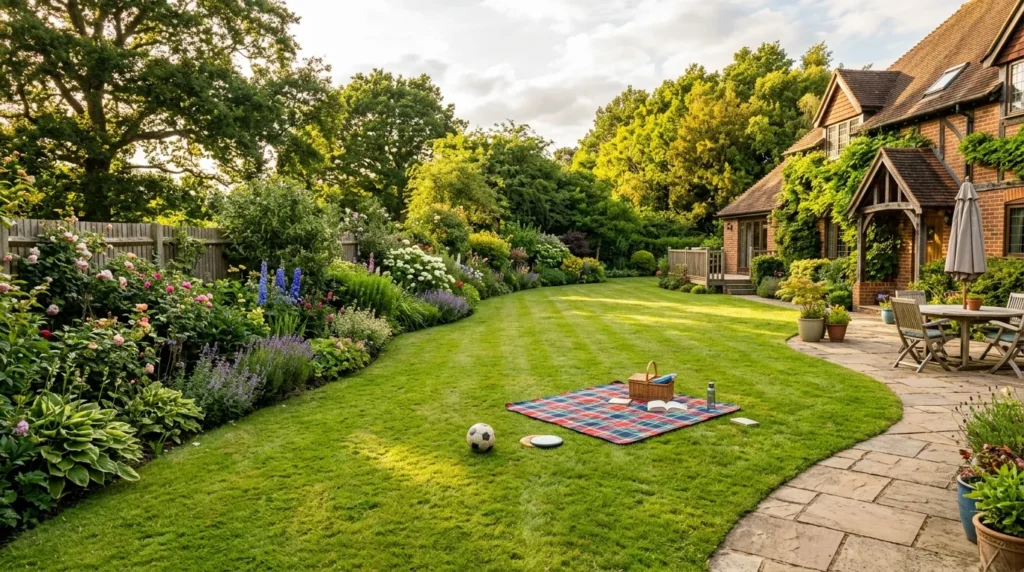
Why It Works Even with well-defined zones, most family backyards benefit from at least one area of open, flexible lawn. A mistake many homeowners make is landscaping every inch of the yard so densely that there’s no open space left for the unstructured uses families actually rely on — cornhole, a soccer ball, a picnic blanket, a dog running freely. I’ve noticed that the best family backyards balance defined zones with at least one generous stretch of open grass that isn’t assigned a single fixed purpose.
How To Style It Choose a durable, family-friendly turf variety suited to your climate and how much foot traffic the space gets, since ornamental or delicate grass types often struggle under regular play. Keep this open lawn area free of permanent furniture or structures so it stays genuinely flexible for whatever the week calls for. Border it with defined zones — dining, play, garden — so the open lawn reads as an intentional central space rather than simply unused, unplanned yard.
Frequently Asked Questions
How do I start planning a backyard redesign on a budget? Start with a rough zone map of how your family actually uses outdoor space, then prioritize the one or two zones with the highest daily impact, like dining or play. Adding pathways, plants, and furniture gradually is far more budget-friendly than a full renovation done all at once.
What’s the easiest way to make a backyard more private? Fast-growing evergreen shrubs paired with a simple wood or lattice screen provide immediate privacy while the plants mature over one to three seasons. Focus screening efforts on the specific zones you use most, rather than the entire perimeter.
Are native plants really easier to maintain than other landscaping? Yes, in most cases. Native plants are adapted to local rainfall and soil conditions, which typically means less watering, fertilizing, and troubleshooting once they’re established in the ground.
What size fire pit works best for a family backyard? A fire pit around 36 to 44 inches in diameter comfortably seats four to six people and works well in most mid-sized backyards. Smaller pits suit tighter spaces, while larger ones fit yards regularly used for bigger gatherings.
How much lawn space should I leave open for kids and pets? There’s no universal number, but leaving at least one clear, unstructured area — even a modest one — tends to get more consistent daily use than a yard that’s fully landscaped with no open flexibility.
Do raised garden beds work in yards with poor soil? Yes, this is one of their biggest advantages. Raised beds let you control soil quality directly, which makes them a great option for yards with heavy clay, poor drainage, or otherwise difficult native soil.
What’s the best type of outdoor lighting for a family backyard? A layered approach works best: warm string lights over gathering areas, low-voltage path lighting for safety, and subtle uplighting on a few key features. This combination extends usable hours without feeling overly bright or harsh.
Final Thoughts
A backyard designed for a modern family isn’t built around one big feature — it’s built around a series of intentional zones that work together: a place to eat, a place to play, a place to gather after dark, and enough open space to leave room for whatever the week brings. Each idea on this list can stand alone, but layered together, they create a yard that genuinely earns its use, week after week.
Start with one or two ideas and gradually build a space that reflects your style and supports everyday family life. The goal isn’t a magazine-perfect landscape — it’s a backyard your family actually wants to spend time in.
Related Articles
- 10 Modern Living Room Ideas with Natural Wood Finishes
- Small Patio Ideas for Outdoor Entertaining
- Modern Farmhouse Decor Ideas for Every Room
- DIY Accent Wall Ideas Anyone Can Do
- 10 Bathroom Decor Ideas That Add Everyday Luxury