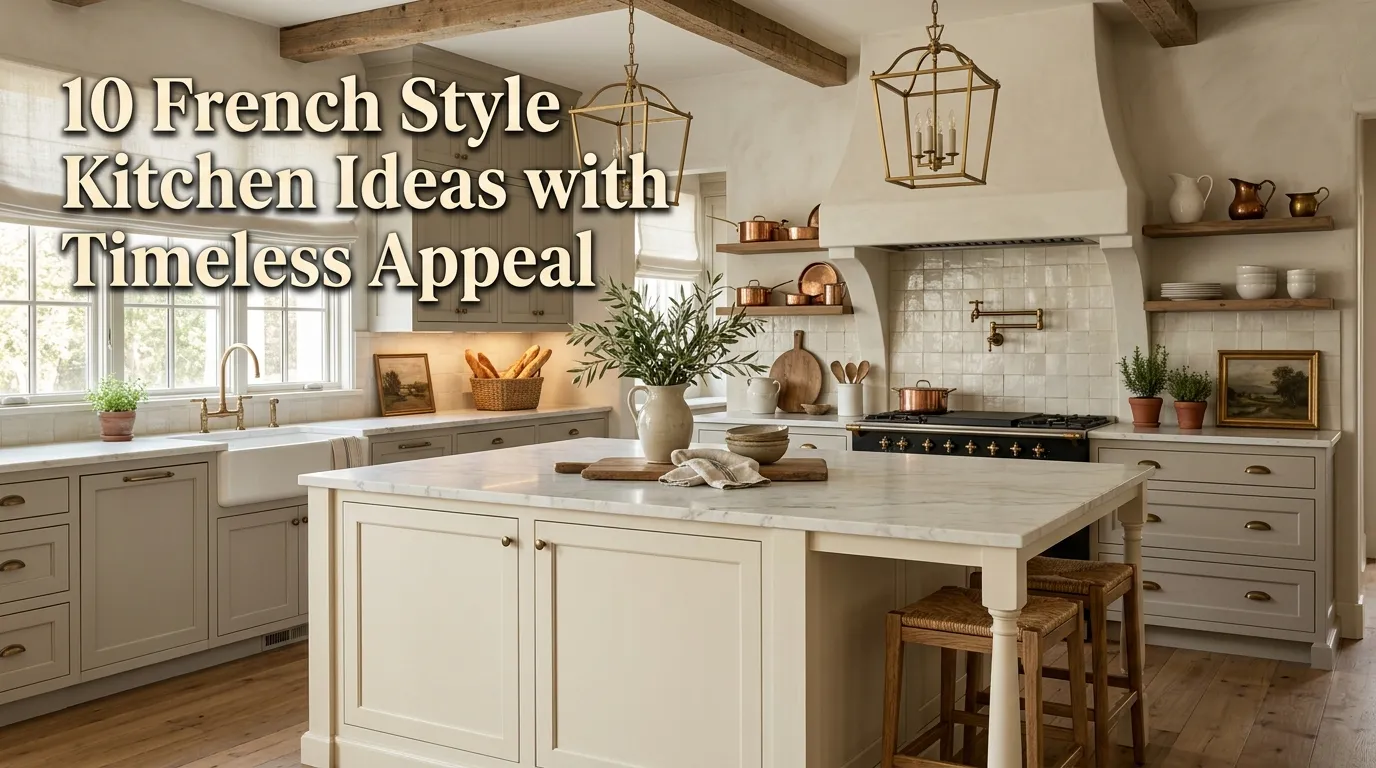
10 French Style Kitchen Ideas with Timeless Appeal
There’s a reason French country kitchens never seem to go out of style, even as design trends shift every few years around them. In my experience, that staying power comes down to restraint — French kitchen design has never chased trends in the first place. It’s built on materials, proportions, and details that were considered elegant a century ago and still read as elegant today.
I’ve noticed that a lot of homeowners try to recreate a French kitchen by focusing entirely on one element, usually a farmhouse sink or a plaster hood, and stop there. But an authentically French kitchen is really a layering of small, considered details: worn brass hardware, a stone or tile backsplash with texture, open shelving that shows off everyday dishware, and a warm, muted color palette that feels collected rather than purchased all at once.
A mistake many homeowners make is assuming French style requires an entirely custom kitchen or an unlimited renovation budget. In reality, many of the most recognizable elements of French kitchen design — unlacquered brass hardware, woven baskets, a marble or butcher block counter section, open shelving — can be introduced gradually, piece by piece, without tearing the whole room down to the studs.
This guide walks through ten French style kitchen ideas that consistently create that timeless, collected-over-generations appeal — practical approaches to materials, hardware, layout, and styling that work whether you’re planning a full renovation or a gradual refresh. If you’re anything like me, you want a kitchen that feels like it belongs in a countryside farmhouse outside Provence, not a showroom. That’s exactly what these ideas are built around.
Table of Contents
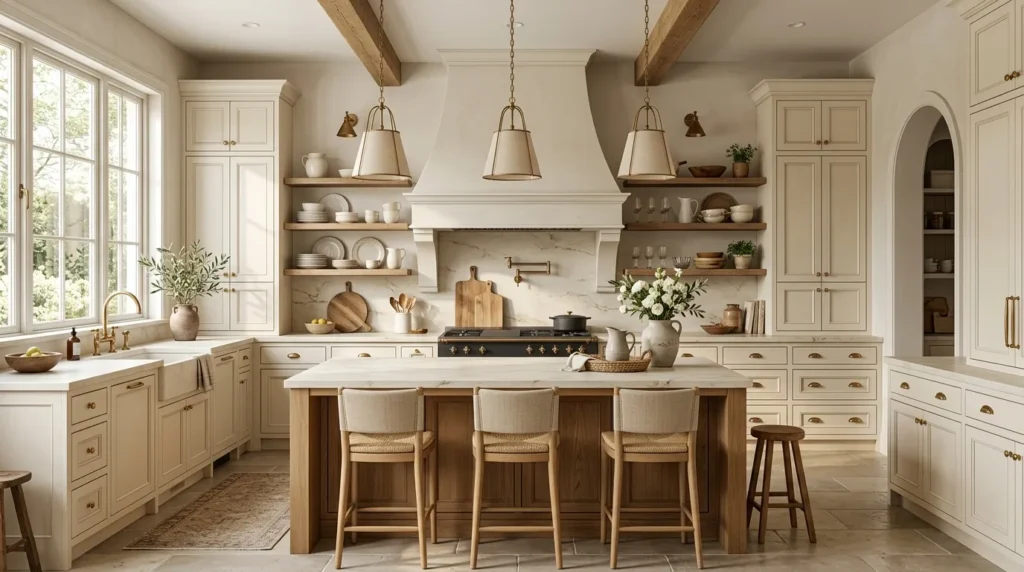
- Warm Plaster Range Hood — A hand-finished plaster hood becomes the kitchen’s quiet centerpiece.
- Unlacquered Brass Hardware — Aged brass details add instant warmth and old-world character.
- Open Shelving Display — Exposed shelves showcase everyday dishware as decor.
- Farmhouse Apron Sink — A deep apron sink anchors the kitchen with classic proportion.
- Marble Countertop Accents — Natural marble brings timeless texture and subtle veining.
- Woven Basket Storage — Natural baskets add texture and practical, rustic storage.
- Vintage-Inspired Lighting — Warm, aged fixtures bring soft old-world glow to the room.
- Terracotta Tile Flooring — Warm terracotta grounds the kitchen with earthy texture.
- Muted Cabinet Colors — Soft, historic paint tones replace stark white or gray.
- Fresh Herb and Produce Display — Everyday ingredients styled as decor add lived-in charm.
1. Warm Plaster Range Hood
Quick Benefits
- Creates a natural architectural focal point
- Adds soft texture without heavy pattern
- Feels handcrafted rather than mass-produced
- Pairs beautifully with brass and stone
- Ages gracefully over time
Why It Works
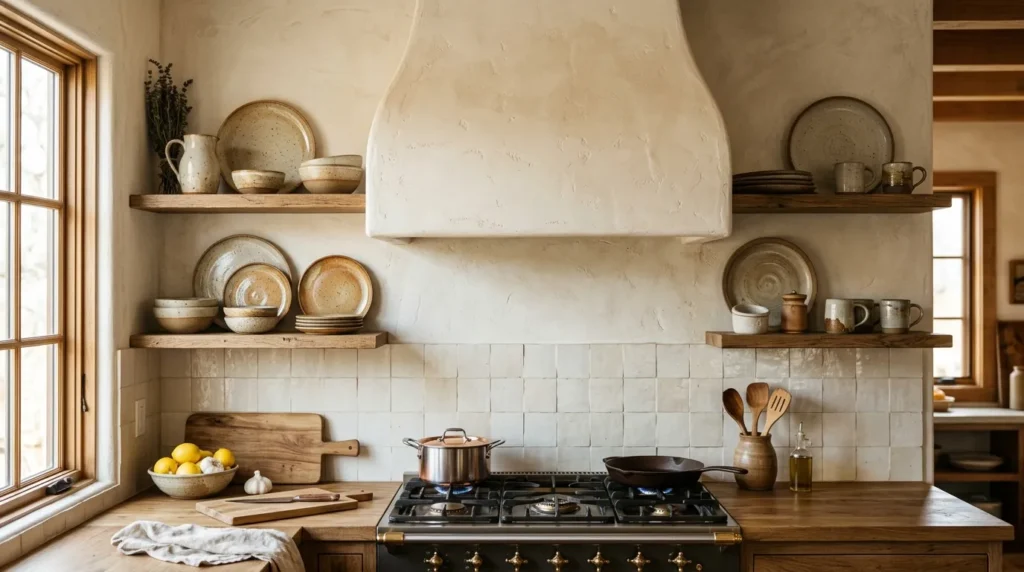
One thing that works especially well as the centerpiece of a French style kitchen is a hand-applied plaster range hood. Unlike a sleek stainless hood, plaster has a soft, slightly imperfect texture that immediately reads as handcrafted and old-world. That’s why many designers recommend it as one of the first investments in a French kitchen renovation — it sets the tone for every other material choice in the room.
How To Style It
Choose a plaster or limewash finish in a warm off-white or soft clay tone, applied with visible, gentle texture rather than a perfectly smooth surface. Keep the surrounding cabinetry simple so the hood remains the clear focal point above the range. If a full plaster application isn’t feasible, a plaster-finish hood cover or a textured venetian plaster paint treatment on an existing hood can achieve a similar effect at a lower cost.
2. Unlacquered Brass Hardware
Quick Benefits
- Adds instant old-world character
- Develops a beautiful natural patina over time
- Pairs with nearly any cabinet color
- Elevates even simple cabinetry
- Feels collected rather than newly purchased
Why It Works
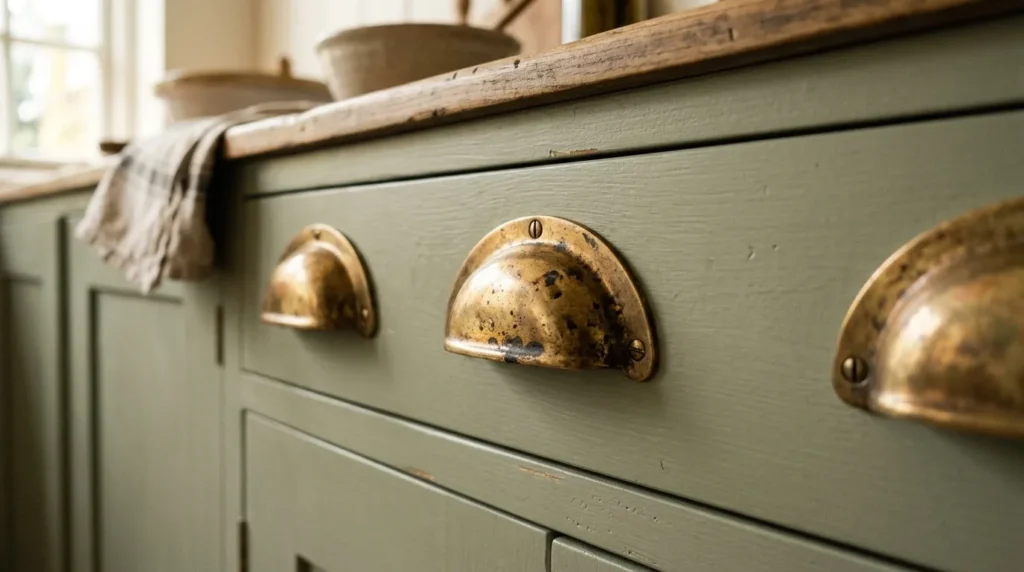
A mistake many homeowners make is choosing polished, lacquered brass hardware, which stays shiny and new-looking indefinitely. Unlacquered brass, on the other hand, is designed to tarnish and darken naturally with use, developing the same soft, aged patina you’d find on hardware that’s been in a French farmhouse for decades. I’ve noticed this small material choice does more to establish authenticity than almost any other single detail.
How To Style It
Replace cabinet knobs and pulls with unlacquered brass in a simple, classic shape — bin pulls and cup pulls both read as period-appropriate. Extend the same finish to faucets and cabinet hinges where possible for consistency throughout the room. Resist the urge to polish the brass as it darkens; the uneven, developing patina is exactly what gives it that lived-in, timeless quality.
3. Open Shelving Display
Quick Benefits
- Turns everyday dishware into decor
- Adds warmth and personality to the walls
- Encourages a more curated, collected look
- Works well alongside upper cabinets
- Makes frequently used items easy to reach
Why It Works
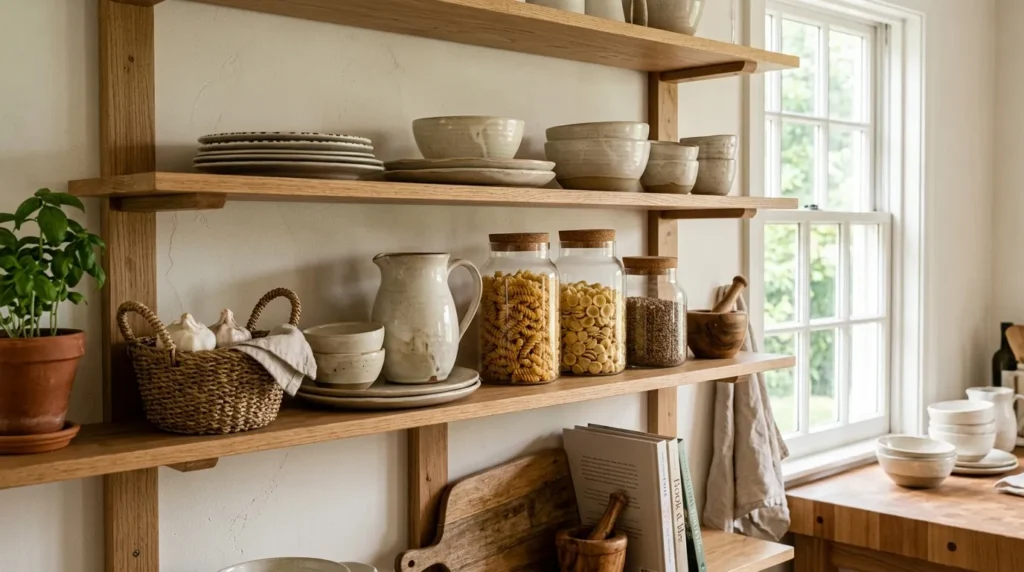
I’ve seen this idea transform kitchens that felt closed-off and generic into ones that feel personal and collected: open shelving. French kitchens have long favored displaying everyday stoneware, glassware, and linens rather than hiding everything behind closed cabinet doors. This approach makes the kitchen feel lived-in and warm, as though the dishware has been gathered over years rather than purchased as a matched set.
How To Style It
Replace one or two sections of upper cabinetry with simple wood or wrought iron shelves, and style them with a mix of stoneware plates, glass jars, and a few woven baskets. Avoid overly matched dishware — a slightly varied collection of cream and earth-toned pieces looks more authentic than a uniform set. Leave some negative space between objects so the shelves read as curated rather than crammed.
4. Farmhouse Apron Sink
Quick Benefits
- Anchors the kitchen with classic proportion
- Offers generous, practical basin space
- Pairs beautifully with brass fixtures
- Works in both traditional and modern layouts
- Instantly recognizable French kitchen detail
Why It Works
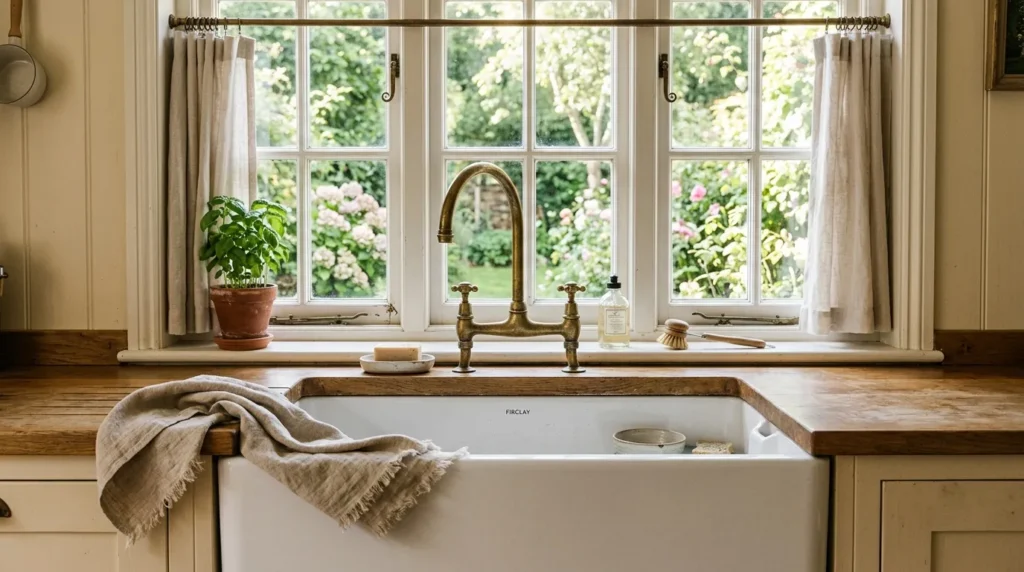
That’s why many designers recommend a farmhouse apron sink as one of the defining features of a French style kitchen — it’s one of the most instantly recognizable elements of the look. The deep, exposed front panel of an apron sink has a substantial, old-world presence that a standard undermount sink simply doesn’t have, and the generous basin size is genuinely practical for everyday cooking and cleanup.
How To Style It
Choose a fireclay or cast iron apron sink in white or cream, which pairs beautifully with warm brass fixtures and natural stone countertops. Position it beneath the kitchen’s main window if possible, which is a classic French layout choice that keeps the cook facing outward. Pair the sink with a gooseneck or bridge-style faucet in an aged brass or bronze finish to complete the vintage-inspired look.
5. Marble Countertop Accents
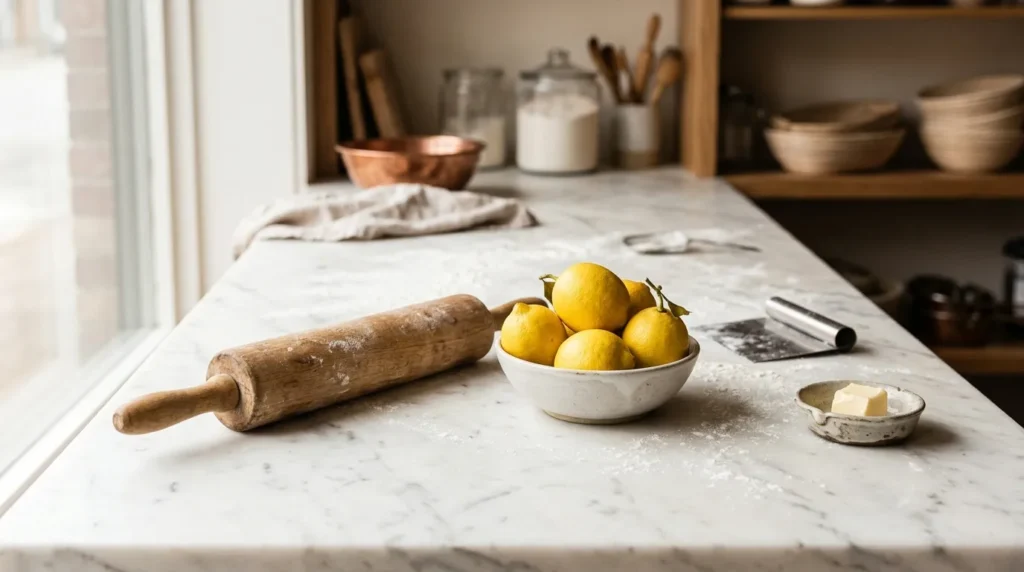
Quick Benefits
- Adds timeless texture and subtle veining
- Pairs beautifully with brass and wood
- Feels elevated without excessive pattern
- Works well as a full counter or an accent
- Develops character with use over time
Why It Works
Marble has been a staple of French kitchens for generations, prized for its soft veining and the way it ages with gentle patina rather than looking worn out. One simple trick I always suggest for homeowners hesitant about marble’s maintenance is introducing it in a smaller, accent capacity rather than committing to a full marble kitchen, which still captures the timeless look with less day-to-day worry.
How To Style It
Consider a marble slab specifically for a baking or prep station, since this is a traditional French kitchen detail that adds both function and material variety. If a full marble installation isn’t in the budget, a marble pastry board or a small marble-topped kitchen island section offers a similar effect on a smaller scale. Choose a soft white or warm cream marble with subtle gray veining rather than a heavily patterned, high-contrast stone, which tends to look more timeless and less trend-driven.
6. Woven Basket Storage
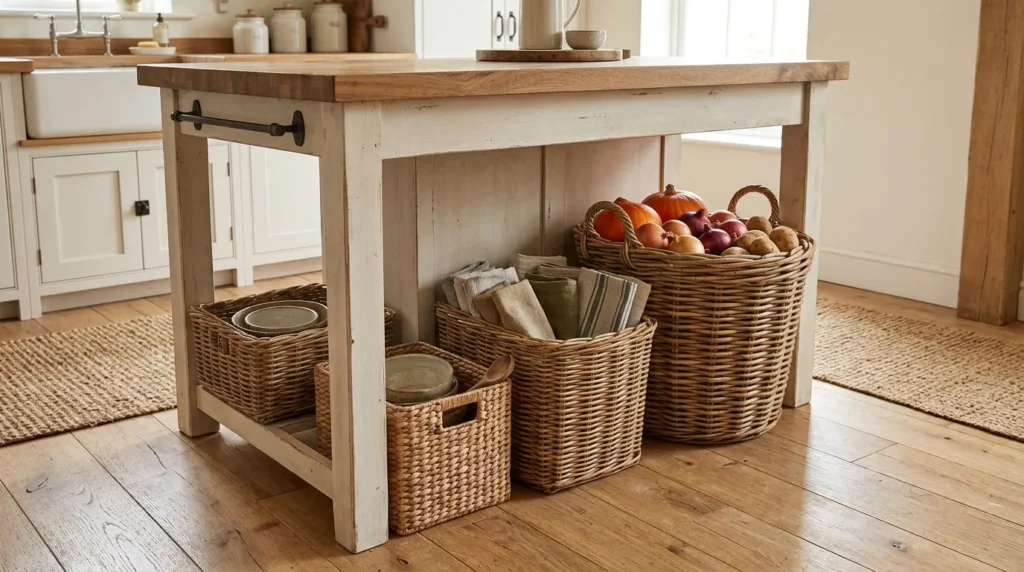
Quick Benefits
- Adds natural texture throughout the kitchen
- Provides practical, flexible storage
- Softens the look of open shelving
- Brings warmth without added color
- Inexpensive and easy to source
Why It Works
A mistake many homeowners make when styling open shelving is filling it entirely with dishware, which can start to look repetitive. Woven baskets break up that visual pattern while adding practical storage for produce, linens, or bread. In my experience, this small addition is one of the easiest ways to introduce the soft, rustic texture that defines French country style.
How To Style It
Use varying basket sizes on open shelves or beneath a kitchen island for storing produce, dish towels, or bread. A large woven basket on the floor near the pantry works well for storing root vegetables or extra linens in plain sight. Choose natural, unfinished wicker or rattan rather than painted or stained baskets, which keeps the material palette consistent with the kitchen’s warm, organic tones.
7. Vintage-Inspired Lighting
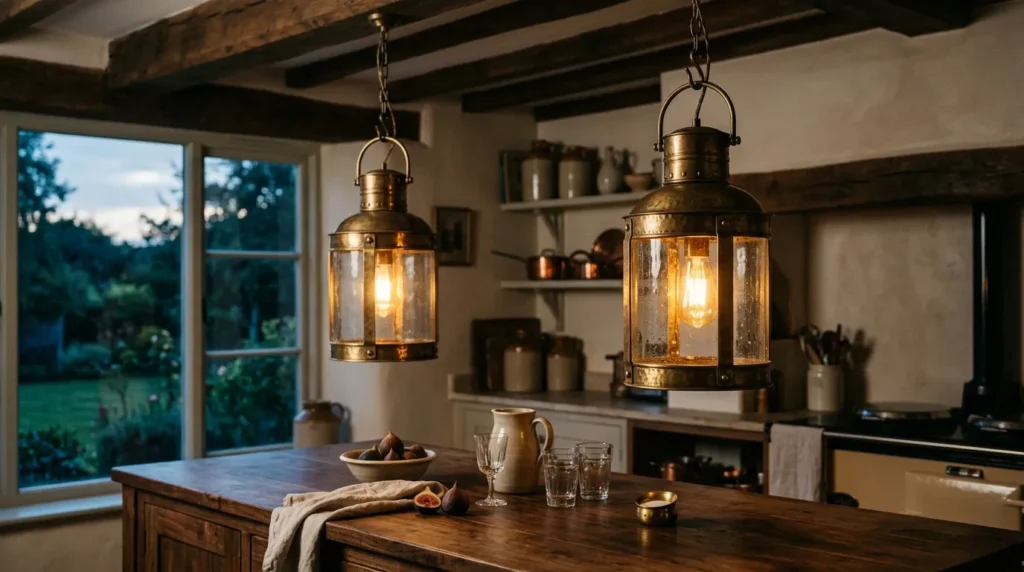
Quick Benefits
- Adds soft, old-world glow throughout the room
- Elevates the kitchen without major renovation
- Pairs beautifully with brass hardware
- Works well over islands and dining areas
- Creates warmth during evening cooking and gathering
Why It Works
Lighting does more to set the mood of a French kitchen than almost any other single element. A mistake many homeowners make is keeping builder-grade recessed lighting as the only light source, which tends to feel flat and impersonal. Vintage-inspired pendant lights or a lantern-style fixture above the island bring the same warm, gathered-over-time character as the rest of the room’s details.
How To Style It
Hang a pair of glass or brass lantern-style pendants above the kitchen island, spaced evenly and hung low enough to provide task lighting without blocking sightlines across the room. Consider a small vintage-inspired wall sconce near the range or sink for additional layered light. Choose warm bulbs around 2700K throughout, since cool white lighting can undercut the warm, old-world mood these fixtures are meant to create.
8. Terracotta Tile Flooring
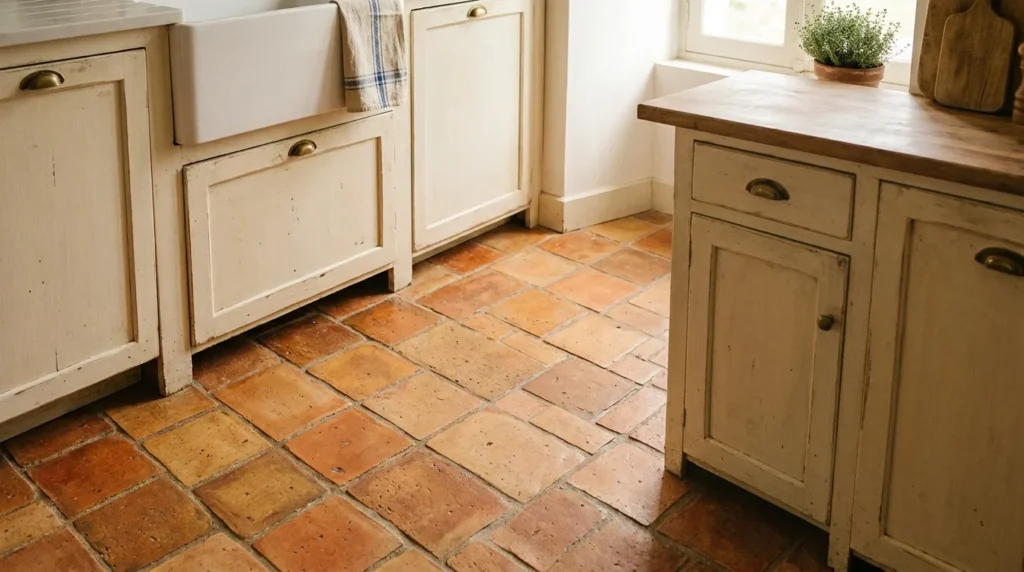
Quick Benefits
- Grounds the kitchen with earthy warmth
- Adds timeless, textured character underfoot
- Pairs beautifully with wood and brass
- Hides everyday wear gracefully
- Feels authentic to traditional French kitchens
Why It Works
Terracotta tile has been a hallmark of French farmhouse kitchens for centuries, prized for its warm color and the way it ages beautifully with foot traffic rather than showing every scuff. I’ve noticed that kitchens with cool gray or stark white flooring, however well-designed otherwise, often miss the warmth that terracotta brings to a genuinely French-inspired space.
How To Style It
Choose handmade or hand-finished terracotta tiles rather than a uniform, machine-pressed version, since the slight variation in tone and texture is part of the authentic look. Lay the tiles in a simple grid or herringbone pattern rather than an elaborate design, which keeps the focus on the material’s natural warmth. If a full terracotta floor isn’t feasible, a terracotta tile runner in front of the sink or range introduces the material on a smaller scale.
9. Muted Cabinet Colors
Quick Benefits
- Feels historic rather than trend-driven
- Pairs beautifully with brass and stone
- Softer on the eye than stark white
- Works well in both large and small kitchens
- Ages gracefully without feeling dated
Why It Works
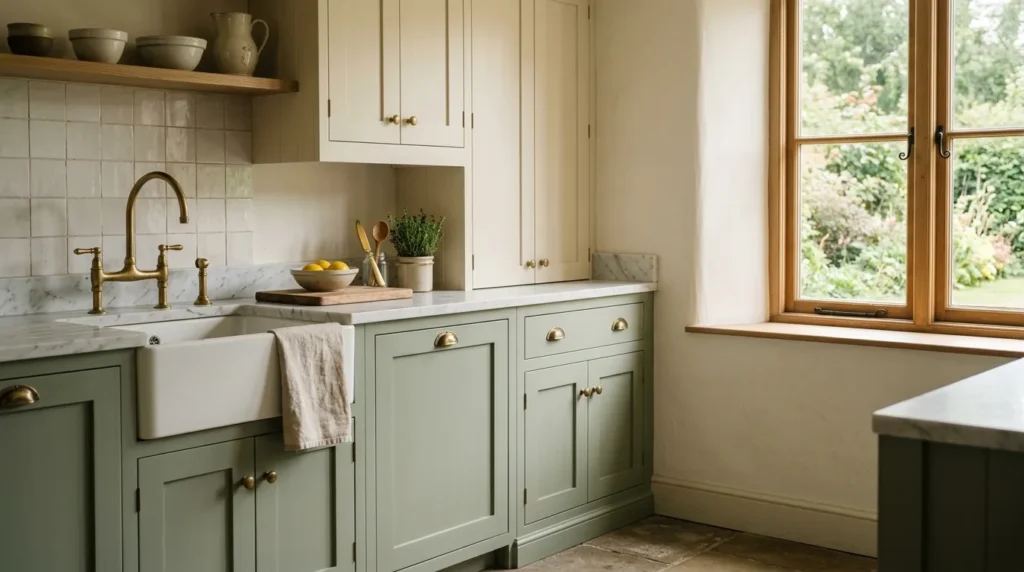
One thing that works especially well in French style kitchens is moving away from bright white or cool gray cabinetry in favor of muted, historic paint tones — soft sage, warm putty, dusty blue, or buttery cream. These colors have been used in French interiors for generations, which is exactly why they read as timeless rather than tied to a specific decade or trend cycle.
How To Style It
Choose a muted, slightly grayed-down paint tone for lower cabinets, and consider pairing it with warm white or cream uppers for gentle contrast. Test paint colors in your actual kitchen lighting before committing, since muted tones can shift significantly between natural and artificial light. Pair the cabinet color with warm brass hardware and natural stone or butcher block counters to keep the palette cohesive and grounded.
10. Fresh Herb and Produce Display
Quick Benefits
- Adds lived-in, everyday charm
- Brings natural color without permanent decor
- Encourages fresh cooking habits
- Costs very little to implement
- Constantly refreshes the kitchen’s look
Why It Works
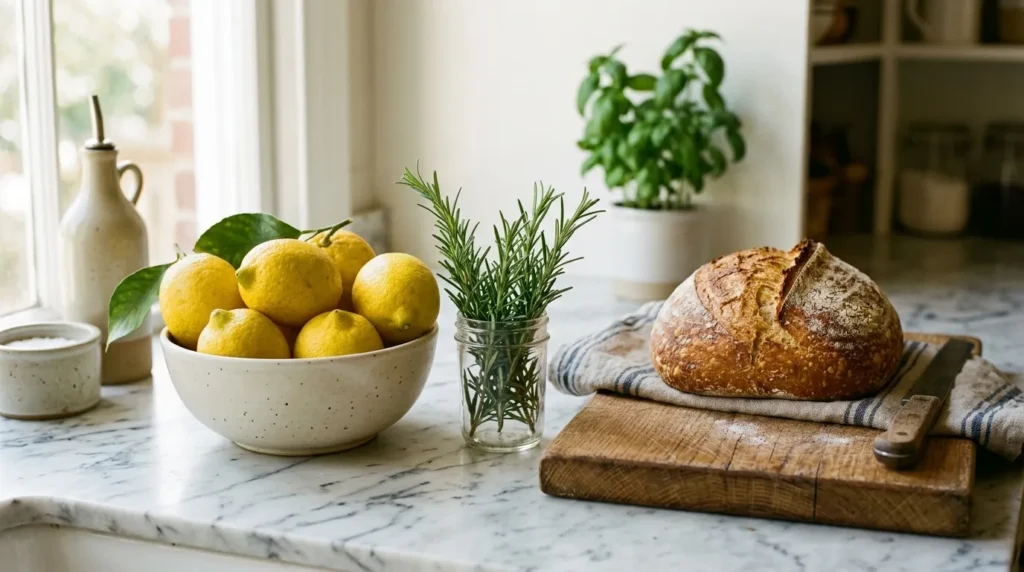
French kitchens have always treated food itself as part of the decor — a bowl of lemons, a jar of fresh herbs, a loaf of bread on a wood board. I’ve seen this idea transform kitchens that felt sparse or overly staged into ones that feel genuinely warm and used, simply because the styling incorporates the everyday act of cooking rather than hiding it away.
How To Style It
Keep a simple ceramic bowl of lemons, apples, or seasonal produce on the counter or island as a natural, ever-changing pop of color. Store fresh herbs like rosemary or thyme in a small glass jar or vase near the sink or range, both for styling and for easy access while cooking. A wood cutting board leaned against the backsplash with a few onions or a loaf of bread nearby adds the same lived-in, farmhouse charm without requiring any permanent decor changes.
Frequently Asked Questions
What defines French style kitchen design?
French style kitchens are defined by warm, muted colors, natural materials like marble, wood, and terracotta, aged brass hardware, and open shelving that displays everyday dishware. The overall feel is collected and timeless rather than matched or trend-driven.
Do I need to renovate my whole kitchen to get a French look?
No. Many of the most recognizable French kitchen details, like unlacquered brass hardware, open shelving, woven baskets, and vintage-inspired lighting, can be introduced gradually without a full renovation, making the style accessible on almost any budget.
What colors work best for a French style kitchen?
Muted, historic tones work best, such as soft sage, warm putty, dusty blue, and buttery cream. These colors have been used in French interiors for generations, which is part of why they read as timeless rather than tied to a specific design era.
Is a farmhouse sink necessary for French kitchen style?
It’s not strictly necessary, but it is one of the most recognizable elements of the look. If a full sink replacement isn’t feasible, focusing on other details like brass hardware, open shelving, and warm lighting can still achieve a strongly French-inspired feel.
What kind of lighting fits a French style kitchen?
Vintage-inspired pendant lights, lantern-style fixtures, and warm wall sconces all suit French kitchen design well. Warm bulbs around 2700K are essential, since cool white lighting tends to clash with the warm, old-world mood these kitchens are known for.
How do I keep open shelving from looking cluttered in a French kitchen?
Choose a slightly varied but cohesive color palette for your dishware, leave breathing room between objects, and mix in a few woven baskets to break up repetitive shapes. Curated restraint, rather than filling every inch, is what keeps open shelving looking intentional.
Can French style work in a small kitchen?
Yes. Details like unlacquered brass hardware, a marble accent on a small section of counter, open shelving instead of upper cabinets, and warm terracotta flooring all scale down beautifully, making French style just as achievable in a compact kitchen as in a large one.
Final Thoughts
Timeless French kitchen style isn’t about recreating a showroom — it’s about layering warm, natural materials and details that age gracefully instead of going out of style. Every idea in this list, from unlacquered brass hardware to a simple bowl of lemons on the counter, works because it draws on materials and habits that have defined French kitchens for generations, not this year’s trend. None of these ideas require a complete renovation. Most start with a single material swap or a small styling change you can make this weekend.
Start with one or two ideas and gradually build a kitchen that reflects a warmer, more collected feel. Maybe that means finally swapping your cabinet hardware for unlacquered brass, or adding a few woven baskets to open shelving you already have. Small, consistent changes compound into a kitchen that feels timeless, lived-in, and completely yours.
Your kitchen doesn’t need a full renovation to feel French — it just needs warmth, texture, and a little patina.
Related Articles
- Modern Bedroom Ideas with Neutral Colors
- Small Living Room Layouts
- Neutral Home Styling Guide
- DIY Accent Wall Ideas
- Cozy Bedroom Ideas