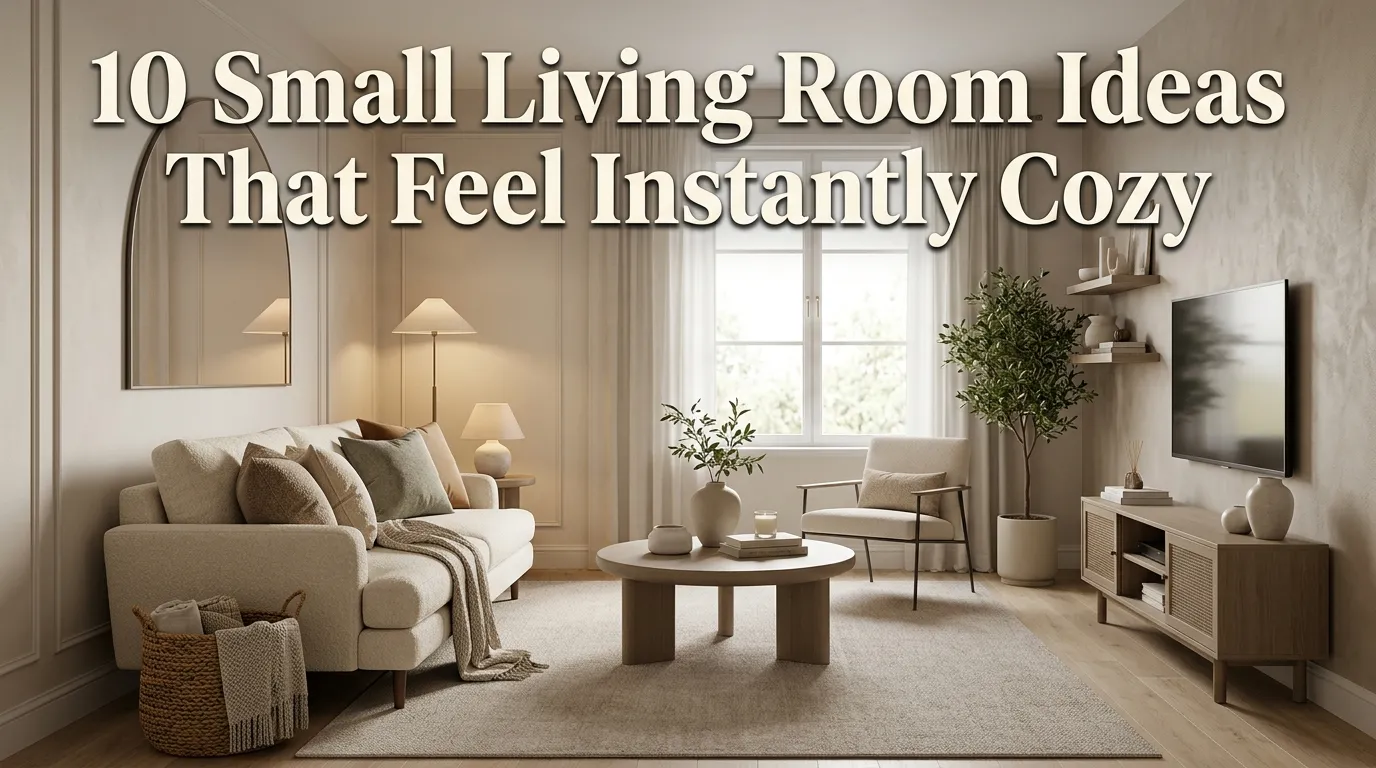
10 Small Living Room Ideas That Feel Instantly Cozy
If you’ve ever stood in the doorway of your living room and felt like the walls were closing in, you’re not alone. A small living room can feel cramped, cluttered, or oddly cold no matter how much furniture you rearrange — and that’s usually not a size problem at all. It’s a styling problem.
In my experience working with small spaces, the rooms that feel the most inviting aren’t the biggest ones. They’re the ones that use every inch with intention. A tight footprint can actually work in your favor, because it forces you to choose pieces that matter instead of filling corners with things that just take up space.
I’ve noticed that most small living rooms struggle with the same handful of issues: too much dark furniture, poor lighting, no clear focal point, and a layout that fights the natural flow of the room. The good news is that none of these are permanent. A few thoughtful changes can transform a cramped, forgettable room into the coziest spot in the house — the place everyone naturally gravitates toward.
This guide walks through ten small living room ideas that consistently work, whether you’re in a studio apartment, a starter home, or a cozy cottage with limited square footage. These aren’t abstract design theories. They’re practical, tested approaches that address lighting, furniture scale, texture, storage, and layout — the real things that make a small room either feel suffocating or feel like a warm hug at the end of a long day.
If you’re anything like me, you don’t want a Pinterest-perfect showroom that’s uncomfortable to actually live in. You want a room that looks good and functions even better. That’s exactly what this list is built around.
Table of Contents
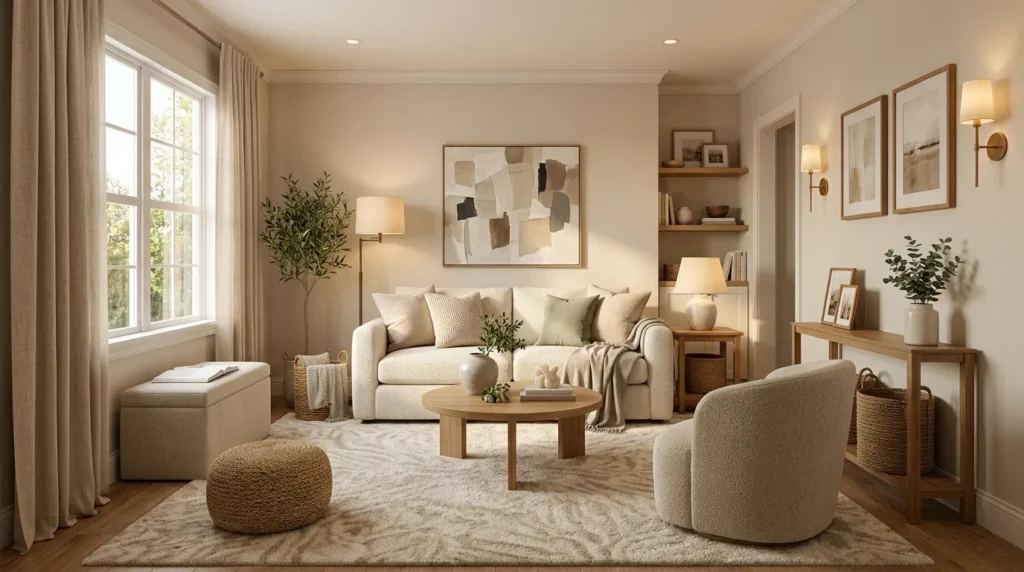
- Multipurpose Furniture Pieces — Furniture that does double duty saves space without sacrificing comfort.
- Light Neutral Palette — A soft, cohesive color scheme opens up visual space instantly.
- Vertical Storage Solutions — Going up instead of out keeps the floor plan open and airy.
- Layered Textural Throws — Texture adds warmth and depth without adding bulk.
- Mirror Placement Tricks — Strategic mirrors trick the eye into seeing more square footage.
- Cozy Corner Nook — A dedicated reading or lounging corner gives the room purpose.
- Warm Ambient Lighting — Layered lighting softens harsh edges and adds instant coziness.
- Curved Furniture Lines — Rounded silhouettes improve flow and reduce visual clutter.
- Gallery Wall Styling — A curated wall draws the eye up and adds personality.
- Statement Rug Anchor — The right rug ties the whole room together and defines the space.
1. Multipurpose Furniture Pieces
Quick Benefits
- Reduces clutter by combining functions in one piece
- Frees up floor space for movement
- Adds hidden storage without extra furniture
- Works well for entertaining guests
- Adapts easily as your needs change
Why It Works
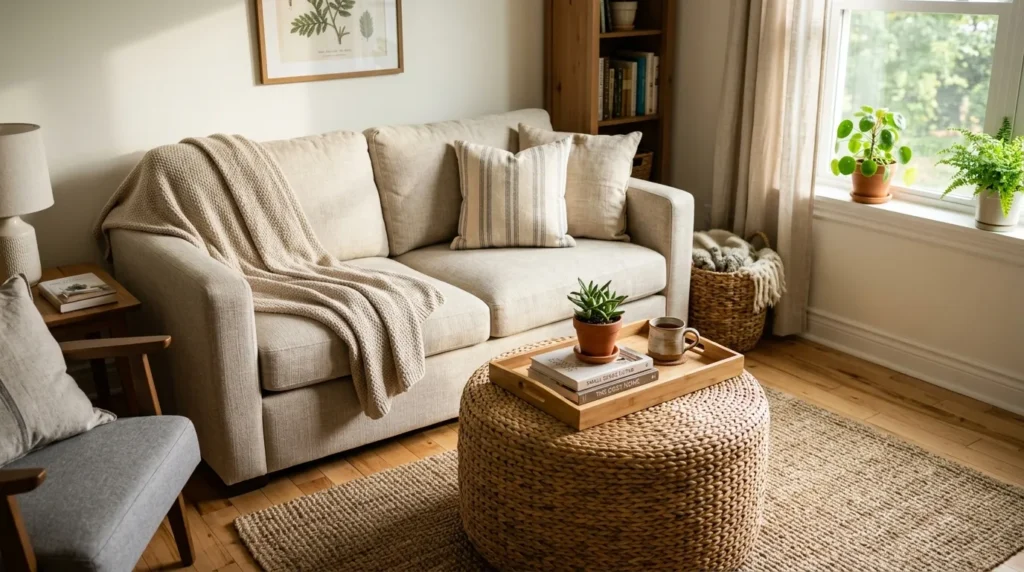
A mistake many homeowners make in small living rooms is buying furniture piece by piece without thinking about how each item earns its place. Multipurpose furniture solves this instantly. A storage ottoman doubles as a coffee table, extra seating, and a place to tuck away blankets or remotes. A daybed can serve as both a sofa and a guest bed. These pieces reduce the total number of items in the room, which is one of the fastest ways to make a small space feel bigger and calmer.
How To Style It
Start with your coffee table — swap a solid wood table for a storage ottoman with a tray top, and you instantly gain hidden storage plus a soft surface for feet or trays. Consider a sofa bed or a daybed with drawers underneath if the room doubles as a guest space. Nesting tables are another favorite of mine because they tuck away completely when not in use but pull out easily for extra surface area during movie nights or gatherings.
2. Light Neutral Palette
Quick Benefits
- Reflects more natural and artificial light
- Creates a seamless, expansive feel
- Makes the ceiling feel higher
- Pairs easily with any decor style
- Provides a calm, restful backdrop
Why It Works
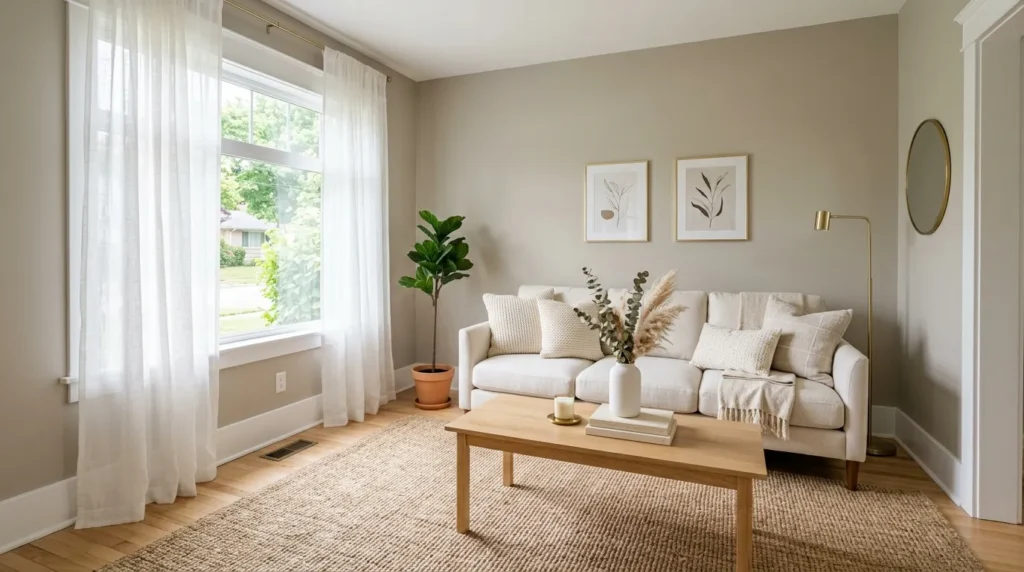
One simple trick I always suggest for small rooms is lightening the palette. Dark walls and heavy furniture absorb light, which makes a small room feel even smaller and, honestly, a little heavier. Soft whites, warm greiges, and gentle creams bounce light around the room instead of swallowing it. This isn’t about making the room feel sterile — it’s about giving the eye fewer hard stops, so the space reads as open rather than boxed in.
How To Style It
Paint walls in a warm off-white or soft greige rather than stark white, which can feel cold under artificial light. Choose a sofa in a light neutral like oatmeal, ivory, or soft taupe, and use trim, ceiling, and baseboards in a slightly lighter shade than the walls to visually raise the ceiling line. Add warmth back in through wood tones, woven textures, and soft metallics like brass or warm brushed gold so the palette doesn’t feel flat or cold.
3. Vertical Storage Solutions
Quick Benefits
- Keeps the floor plan open and walkable
- Uses often-wasted wall space
- Reduces visual clutter at eye level
- Adds display space for personal touches
- Draws the eye upward for a taller feel
Why It Works
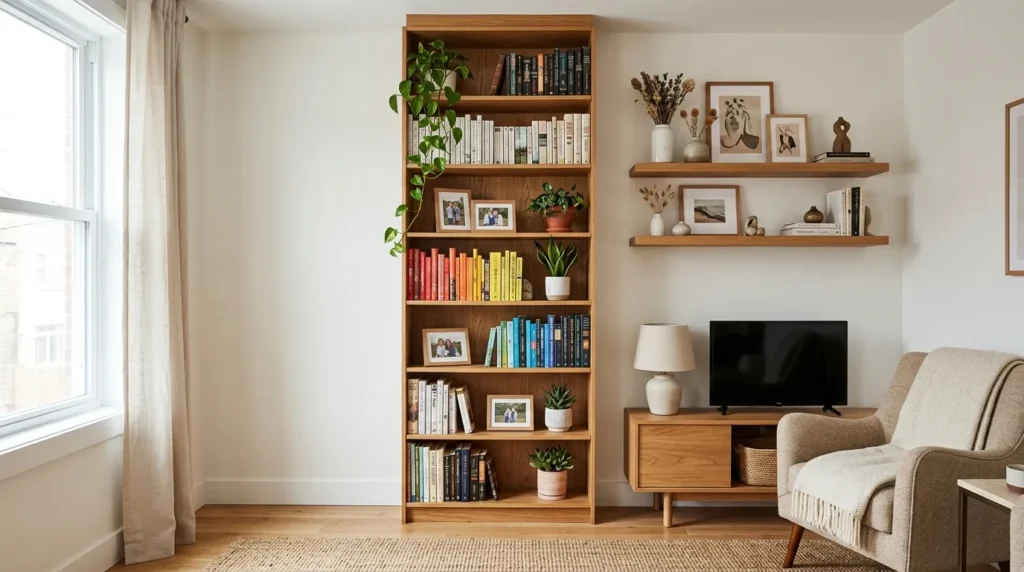
Small rooms have a limited floor footprint, but the walls are almost always underused. Tall, narrow bookshelves and wall-mounted shelving take advantage of vertical space without eating into your walking area. I’ve seen this idea transform spaces that felt genuinely cramped into rooms that suddenly had room to breathe, simply because the storage moved up instead of out.
How To Style It
Choose a tall, narrow bookshelf rather than a short, wide one — the same storage capacity in a smaller footprint. Install floating shelves above the sofa or TV for books, plants, and framed pieces instead of a bulky media console. Use wall-mounted baskets near the entry for shoes, mail, or blankets. Keep the bottom third of the wall relatively open so the room doesn’t feel top-heavy or cluttered near eye level.
4. Layered Textural Throws
Quick Benefits
- Adds warmth without taking up floor space
- Creates visual depth and coziness
- Softens hard furniture lines
- Inexpensive way to refresh a room
- Easy to swap seasonally
Why It Works
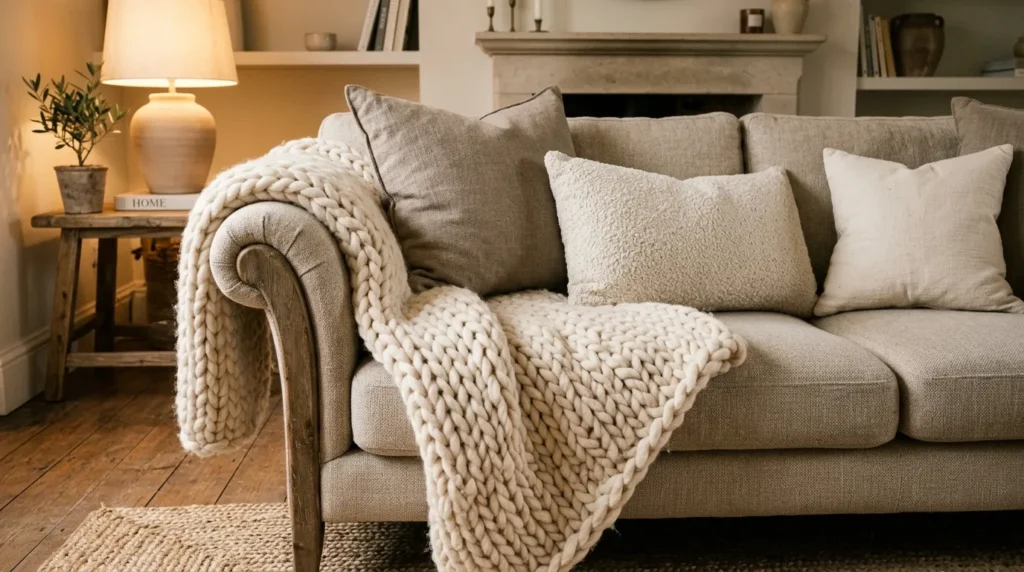
Texture is one of the most underrated tools in small-space design. A room can be beautifully painted and perfectly laid out, yet still feel flat and uninviting without it. Layering a chunky knit throw, a woven pillow, and a soft area rug creates the sense of coziness that makes people want to curl up and stay a while — without adding a single extra piece of furniture.
How To Style It
Drape a chunky knit or bouclé throw over the arm of the sofa rather than folding it flat, which adds dimension. Mix two or three pillow textures — linen, velvet, and woven cotton work well together — while keeping the color palette tight so it doesn’t feel busy. A jute or wool rug underfoot adds grounding texture that pairs beautifully with smoother furniture fabrics. Rotate throws and pillow covers seasonally for an easy refresh that costs very little.
5. Mirror Placement Tricks
Quick Benefits
- Visually doubles the perceived space
- Bounces natural light deeper into the room
- Adds a decorative focal point
- Works in nearly any design style
- Budget-friendly compared to renovation
Why It Works
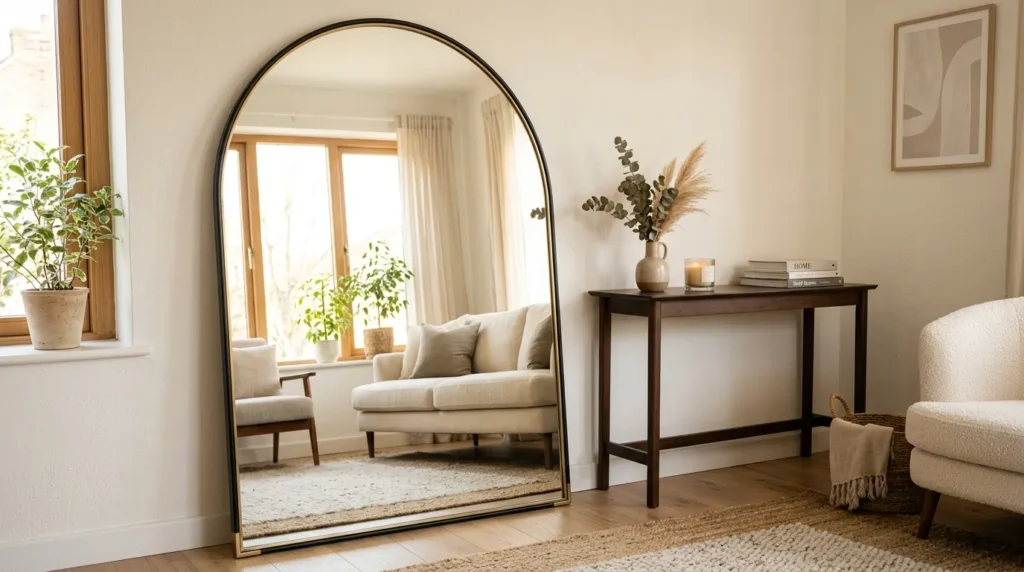
That’s why many designers recommend a large mirror as one of the first purchases for a small room. Mirrors reflect both light and the room itself, creating the illusion of depth that a small space desperately needs. Placed correctly, a mirror can make a room feel nearly twice its actual size, especially when it reflects a window or a light source.
How To Style It
Hang a large, leaning floor mirror directly across from your main window so it reflects natural light back into the room throughout the day. If floor space is tight, mount an oversized round or arched mirror above the sofa or console table instead. Avoid small, scattered mirrors, which fragment the reflection and create visual clutter rather than openness. One large statement mirror almost always outperforms several small ones.
6. Cozy Corner Nook
Quick Benefits
- Gives the room a clear sense of purpose
- Makes use of otherwise awkward corners
- Encourages relaxation and slower moments
- Adds personality without much square footage
- Works well even in oddly shaped rooms
Why It Works
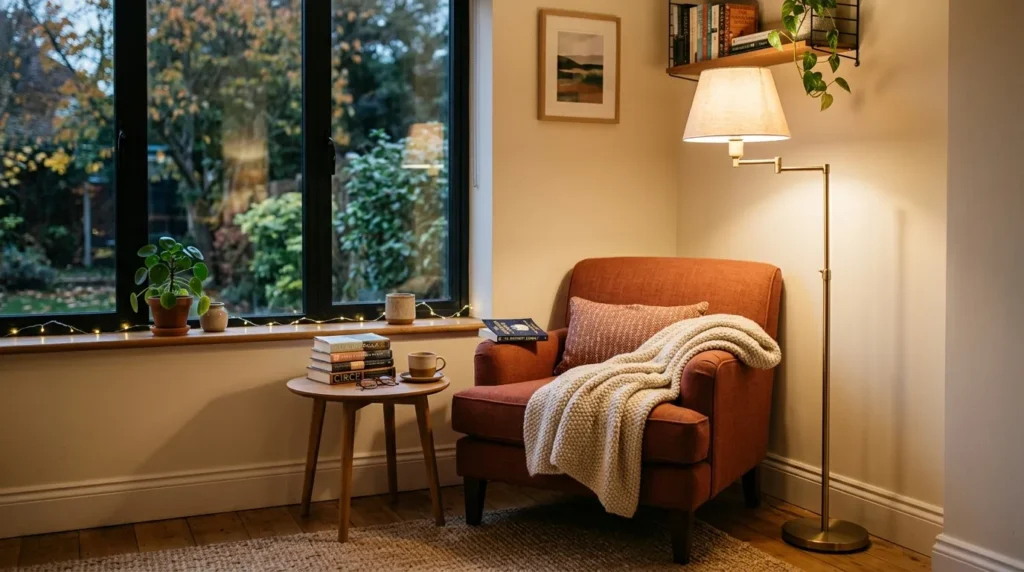
Every small living room has at least one corner that goes unused — often because it feels too awkward to furnish. In my experience, turning that corner into a dedicated nook is one of the most satisfying small living room ideas because it gives the space a genuine sense of purpose. A reading chair with a small side table transforms dead space into the coziest spot in the house.
How To Style It
Choose a slim armchair that fits comfortably in the corner without blocking walkways, and pair it with a small round side table for a lamp or a cup of coffee. Add a floor lamp with a warm bulb rather than relying on the room’s main overhead light. Layer in a small basket for magazines or throw blankets nearby. Even a two-foot-wide corner can become a beloved reading nook with the right proportions.
7. Warm Ambient Lighting
Quick Benefits
- Softens harsh overhead lighting
- Creates instant mood and warmth
- Highlights architectural and decor details
- Makes evenings feel more relaxing
- Inexpensive to implement immediately
Why It Works
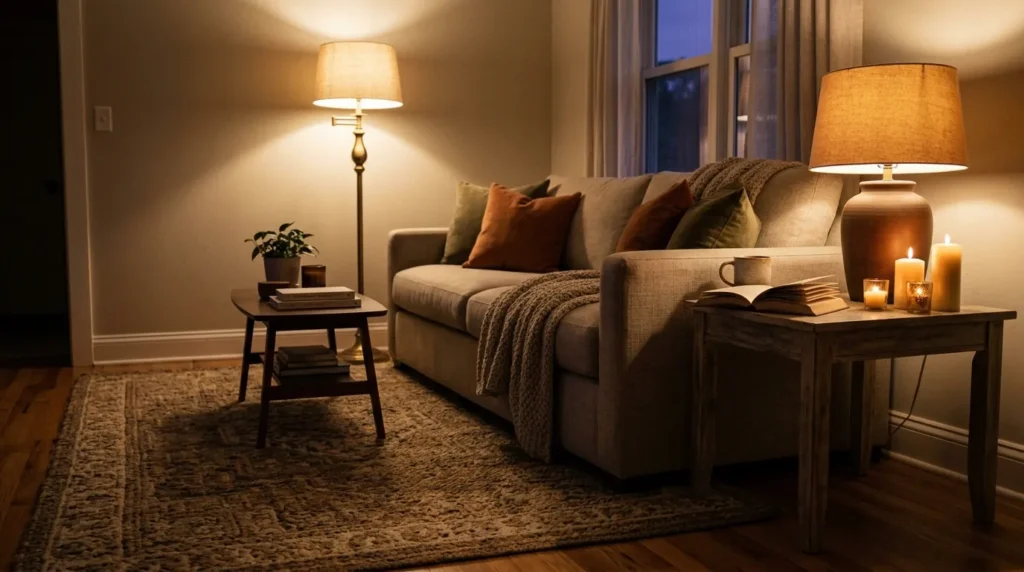
A mistake many homeowners make is relying entirely on one overhead light. Single-source lighting creates flat, harsh shadows that make a small room feel more like an office than a living space. Layered lighting — a mix of overhead, table, and floor sources — softens the room and adds the warm glow that photographs beautifully and feels even better in person.
How To Style It
Add at least two additional light sources beyond the overhead fixture, such as a floor lamp near the seating area and a table lamp on a console or side table. Choose warm bulbs (around 2700K) rather than cool white, which can feel clinical in a living space. Consider a plug-in wall sconce if outlets are limited, and use a dimmer where possible so the room can shift from bright and functional during the day to soft and cozy in the evening.
8. Curved Furniture Lines
Quick Benefits
- Improves walking flow around furniture
- Softens the overall look of the room
- Reduces the feeling of sharp, boxy clutter
- Works especially well in tight layouts
- Pairs beautifully with rounded decor accents
Why It Works
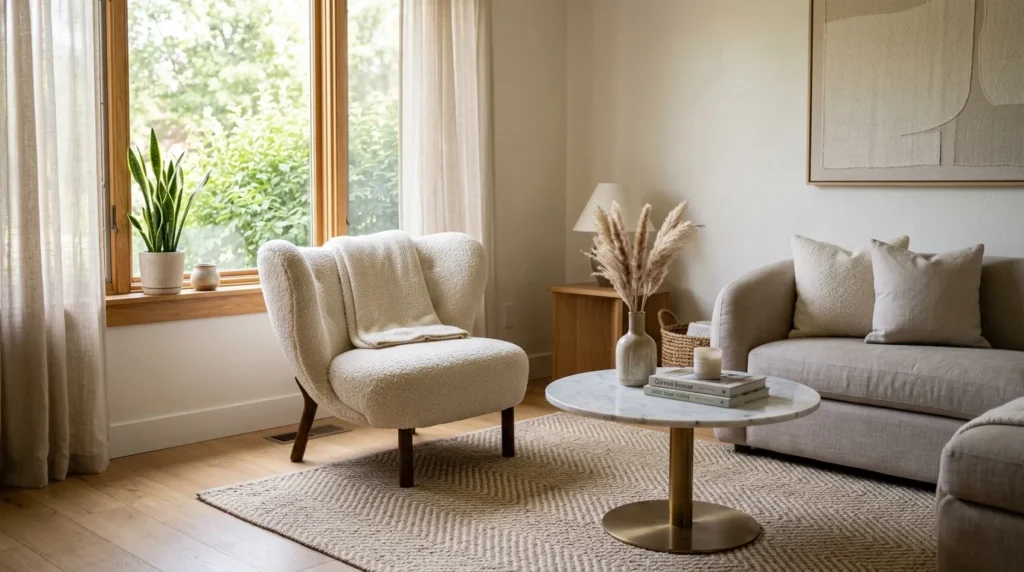
Sharp-edged furniture is one of the biggest culprits behind a small room feeling chaotic. Curved sofas, rounded coffee tables, and arched mirrors soften the overall geometry of the room, which makes navigating around them feel more natural. I’ve noticed that even swapping one boxy piece for a curved alternative can noticeably improve how a small room flows.
How To Style It
If a full curved sofa isn’t in the budget, start with a round or oval coffee table instead of a rectangular one — it eliminates sharp corners in the most trafficked part of the room. Look for accent chairs with rounded backs and tapered legs, which feel lighter visually than boxy armchairs. Rounded lighting fixtures and arched mirrors continue the theme without requiring a full furniture overhaul.
9. Gallery Wall Styling
Quick Benefits
- Adds personality without using floor space
- Draws the eye upward and outward
- Fills empty walls with meaningful decor
- Easy to update over time
- Works with almost any budget
Why It Works
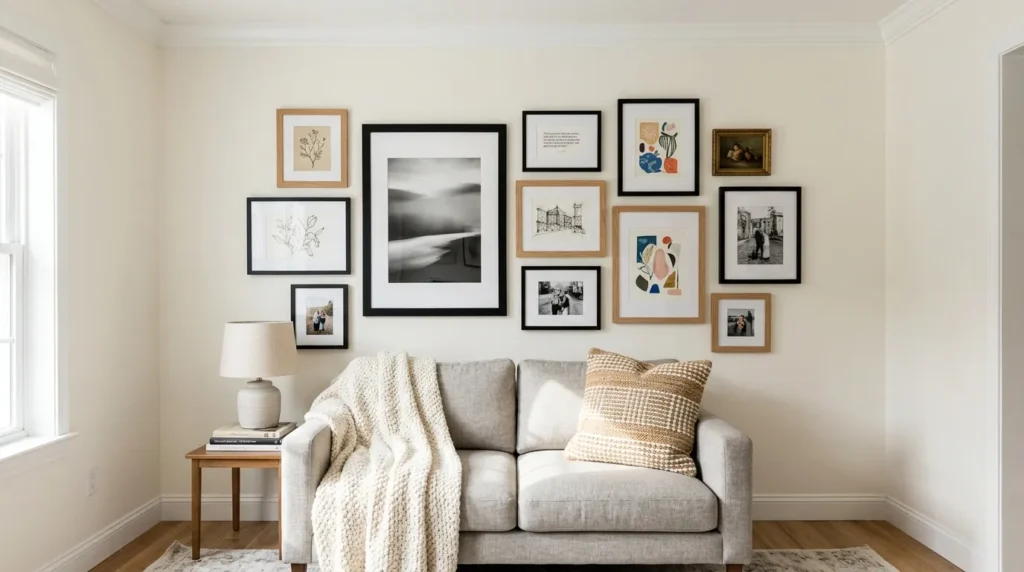
A blank wall in a small room often feels like wasted potential, while a thoughtfully arranged gallery wall becomes an instant focal point. One thing that works especially well is using a gallery wall to draw the eye across the room rather than down into the furniture, which visually expands the space. It’s also one of the few decor upgrades that adds real personality without competing for floor space.
How To Style It
Choose a mix of frame sizes but keep the color palette of the frames consistent — all black, all wood tone, or all white tends to look more cohesive in a small room than mixed metals. Anchor the arrangement with one larger piece and build smaller frames around it rather than scattering evenly sized pieces. Leave two to three inches between frames for a gallery feel that doesn’t read as cluttered, and hang the collection with the center at roughly eye level.
10. Statement Rug Anchor
Quick Benefits
- Defines the seating area clearly
- Adds warmth underfoot and visually
- Ties furniture and colors together
- Makes the room feel intentional
- Works as a bold style statement
Why It Works
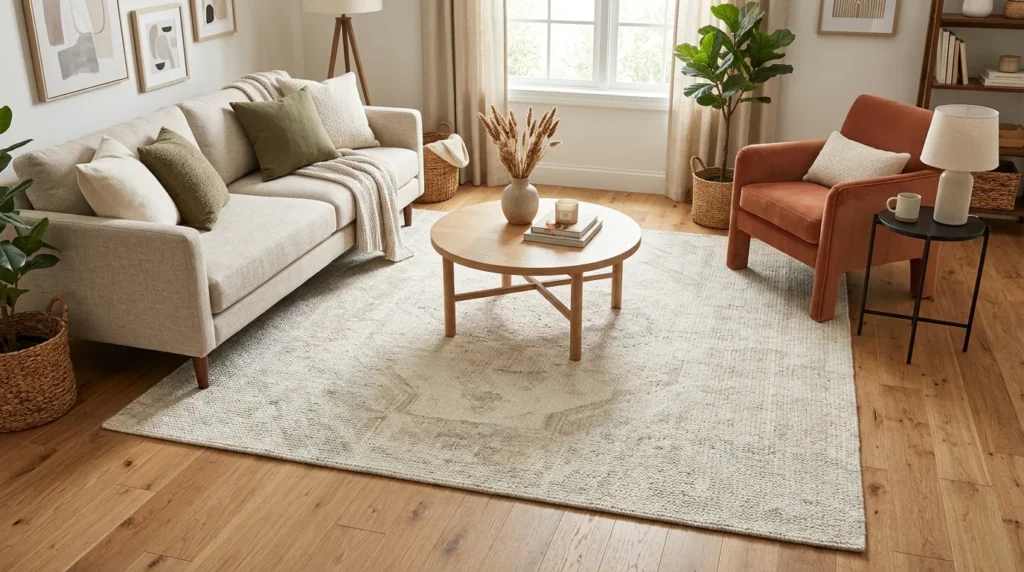
Without a rug, furniture in a small room can feel like it’s floating with no real connection to each other. A well-chosen rug anchors the seating area, visually grouping the sofa, chairs, and coffee table into one cohesive zone. I’ve seen this idea transform spaces where the furniture felt randomly placed into rooms that suddenly felt curated and complete.
How To Style It
Size matters most here — at minimum, the front legs of your sofa and chairs should rest on the rug, which visually enlarges the seating area rather than shrinking it. In a small room, a lighter rug with subtle pattern tends to open up the space more than a dark, heavily patterned one. Layering a smaller vintage or patterned rug on top of a larger jute base adds texture and interest without overwhelming the room.
Frequently Asked Questions
What is the best furniture layout for a small living room?
Floating your sofa slightly away from the wall, even a few inches, often creates better flow than pushing every piece against the perimeter. Angle furniture toward a natural focal point, like a window or fireplace, and keep walkways at least two feet wide so the room doesn’t feel obstructed.
What colors make a small living room look bigger?
Soft whites, warm greiges, and light neutrals reflect the most light and create a seamless, expansive feel. Painting the trim a shade lighter than the walls and keeping the ceiling white or very light also helps raise the visual height of the room.
How do I add storage to a small living room without clutter?
Prioritize vertical storage like tall bookshelves and floating shelves over wide furniture pieces. Multipurpose items, such as storage ottomans and console tables with drawers, add function without increasing the room’s footprint.
Should I use a large rug or a small rug in a small living room?
A larger rug almost always works better than several small ones. As a general rule, the front legs of your main seating pieces should sit on the rug so the space reads as one connected zone rather than fragmented pieces.
How can I make a small living room feel cozy instead of cramped?
Layered lighting, soft textures, and a clear focal point make the biggest difference. Cramped rooms usually lack warmth and purpose, while cozy rooms use lighting, texture, and intentional layout to feel inviting rather than crowded.
Do mirrors really make a small room look bigger?
Yes, when placed correctly. A large mirror positioned to reflect a window or light source can visually double the sense of space and depth, especially compared to several smaller mirrors scattered around the room.
What is the biggest mistake people make in small living rooms?
Overfurnishing is the most common issue. Filling every wall and corner with furniture leaves no visual breathing room. Choosing fewer, well-scaled multipurpose pieces almost always creates a more open and cozy result than cramming in more furniture.
Final Thoughts
A small living room isn’t a limitation — it’s an invitation to be intentional. Every idea in this list, from lightening your palette to anchoring the room with a well-placed rug, works because it respects the space you actually have instead of fighting against it. None of these changes require a full renovation or a large budget. Most of them start with rearranging what you already own or making one or two thoughtful purchases.
Start with one or two ideas and gradually build a space that reflects your style and supports everyday comfort. Maybe that means finally hanging the large mirror you’ve been putting off, or finally giving that awkward corner a purpose with a reading chair and a warm lamp. Small, consistent changes compound into a room that feels genuinely welcoming — the kind of space where people linger a little longer, whether that’s your family after dinner or guests who came for “just a quick visit.”
Your living room doesn’t need more square footage to feel warm, put-together, and completely yours. It just needs a little intention.
Related Articles
- Cozy Bedroom Ideas
- Small Apartment Layout Tips
- Modern Farmhouse Living Room Decor
- Neutral Home Styling Guide
- DIY Accent Wall Ideas