How to Organize a Small Bedroom Like a Home Expert
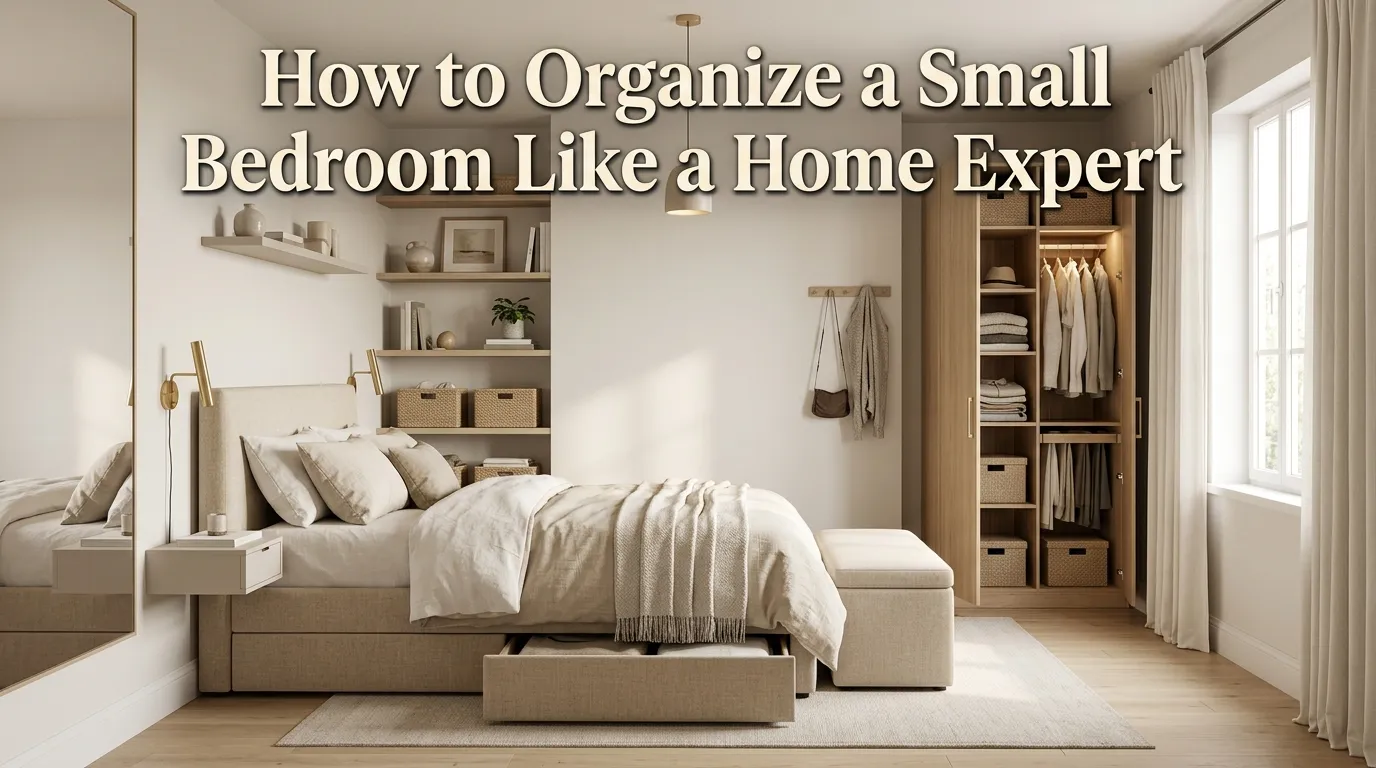
There’s a specific kind of relief that comes from walking into a small bedroom that’s actually been organized well. In my experience, it has nothing to do with square footage and everything to do with strategy — every inch working double duty, nothing left to chance, and just enough breathing room to keep the space feeling calm rather than cramped. A mistake many homeowners make is trying to fit a big-bedroom layout into a small footprint, forcing in a full dresser, a bench, and a reading chair, and ending up with a room that feels like an obstacle course instead of a retreat.
I’ve noticed that the small bedrooms getting saved and shared the most right now share a common approach: they treat vertical space, under-bed space, and multi-functional furniture as the real opportunity, rather than trying to squeeze more floor-based furniture into a limited footprint. That’s the mindset shift that separates a genuinely well-organized small bedroom from one that just feels perpetually tight. Once you start thinking in terms of cubic space rather than square footage, a small room opens up in ways that surprise most people.
One thing that works especially well is auditing what actually needs to live in the bedroom versus what’s ended up there by default. That’s why many professional organizers recommend starting with a full edit — everything out, only what truly belongs goes back in — before buying a single storage bin or shelf. Solving a small space problem with more storage products before solving it with less stuff first is one of the most common and most avoidable mistakes.
This guide walks through ten practical, expert-level strategies for organizing a small bedroom, covering everything from under-bed storage to closet systems and final styling touches. Each idea includes real, actionable guidance you can use this weekend. If you’re anything like me, you don’t want vague tidying advice — you want a clear plan for exactly where things go and why. That’s exactly what you’ll find below.
Table of Contents
- Under-Bed Storage Bins — Using the most overlooked storage zone in the room.
- Vertical Wall Shelving — Going up instead of out to add real storage.
- Multi-Functional Furniture — Choosing pieces that do more than one job.
- Closet Zone System — A structured approach to maximizing closet space.
- Floating Nightstands — Freeing up visual and physical floor space.
- Labeled Drawer Dividers — Keeping small items from becoming clutter.
- Corner Desk Nook — Fitting a workspace into an unused corner.
- Slim Storage Bench — Extra storage and seating in a compact footprint.
- Overhead Loft Storage — Using the space above eye level effectively.
- Minimalist Surface Styling — Keeping visible surfaces calm and clutter-free.
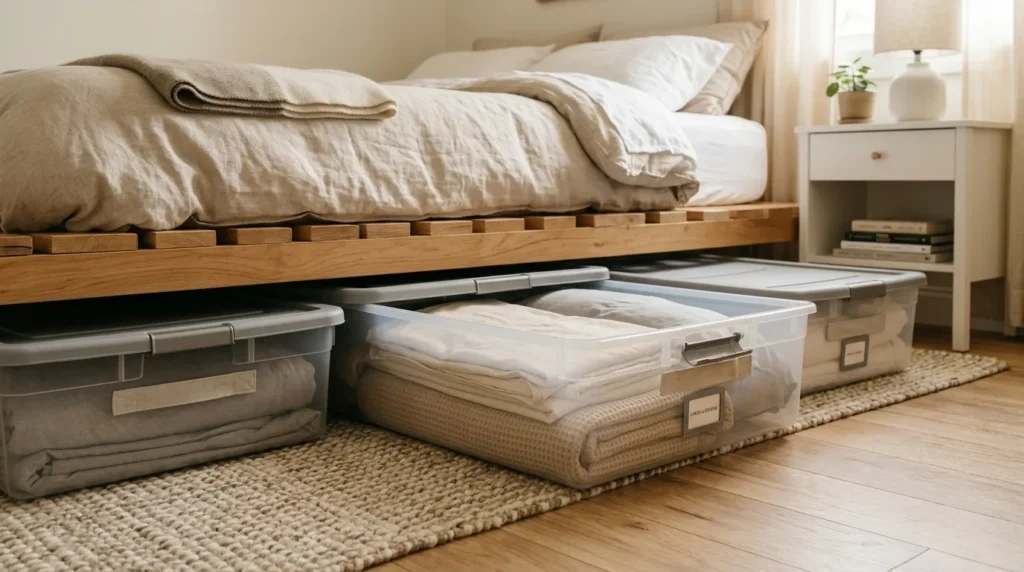
1. Under-Bed Storage Bins
Quick Benefits
- Uses one of the most overlooked storage zones in any bedroom
- Ideal for out-of-season clothing, linens, or shoes
- Keeps items accessible without taking up visible floor space
- Works with nearly any bed frame height
- One of the most affordable organization upgrades available
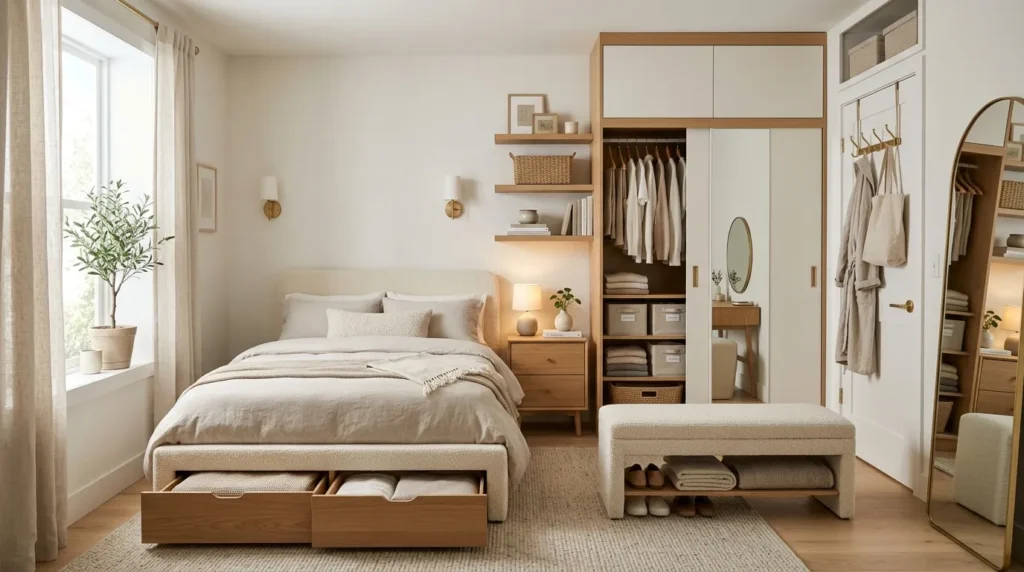
Why It Works In my experience, under-bed space is the single most underused storage zone in a small bedroom. It’s already there, it doesn’t require any new furniture, and it keeps items out of sight without sacrificing accessibility. A mistake many homeowners make is leaving this space empty or, worse, letting it become a catch-all for random items shoved out of view without any real organization. Treated intentionally, it can realistically replace an entire extra dresser drawer or shelf.
How To Style It Use flat, lidded storage bins or rolling under-bed drawers sized to your bed’s clearance height, measuring before you buy to ensure a proper fit. Dedicate one bin to out-of-season clothing, one to extra linens, and one to shoes or accessories, keeping each bin assigned to a single category. Clear bins with labels make it easiest to find what you need quickly, while opaque bins keep the look more streamlined if the space is visible from the room.
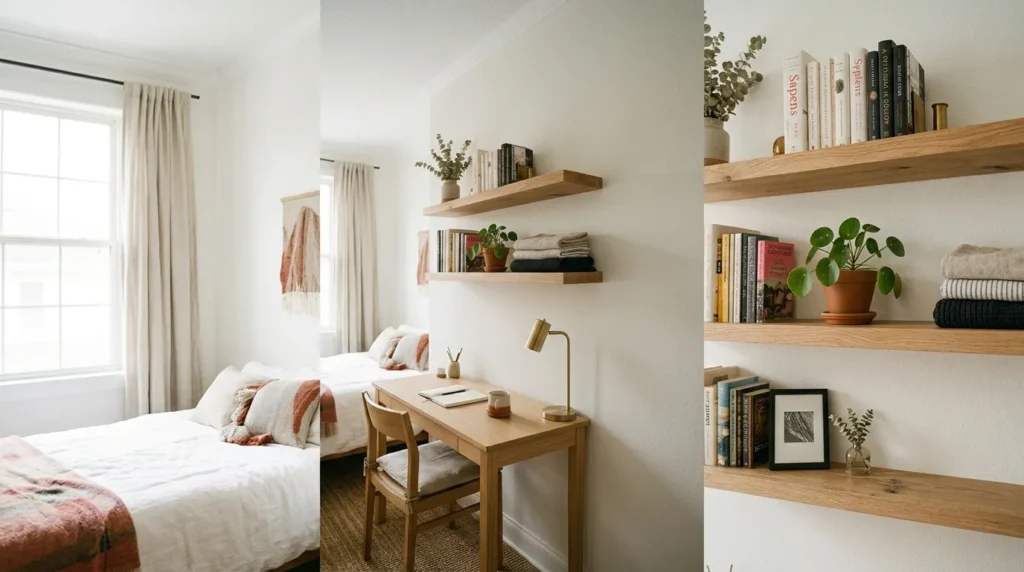
2. Vertical Wall Shelving
Quick Benefits
- Adds real storage without using any additional floor space
- Draws the eye upward, making the room feel taller
- Works well for both storage and display
- Highly customizable to fit any wall or nook
- A relatively simple, affordable installation
Why It Works One thing that works especially well in a small bedroom is going up instead of out. Vertical wall shelving adds meaningful storage capacity without eating into the room’s already-limited floor space, and as a bonus, it tends to make ceilings feel taller by drawing the eye upward. I’ve seen this idea transform bedrooms that felt maxed out on floor storage into rooms with genuine additional capacity, simply by using wall space that would otherwise sit empty.
How To Style It Install a few floating shelves above a desk, dresser, or headboard, sized and spaced to hold books, folded items, or small decorative objects. Keep the lowest shelf at a reachable height for frequently used items, and reserve higher shelves for less-accessed storage like extra linens or seasonal decor. Group items by height and function on each shelf rather than spreading similar objects across multiple shelves, which keeps the overall look organized rather than scattered.
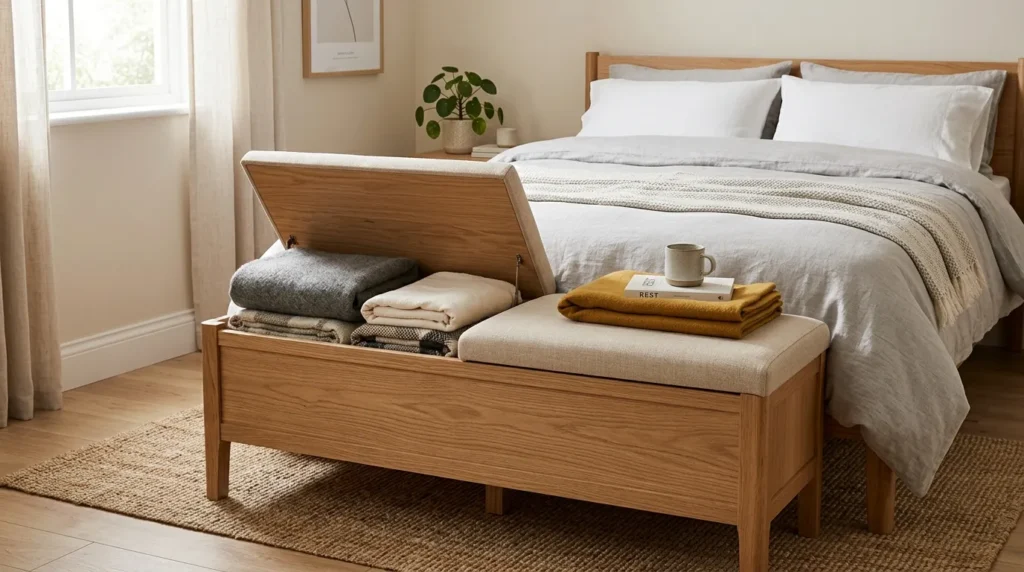
3. Multi-Functional Furniture
Quick Benefits
- Reduces the total number of pieces needed in the room
- Maximizes function within a limited footprint
- Often includes built-in storage as a secondary benefit
- Works well for guest rooms or shared bedrooms
- A smart long-term investment for small spaces
Why It Works A mistake many homeowners make in a small bedroom is buying furniture piece by piece without considering whether each item could be doing more than one job. A storage ottoman that doubles as a bench, a daybed with built-in drawers, or a desk that folds away when not in use all reduce the total furniture footprint while adding function rather than subtracting it. That’s why many professional organizers recommend multi-functional furniture as one of the highest-leverage investments for a small bedroom specifically.
How To Style It Look for a bed frame with built-in drawer storage underneath as a foundational multi-functional piece, which eliminates the need for a separate dresser in very tight rooms. A storage bench at the foot of the bed can serve as both seating and a place to store extra bedding. A wall-mounted or fold-down desk provides workspace without a permanent floor footprint, ideal for rooms that need to flex between sleeping and working functions.
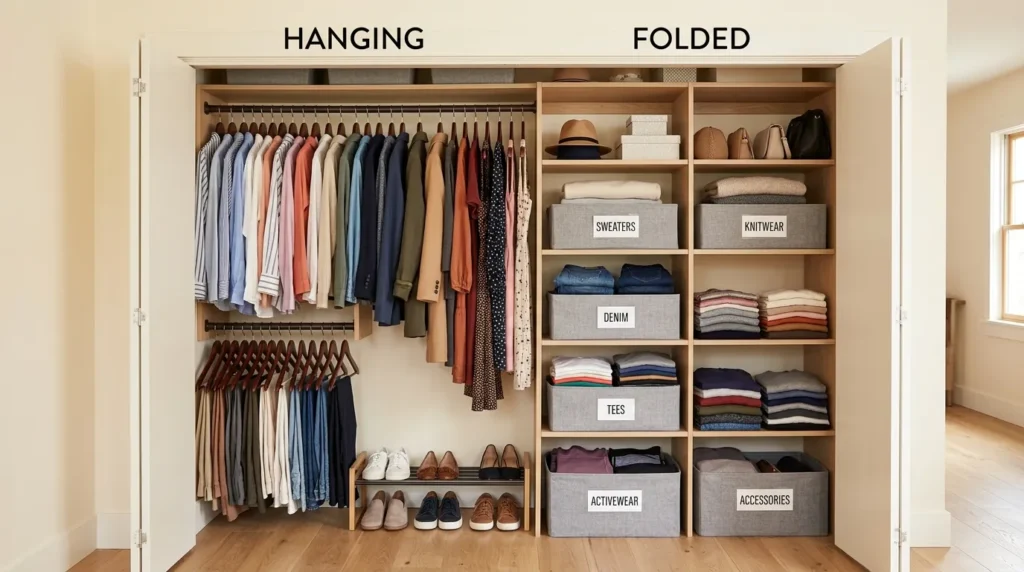
4. Closet Zone System
Quick Benefits
- Maximizes the single largest storage area most bedrooms have
- Makes daily dressing faster and less chaotic
- Reduces the need for additional dressers or storage furniture
- Keeps items organized and easy to find
- Works in closets of nearly any size
Why It Works In my experience, the closet is usually the single biggest opportunity for improved organization in a small bedroom, and it’s also the most commonly underutilized. A mistake many homeowners make is treating the closet as one undifferentiated space rather than dividing it into distinct zones — hanging clothes, folded items, shoes, accessories — the way a well-organized retail store or professional closet system would. This zoning approach alone often frees up enough space that an entire separate dresser becomes unnecessary.
How To Style It Divide your closet into clear zones: hanging clothes on one side, folded items on shelving or in bins on the other, and shoes along the floor or on a slim shoe rack. Use matching hangers to maximize hanging density and create a more visually organized look. Add stackable bins or a hanging shelf organizer for folded items that don’t fit neatly on existing shelving, and keep frequently worn items at eye level with less-used pieces stored higher or lower.
5. Floating Nightstands
Quick Benefits
- Frees up visual and physical floor space beside the bed
- Makes a small bedroom feel more open
- Simplifies cleaning underneath and around the bed
- Works well in narrow rooms with limited bedside clearance
- A relatively simple, affordable installation
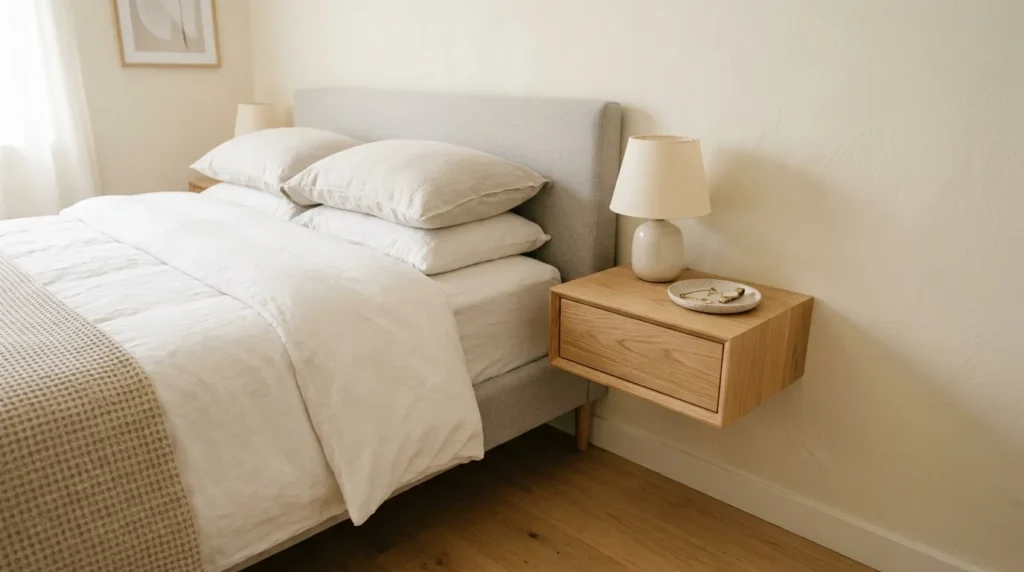
Why It Works I’ve noticed that floating nightstands make a disproportionately large visual difference in small bedrooms, given how modest the change actually is. By mounting a small shelf or drawer unit to the wall instead of using a traditional floor-standing nightstand, you free up visible floor space, which makes the entire room read as more open and less cluttered. One simple trick I always suggest for very narrow bedrooms specifically is a floating nightstand, since it allows for bedside storage even when floor clearance on either side of the bed is minimal.
How To Style It Choose a small floating shelf or a compact wall-mounted drawer unit, mounted at a height that’s comfortable to reach from bed, typically a few inches below mattress height. Keep styling minimal — a lamp, a small dish for glasses or jewelry, and perhaps one book — since the smaller surface area doesn’t accommodate much before feeling crowded. This works especially well paired with a wall-mounted reading light, which further reduces what needs to sit on the surface itself.
6. Labeled Drawer Dividers
Quick Benefits
- Prevents small items from becoming disorganized clutter
- Maximizes usable space within existing drawers
- Makes finding items significantly faster
- An inexpensive, high-impact organizational upgrade
- Works in dressers, nightstands, and closet drawers alike
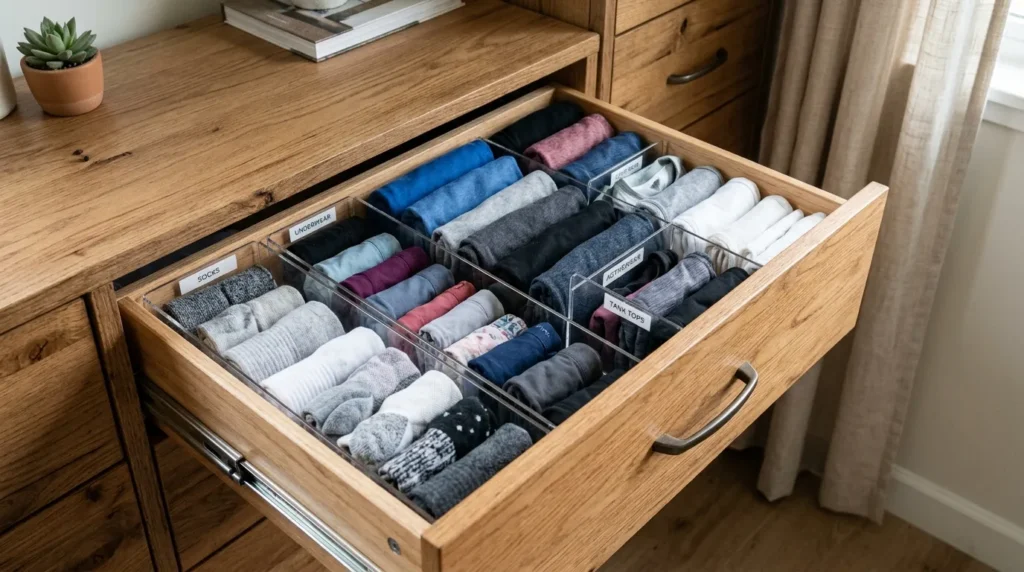
Why It Works A mistake many homeowners make is assuming a drawer is organized simply because the door or drawer front is closed. In my experience, drawers without dividers almost always become disorganized over time, since there’s nothing structurally preventing items from shifting and mixing together. Labeled dividers solve this at the source, keeping categories separated and making the drawer functionally larger, since every item has a defined spot rather than competing for the same open space.
How To Style It Use adjustable drawer dividers sized to fit your specific dresser or nightstand drawers, creating distinct sections for categories like socks, undergarments, or accessories. Fold clothing using a vertical, file-style method rather than stacking, which makes items easier to see and access without disturbing the rest of the drawer. Label sections, especially in shared or guest bedrooms, so the system stays intact even when someone unfamiliar with it is putting laundry away.
7. Corner Desk Nook
Quick Benefits
- Fits a functional workspace into an otherwise unused corner
- Ideal for small bedrooms serving double duty as an office
- Doesn’t require sacrificing significant floor space
- Can be closed off or minimized when not in use
- A smart solution for multi-purpose small rooms
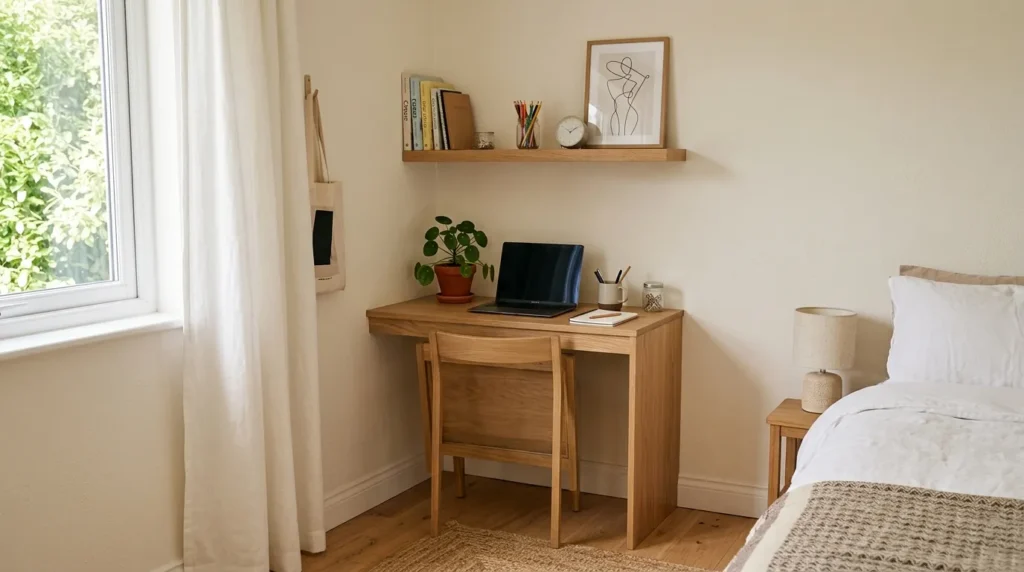
Why It Works That’s why many designers recommend a corner desk nook specifically for small bedrooms that need to double as a workspace, since corners are almost always underused in a standard room layout. I’ve seen this idea transform bedrooms that previously had no real work-from-home solution into rooms with a genuinely functional, dedicated desk area, all without displacing any of the room’s existing furniture. A small corner desk claims space that would otherwise sit empty.
How To Style It Choose a compact corner desk or a simple floating shelf desk sized to fit the available nook, paired with a slim chair that can tuck fully underneath when not in use. Add a small shelf or wall-mounted organizer above the desk for supplies, keeping the surface itself as clear as possible. If the desk needs to visually disappear when not in use, choose a finish that matches the surrounding walls or furniture so it blends rather than stands out.
8. Slim Storage Bench
Quick Benefits
- Adds both seating and storage in a compact footprint
- Works well at the foot of the bed or along a wall
- Useful for shoes, extra bedding, or seasonal items
- A practical landing spot for daily items like bags or shoes
- Available in slim profiles suited to tight spaces
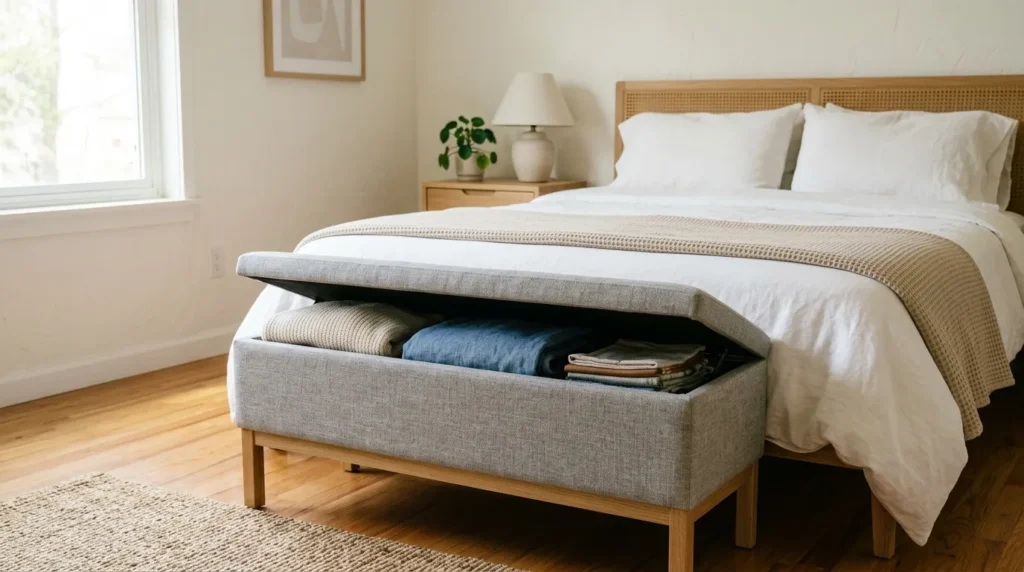
Why It Works A slim storage bench solves two space problems at once: it provides a functional landing spot for daily items like bags or shoes, and it adds hidden storage capacity, all within a narrow footprint that fits even tight bedroom layouts. In my experience, this piece earns its place quickly in a small bedroom, since it prevents the common habit of dropping bags, shoes, and clothing onto the floor or bed simply because there’s no other obvious spot for them.
How To Style It Choose a bench sized to fit at the foot of the bed or along an underused wall, with a hinged or lift-off lid for interior storage. Use the interior for extra bedding, off-season shoes, or accessories, and the exterior seat as a daily catch-all spot for bags or a robe. Keep the top styled with just one or two small items so it remains genuinely usable as seating rather than becoming another surface for clutter to accumulate.
9. Overhead Loft Storage
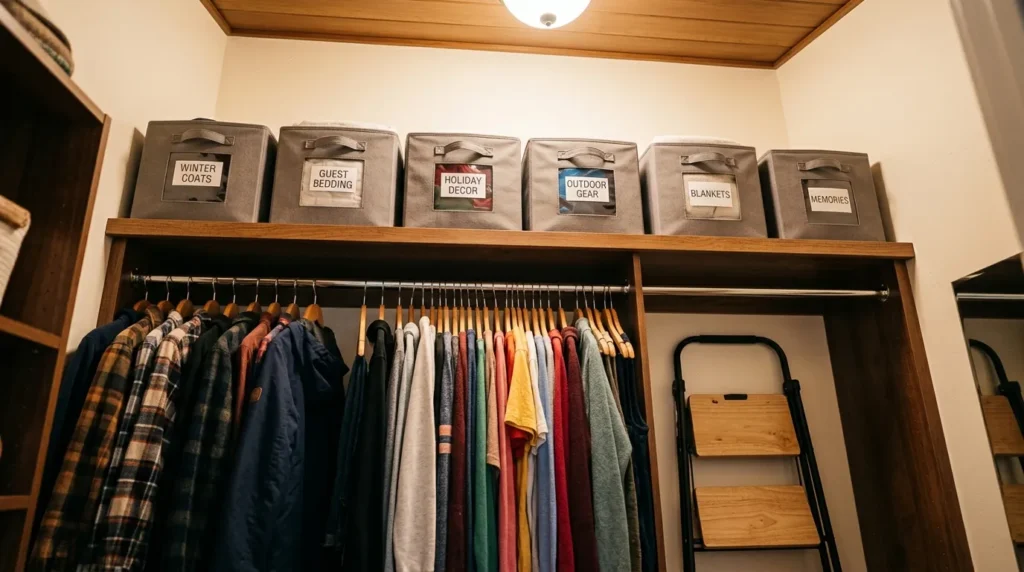
Quick Benefits
- Uses the often-empty space above eye level
- Ideal for infrequently accessed or seasonal items
- Doesn’t interfere with daily floor-level organization
- Works well in rooms with high ceilings or closets
- Maximizes storage without adding visual clutter below
Why It Works One simple trick I always suggest for small bedrooms with taller ceilings or closets is using the overhead space that typically sits completely empty. In my experience, this zone is ideal specifically for items you don’t need regular access to — out-of-season decor, extra luggage, or infrequently used bedding — since it requires a step stool to reach and therefore isn’t suited to daily-use items. I’ve noticed that homeowners often overlook this space entirely, leaving real storage capacity unused above their heads.
How To Style It Install a shelf above closet hanging rods, or add stackable bins on a high closet shelf, reserving this zone specifically for infrequently accessed items. Label bins clearly, since items stored overhead are harder to visually identify at a glance compared to eye-level storage. Keep frequently used items at lower, more accessible levels, and use the overhead zone purely as a supplement rather than primary storage for anything needed on a regular basis.
10. Minimalist Surface Styling
Quick Benefits
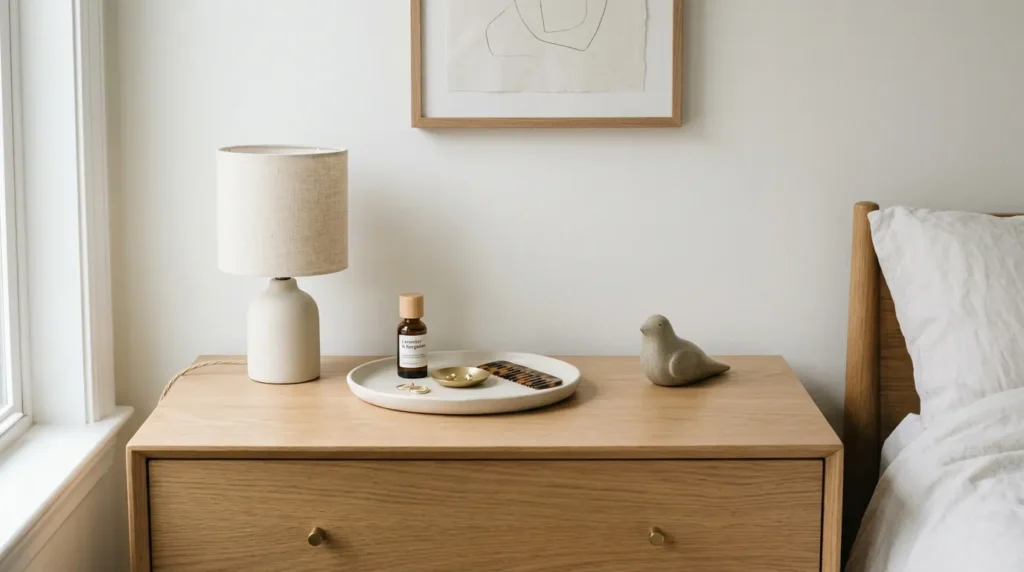
- Keeps visible surfaces calm and genuinely clutter-free
- Makes the whole room feel more organized at a glance
- Reinforces good habits around where items belong
- Requires no purchases, just editing what’s displayed
- The final, finishing step of a well-organized bedroom
Why It Works A mistake many homeowners make after organizing all their storage is failing to also edit what stays out in the open. In my experience, a bedroom can have excellent behind-the-scenes organization and still feel cluttered if every visible surface — the dresser top, the desk, the windowsill — is covered in miscellaneous items. That’s why many professional organizers finish a small bedroom project with a final surface edit, since visible clutter undermines the sense of order created by everything else on this list.
How To Style It Limit each visible surface to three to five intentional items: a lamp, a small tray for daily essentials, and one or two decorative objects. Anything without an obvious permanent home should be assigned a drawer, bin, or shelf rather than living on an open surface by default. Do a quick nightly reset, clearing surfaces of anything accumulated during the day, which keeps the organized look genuinely sustainable rather than something that only holds up right after a big cleanup.
Frequently Asked Questions
What’s the first step to organizing a small bedroom? Start with a full edit: remove everything from the room and only bring back what genuinely belongs there. Solving space constraints with better organization products before doing this edit is one of the most common mistakes, since it’s easy to organize items that shouldn’t be in the room at all.
How much storage can under-bed space realistically provide? Depending on your bed frame’s clearance height, under-bed bins can often replace an entire dresser drawer or more, making it one of the highest-capacity storage zones in a small bedroom. Measuring clearance before purchasing bins ensures a proper, space-maximizing fit.
Is multi-functional furniture worth the investment for a small bedroom? In most cases, yes — pieces that combine storage and seating, or sleeping and working, reduce the total furniture footprint needed in the room while still providing full function. This is especially valuable in bedrooms serving more than one purpose, like a guest room and office combined.
How do I keep an organized small bedroom from becoming cluttered again? A quick nightly reset of visible surfaces, combined with drawer dividers and clearly assigned zones for different item categories, makes an organized system far more sustainable over time. Most clutter accumulates when items don’t have an obvious designated spot to return to.
Should I use clear or opaque storage bins? Clear bins make it easier to quickly identify contents without opening each one, which is especially useful for under-bed or overhead storage. Opaque bins offer a cleaner, more streamlined look if the storage is visible within the room itself.
What’s the best way to organize a shared or small closet? Dividing the closet into clear zones — hanging clothes, folded items, shoes, and accessories — makes the space significantly more efficient than treating it as one undifferentiated area. This zoning approach often frees up enough space to eliminate the need for an additional dresser.
Do vertical shelves really make a small bedroom feel bigger? Yes, in most cases. Vertical storage draws the eye upward, which tends to make ceilings feel taller and the overall room feel more spacious, while also adding capacity without consuming any additional floor space.
Final Thoughts
Organizing a small bedroom like a home expert isn’t about cramming in more storage products — it’s about using every dimension of the room strategically: under the bed, up the walls, and within furniture that does more than one job. From a full initial edit to a nightly surface reset, each idea on this list builds toward a bedroom that stays genuinely organized, not just tidy for a day or two after a big cleanup.
Start with one or two ideas and gradually build a space that reflects your style and supports everyday comfort. The goal isn’t a picture-perfect bedroom for a single photo — it’s a room that stays functional, calm, and easy to maintain, week after week.
Related Articles
- How to Decorate a Bedroom Like a Luxury Retreat
- Small Living Room Layouts That Actually Work
- 10 DIY Coffee Tables with Hidden Storage Space
- How to Decorate a Living Room with Soft Neutral Decor
- Neutral Home Styling on a Budget