10 Garden Decor Ideas That Feel Peaceful and Relaxing
Some gardens feel like a chore waiting to happen, and others feel like the first place you want to sit down with your coffee in the morning. In my experience, the difference almost never comes down to size or budget — it comes down to how intentionally the space is decorated. A tiny courtyard styled with care can feel more peaceful than a sprawling backyard full of mismatched furniture and half-finished projects.
I’ve noticed that a lot of homeowners treat garden decor as an afterthought, something to add once the “real” landscaping is done. But decor is often what turns a functional outdoor space into one that actually feels restful. Plants and hardscaping create the bones of a garden, while decor — lighting, seating, texture, water, scent — is what gives it a soul, the details that make you want to linger instead of just walking through.
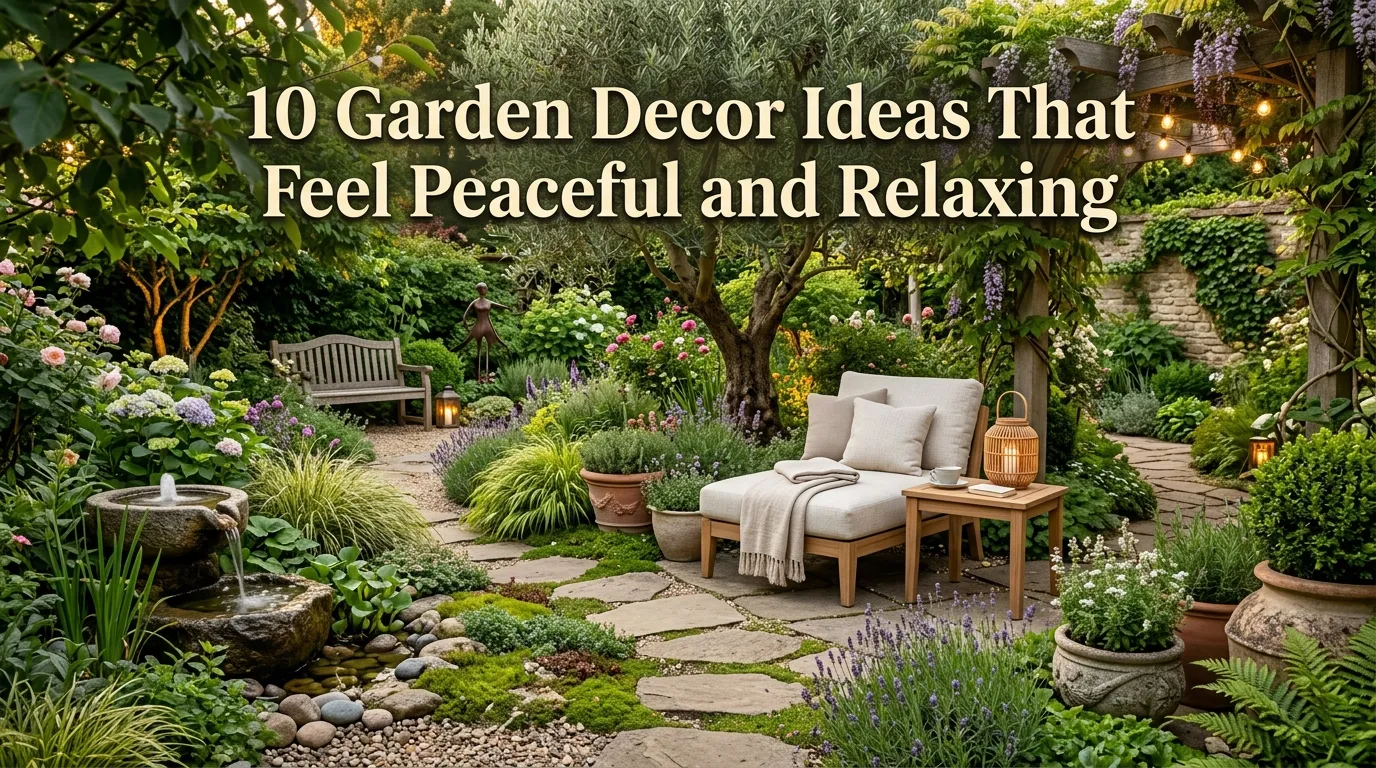
A mistake many homeowners make is assuming a peaceful garden requires a total landscaping overhaul. In reality, some of the most calming outdoor spaces are built from small, layered details: a soft path light, a weathered bench tucked under a tree, the gentle sound of moving water. These elements work together to slow you down, which is exactly what a relaxing garden is supposed to do.
This guide walks through ten garden decor ideas that consistently create a peaceful, relaxing atmosphere — practical approaches to seating, lighting, texture, and layout that work in a small courtyard, a suburban backyard, or anywhere in between. If you’re anything like me, you don’t want a garden that only looks good in photos. You want one that actually invites you outside to unwind. That’s exactly what these ideas are built around.
Table of Contents
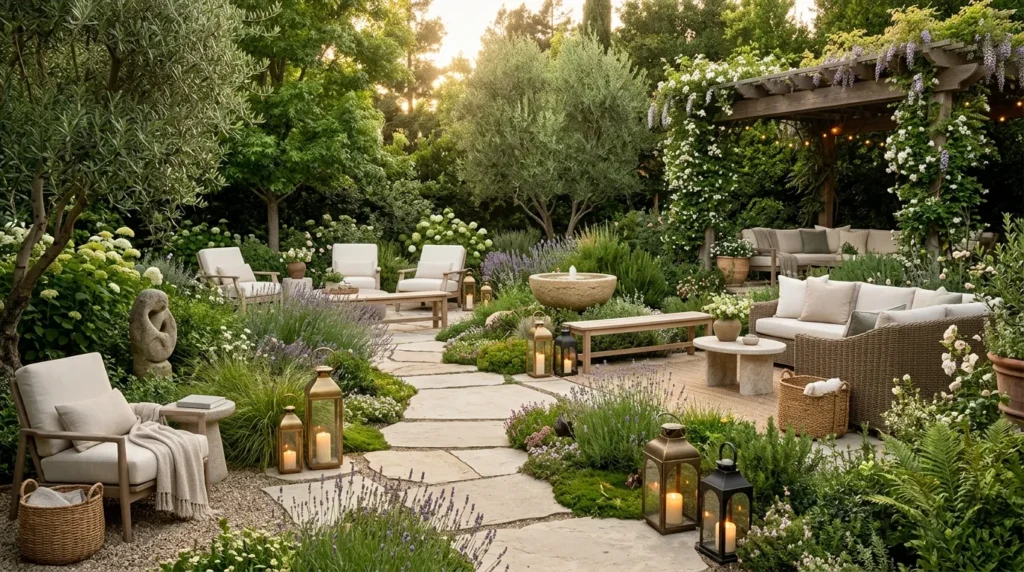
- Weathered Wood Seating — Natural, aged wood furniture brings an instantly calming, grounded feel.
- Soft Pathway Lighting — Gentle low lighting extends the garden’s peaceful mood into the evening.
- Trickling Water Feature — Moving water adds soothing sound and a natural focal point.
- Layered Potted Greenery — Grouped plants soften hard edges and add lush texture.
- Shaded Hammock Corner — A dedicated hammock spot invites slow, restful moments outdoors.
- Natural Stone Pathways — Organic stone paths add texture and a sense of calm movement.
- Fragrant Herb Borders — Scented plantings engage the senses and deepen the relaxing mood.
- Woven Outdoor Textiles — Soft textiles bring warmth and comfort to outdoor seating.
- Climbing Vine Accents — Vertical greenery softens walls and fences for a secluded feel.
- Candlelit Evening Nook — A cozy candlelit corner extends the garden’s calm into nighttime.
1. Weathered Wood Seating
Quick Benefits
- Adds a grounded, natural feel instantly
- Ages gracefully without looking neglected
- Blends seamlessly into garden surroundings
- Encourages slower, more restful moments
- Works in both small and large spaces
Why It Works
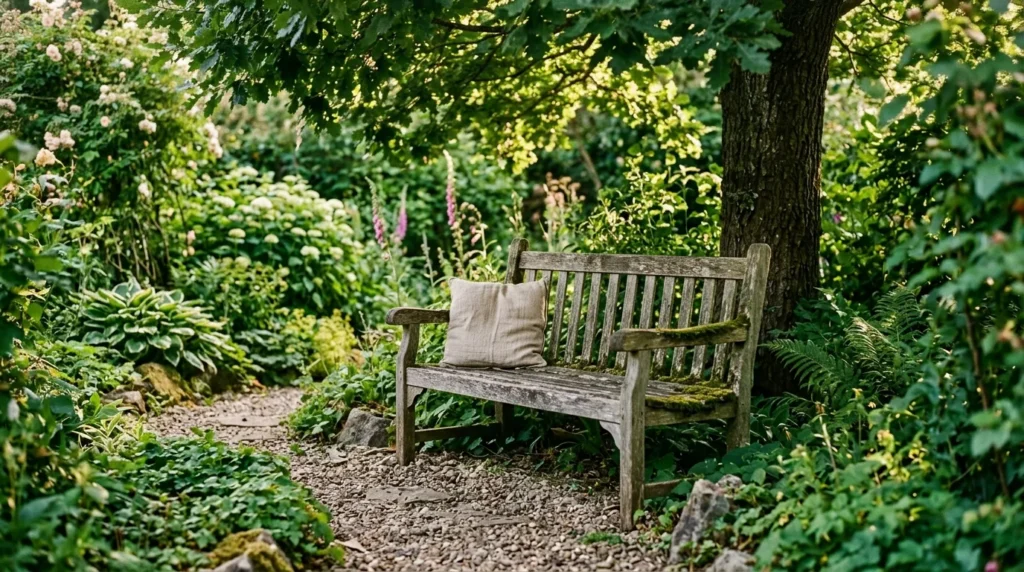
One simple trick I always suggest for a peaceful garden is choosing weathered wood seating over anything glossy or overly polished. Natural, slightly worn wood has a grounded quality that fits organically into a garden setting, unlike bright plastic or heavily lacquered furniture, which can feel jarring against soft greenery. There’s also something inherently calming about materials that show the passage of time gracefully.
How To Style It
Choose a simple wood bench or a pair of weathered Adirondack chairs in a natural or gently gray-washed finish, and place them beneath a tree or against a backdrop of greenery for a sense of enclosure. Avoid matching every piece perfectly — a slightly mismatched, collected-over-time look tends to feel more relaxed than a matched furniture set. Let the wood age naturally outdoors rather than refinishing it too often, since that soft patina is part of the peaceful appeal.
2. Soft Pathway Lighting
Quick Benefits
- Extends the garden’s peaceful mood into evening
- Creates a soft, glowing ambiance
- Improves safety without harsh brightness
- Highlights plants and pathways beautifully
- Easy and affordable to install
Why It Works
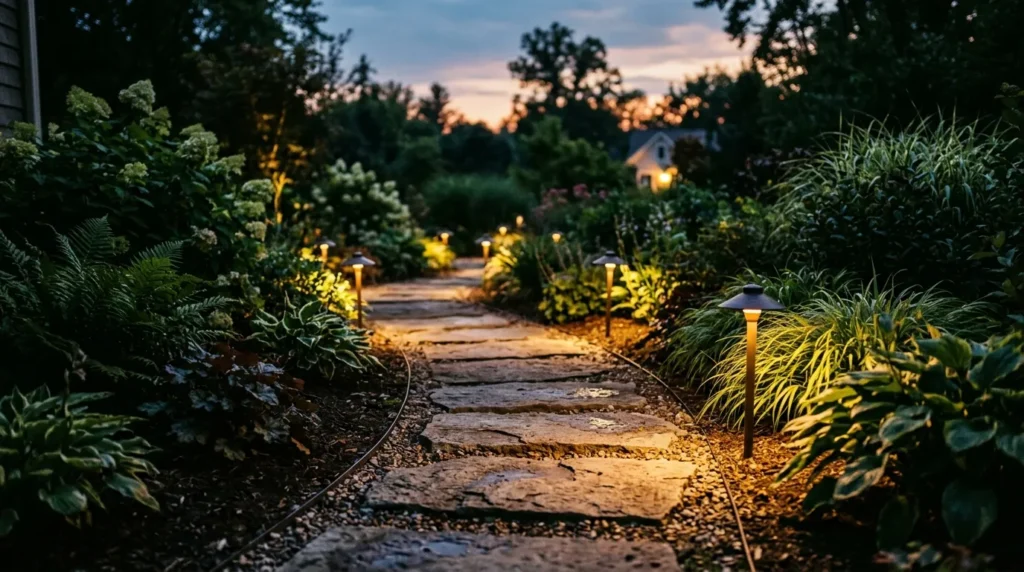
A mistake many homeowners make with garden lighting is going too bright, which can make an outdoor space feel more like a parking lot than a retreat. Soft, low pathway lighting does the opposite — it guides movement through the garden while casting a warm, gentle glow that enhances the peaceful mood rather than disrupting it. I’ve noticed that even a few well-placed lights can transform how a garden feels after sunset.
How To Style It
Install low, warm-toned solar or low-voltage path lights along walkways, spaced far enough apart that they cast soft pools of light rather than a continuous bright line. Add a few uplights beneath trees or large shrubs to highlight their silhouette after dark. Choose fixtures in a matte bronze or black finish that disappear into the landscape during the day, so the lighting feels like a natural extension of the garden rather than an obvious fixture.
3. Trickling Water Feature
Quick Benefits
- Adds soothing, continuous background sound
- Masks street noise and other distractions
- Creates a natural focal point
- Attracts birds and adds life to the garden
- Works in both small and large spaces
Why It Works
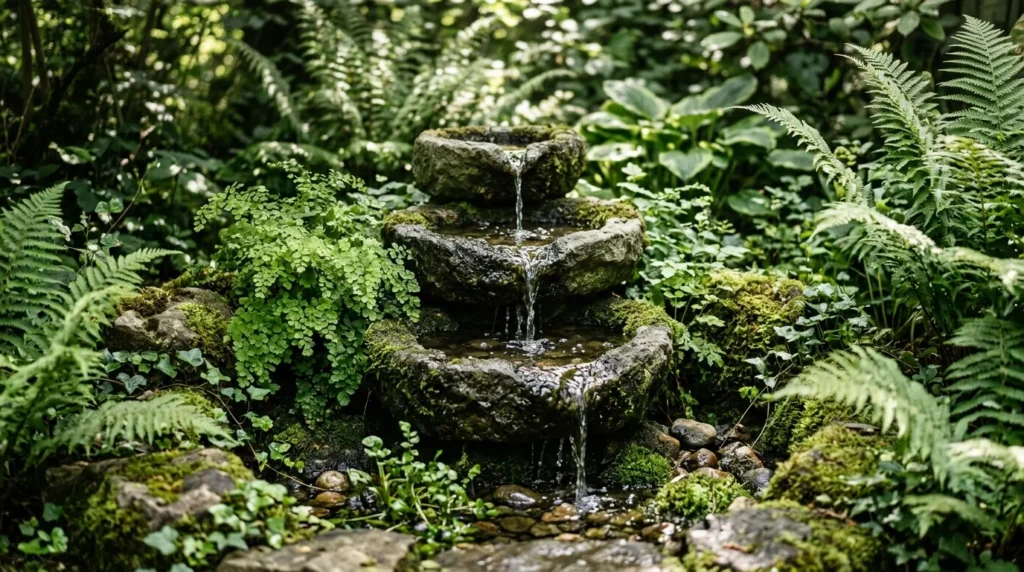
That’s why many designers recommend adding a water feature to any garden meant for relaxation. The gentle sound of trickling water has a genuinely calming effect, and it also helps mask traffic noise or neighboring sounds that can otherwise pull you out of the peaceful mood you’re trying to create. Even a small, tabletop-style fountain can noticeably shift the feel of a space.
How To Style It
For smaller gardens, a compact tiered fountain or a simple bubbling urn tucked into a planting bed adds sound without requiring much space. In larger yards, a small recirculating pond or stream feature can become the garden’s central focal point. Position the water feature somewhere you’ll actually sit near it often, like beside a seating area, rather than tucking it into a rarely visited corner where its calming sound goes unheard.
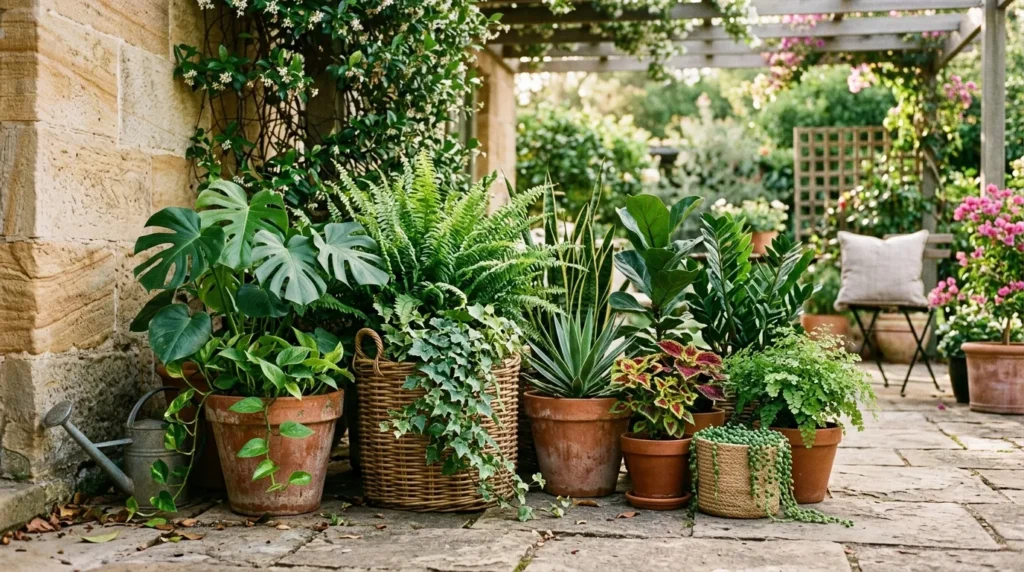
4. Layered Potted Greenery
Quick Benefits
- Softens hard edges like patios and walls
- Adds lush texture without permanent planting
- Easy to rearrange and update seasonally
- Works well in small or rented spaces
- Brings life to bare corners instantly
Why It Works
I’ve seen this idea transform garden spaces that felt sparse or unfinished into ones that feel lush and intentional: grouping potted plants in varying heights and textures. Layered greenery softens hard architectural lines, like patio edges or fence lines, and creates the sense of being tucked into nature rather than standing beside it. It’s also one of the most flexible decor choices, since pots can be moved and rearranged as the garden evolves.
How To Style It
Group three to five pots of varying heights together rather than spacing single pots evenly around the garden, which tends to look more intentional and lush. Mix textures — a spiky plant, a trailing vine, and a full leafy variety — for visual interest within each grouping. Use terracotta, aged stone, or woven basket planters rather than glossy plastic pots, which keeps the material palette consistent with the garden’s natural, peaceful feel.
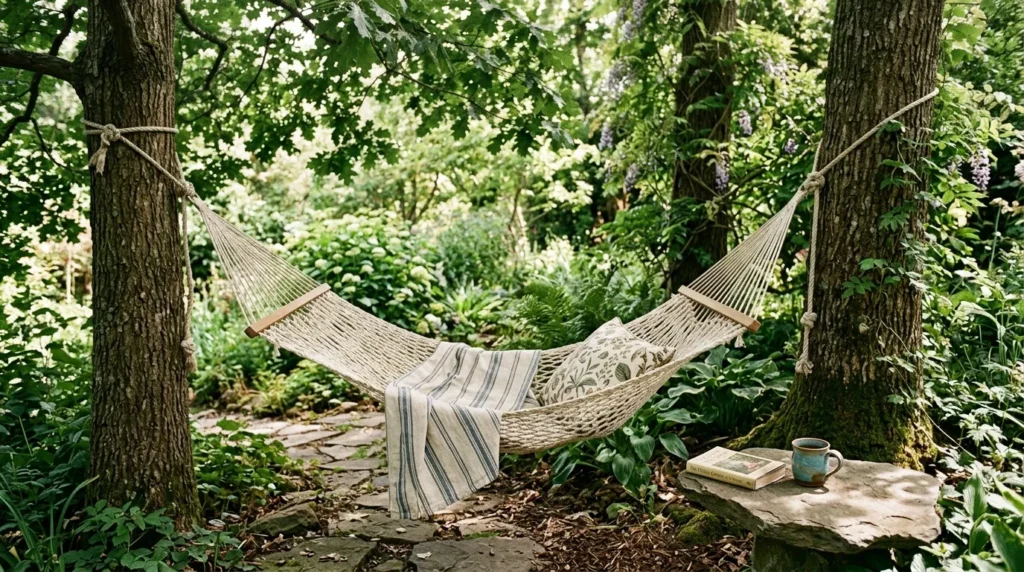
5. Shaded Hammock Corner
Quick Benefits
- Invites slow, restful moments outdoors
- Creates a clear relaxation focal point
- Works well under trees or a pergola
- Adds a playful, inviting element
- Encourages longer time spent in the garden
Why It Works
One thing that works especially well for encouraging actual relaxation, rather than just admiring the garden from a window, is a dedicated hammock corner. A hammock physically slows you down in a way that a chair often doesn’t — it’s hard to check your phone or rush through a task while lying in one. In my experience, gardens with a hammock or a similarly slow-paced seating spot get used far more often than those without.
How To Style It
Hang a woven or cotton rope hammock between two sturdy trees, or use a freestanding hammock stand if your garden doesn’t have the right spacing. Position it in a partially shaded spot so it stays comfortable through the warmer parts of the day. Add a small side table or a flat stone nearby for a drink or book, and consider a few string lights overhead for a soft glow if you plan to use the space in the evening.
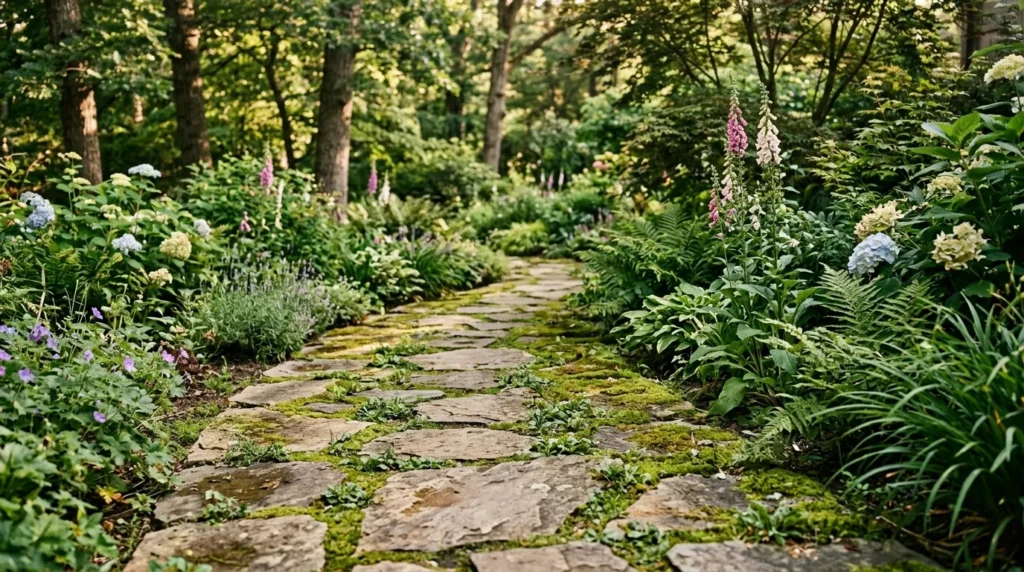
6. Natural Stone Pathways
Quick Benefits
- Adds organic texture underfoot
- Guides movement through the garden calmly
- Blends naturally with plantings
- Improves accessibility in wet weather
- Ages beautifully over time
Why It Works
A mistake many homeowners make is paving garden paths in stark, uniform concrete, which can feel more utilitarian than peaceful. Natural stone — flagstone, gravel, or stepping stones — has an organic irregularity that suits a relaxed garden far better. Walking a winding stone path also naturally slows your pace, which reinforces the unhurried mood a peaceful garden is meant to create.
How To Style It
Choose irregular flagstone or stepping stones set with gaps for low groundcover or moss to grow between them, softening the hard edges of the stone. Curve the path slightly rather than laying it in a straight line, which encourages a slower, more contemplative walk through the space. Edge the path with low plantings or gravel to blur the line between the path and surrounding garden beds.
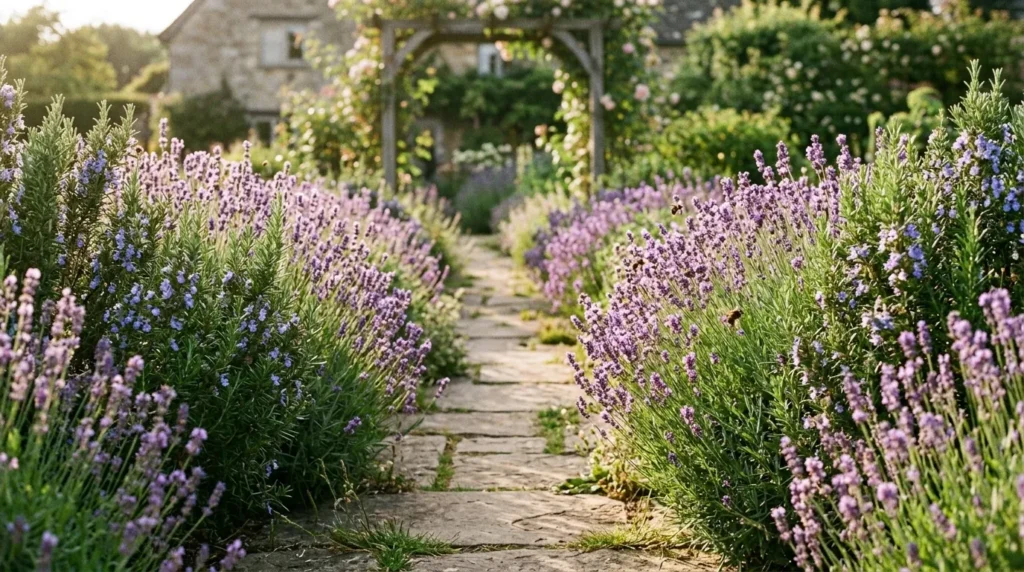
7. Fragrant Herb Borders
Quick Benefits
- Engages smell alongside sight for deeper calm
- Provides fresh herbs for cooking
- Attracts pollinators and adds life
- Works well in small border beds or pots
- Low maintenance once established
Why It Works
Peaceful gardens engage more than just the eyes, and fragrance is one of the most powerful, underused tools for relaxation. I’ve noticed that gardens with fragrant plantings like lavender, rosemary, or mint feel noticeably calmer to walk through than those without, simply because the scent triggers a relaxation response that visuals alone can’t achieve.
How To Style It
Plant a border of lavender or rosemary along a frequently used path, so the scent releases naturally as you brush past it. Group fragrant herbs like mint, thyme, and chamomile near seating areas where you’ll notice the scent while relaxing. Choose plants suited to your climate and light conditions so the border thrives with minimal upkeep, since a struggling, patchy planting undercuts the calming effect you’re going for.
8. Woven Outdoor Textiles
Quick Benefits
- Adds softness to hard outdoor furniture
- Brings warmth without sacrificing durability
- Easy to swap seasonally
- Elevates the comfort of any seating area
- Ties the garden’s color palette together
Why It Works
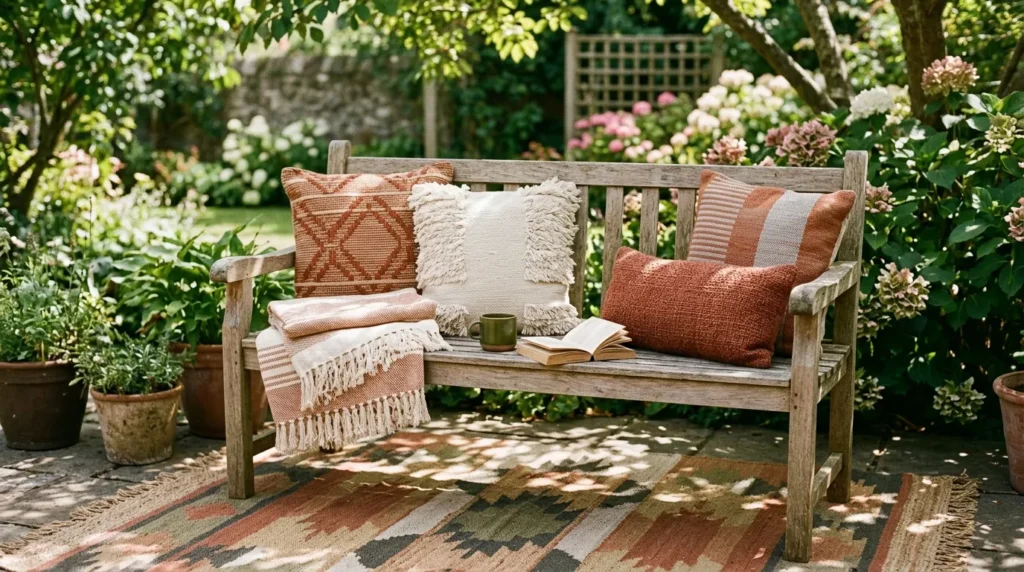
A mistake many homeowners make with outdoor furniture is stopping at the frame and cushions, without adding any additional textile layers. Woven outdoor textiles — throw pillows, blankets, and rugs designed for outdoor use — add the same warmth and coziness outside that they would indoors, which makes a real difference in how inviting a seating area feels.
How To Style It
Add two or three outdoor-rated throw pillows in natural, woven textures to any bench or seating group, choosing weather-resistant fabric so they can stay out through mild weather. Layer a flatweave outdoor rug beneath a seating area to visually ground the space, much like an indoor rug anchors a living room. Keep a few outdoor-friendly throws in a nearby storage bench for cooler evenings, so comfort is always within reach.
9. Climbing Vine Accents
Quick Benefits
- Softens fences, walls, and structures
- Adds a sense of privacy and seclusion
- Creates natural vertical greenery
- Requires minimal ground space
- Deepens over time for a lush, established feel
Why It Works
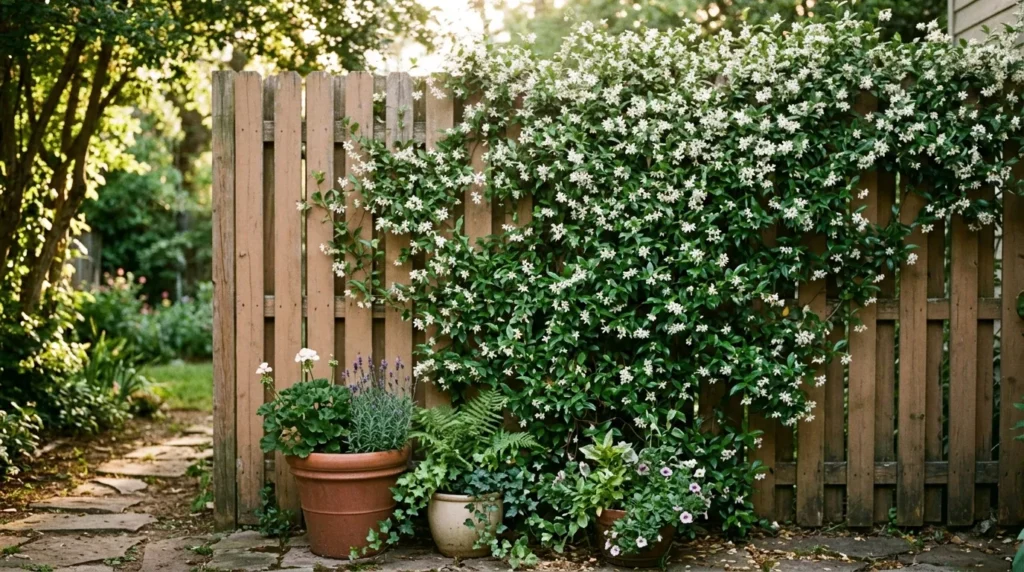
That’s why many designers recommend climbing vines for gardens that feel exposed or overly boxed in by fencing and walls. A bare fence can feel stark, but the same fence covered in climbing jasmine, clematis, or ivy becomes a soft, living backdrop instead. Vines also add a sense of privacy and seclusion, which contributes directly to how peaceful a garden feels, since enclosed spaces tend to feel safer and calmer than fully exposed ones.
How To Style It
Install a simple trellis or wire support along a fence or wall, and choose a climbing variety suited to your climate, such as jasmine for fragrance or clematis for color. Be patient — vines take a season or two to fill in fully, but the established, lush look is worth the wait. Combine climbing vines with a potted plant grouping at the base of the trellis for a fuller, more layered effect.
10. Candlelit Evening Nook
Quick Benefits
- Extends the garden’s calm into nighttime
- Creates a warm, intimate glow
- Encourages evening relaxation outdoors
- Inexpensive to set up and maintain
- Pairs beautifully with existing seating
Why It Works
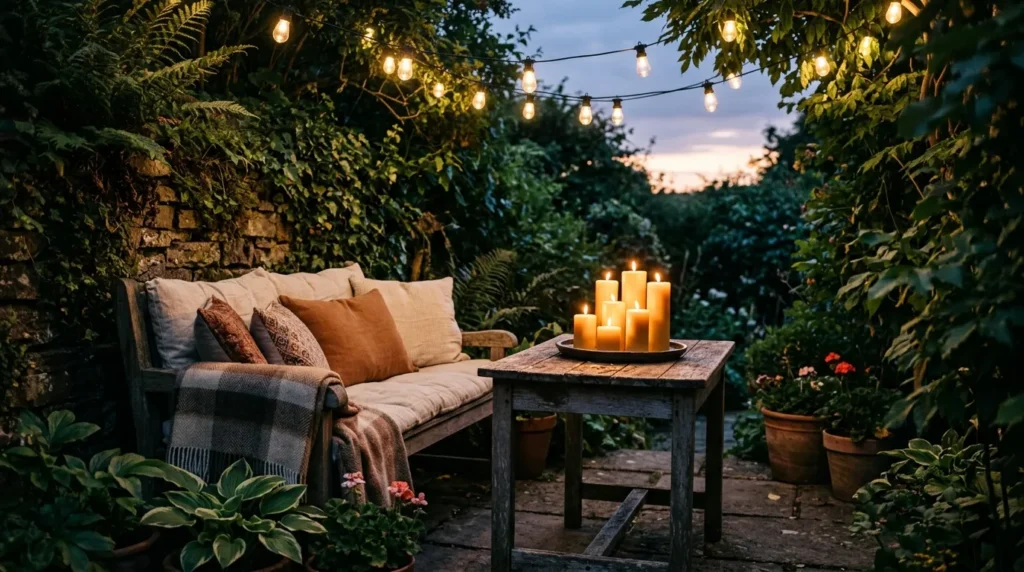
I’ve seen this idea transform how often people actually use their garden in the evening: a dedicated candlelit nook. Overhead lighting alone often feels too bright or too clinical for a relaxing evening outdoors, while candlelight brings a soft, flickering warmth that instantly shifts the mood. It’s a small addition that makes a noticeable difference in how peaceful a garden feels after the sun goes down.
How To Style It
Cluster a few pillar candles or lanterns of varying heights on a small side table near your main seating area, using citronella or outdoor-safe candles for practicality. Add a string of warm fairy lights overhead as a secondary light source for evenings when candles alone feel too dim. Keep the seating nearby soft and comfortable, with a cushion or throw close at hand, so the nook naturally invites you to stay a while longer.
Frequently Asked Questions
What makes a garden feel peaceful instead of just decorative?
Peaceful gardens engage more than sight — sound from moving water, scent from fragrant plants, texture from natural materials, and soft lighting all work together to create a calming atmosphere. A garden can look beautiful in photos and still feel unrelaxing if it only addresses the visual layer.
Do I need a lot of space to create a peaceful garden?
No. Many of the most calming garden details, like a small tabletop fountain, a cluster of fragrant herbs, or soft pathway lighting, work just as well in a small courtyard or balcony as they do in a large backyard. Peaceful design is more about intention than square footage.
What plants are best for a relaxing garden atmosphere?
Fragrant plants like lavender, rosemary, and jasmine are especially effective, along with soft, layered greenery that adds texture without feeling overly manicured. Ornamental grasses that move gently in the breeze also add a subtle, calming motion to the space.
How can I make my garden feel private and secluded?
Climbing vines on fences or trellises, layered potted greenery around seating areas, and strategically placed shrubs all help create a sense of enclosure. Privacy tends to make outdoor spaces feel noticeably calmer, since you’re less likely to feel exposed or observed.
What is the easiest way to add a peaceful element to my garden this weekend?
A small tabletop water feature, a few solar path lights, or a cluster of fragrant potted herbs near your seating area are all easy, low-cost additions that can be set up in an afternoon and make an immediate difference in the garden’s mood.
Should garden furniture match perfectly for a cohesive look?
Not necessarily. A slightly mixed, collected-over-time look with varying wood tones and textures often feels more relaxed and organic than a perfectly matched furniture set, which can feel more formal than peaceful.
How do I keep a peaceful garden low maintenance?
Choose climate-appropriate, low-water plants like lavender and rosemary, use durable weathered wood furniture that doesn’t require frequent refinishing, and opt for solar-powered pathway lighting to avoid ongoing electrical upkeep. A peaceful garden doesn’t have to be a high-maintenance one.
Final Thoughts
A peaceful garden isn’t built through a single big renovation — it’s built through layered, sensory details that invite you to slow down. Every idea in this list, from a trickling water feature to a candlelit evening nook, works because it engages more than just sight, drawing on sound, scent, and texture to create genuine calm. None of these ideas require tearing out your existing landscaping. Most start with a small addition, like a cluster of fragrant herbs near your favorite chair or a few soft path lights along a walkway you already use.
Start with one or two ideas and gradually build a garden that reflects your pace and supports real rest. Maybe that means finally hanging the hammock you’ve been meaning to put up, or adding a small fountain within earshot of your favorite bench. Small, consistent changes compound into an outdoor space that feels like a genuine retreat, not just a backdrop for photos.
Your garden doesn’t need to be elaborate to feel peaceful. It just needs a few details that invite you to stay a little longer.
Related Articles
- Modern Bedroom Ideas with Neutral Colors
- Small Living Room Layouts
- Cozy Bedroom Ideas
- DIY Accent Wall Ideas
- Neutral Home Styling Guide