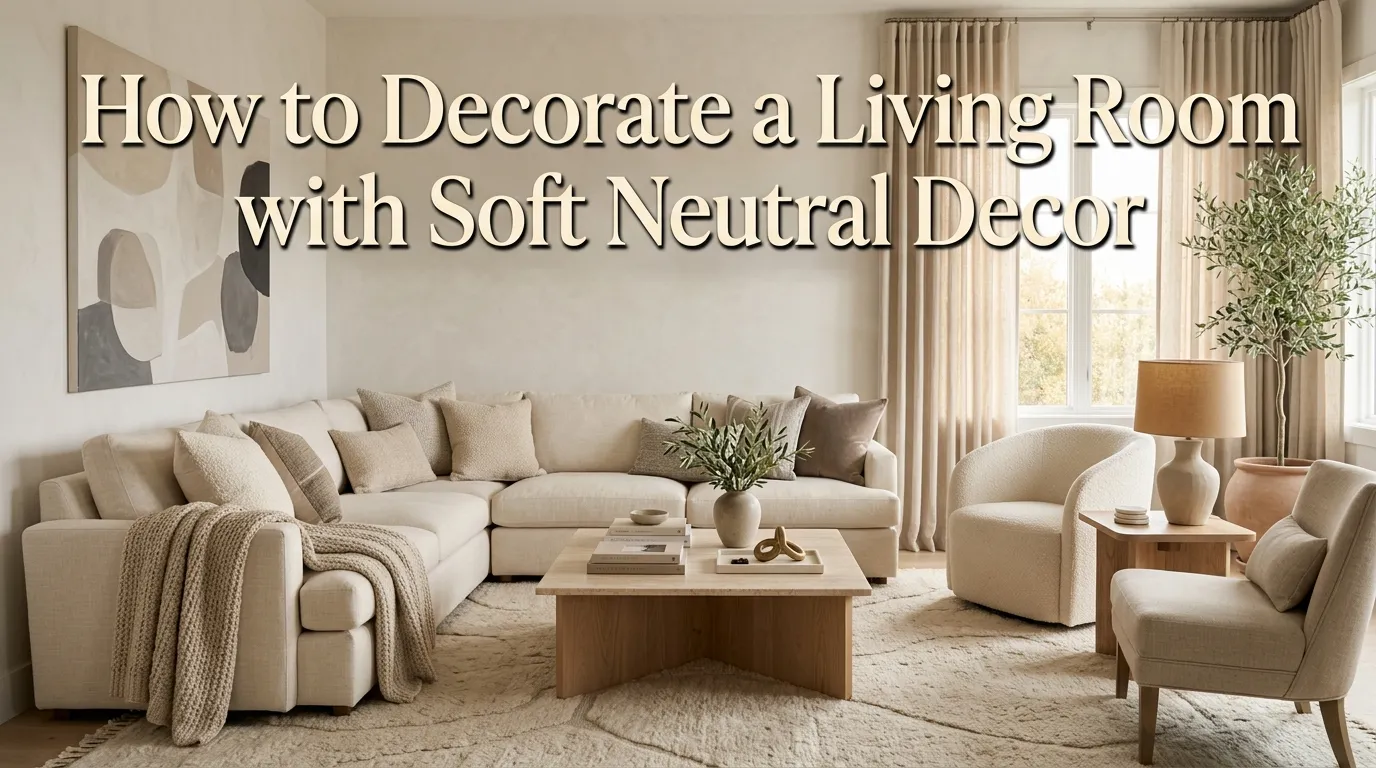
How to Decorate a Living Room with Soft Neutral Decor
There’s a particular kind of living room that feels like it exhales the moment you walk in. In my experience, that calm almost always comes from a soft neutral palette done well — not a flat, boring beige room, but a layered mix of warm whites, oatmeal, taupe, and soft greige that feels rich and considered rather than empty. A mistake many homeowners make is assuming “neutral” means safe or plain, and then either overcorrecting with a bold accent wall or under-committing with a room that feels unfinished and cold instead of calm.
I’ve noticed that the neutral living rooms getting saved and shared the most right now share a common thread: texture is doing almost all of the visual work that color would normally handle. Boucle, linen, wool, raw wood, woven baskets — these materials layered together in a tight tonal palette are what keep a neutral room from feeling flat. That’s the real secret behind this style. It’s not about finding the “right” shade of white; it’s about layering enough texture and warmth that color becomes almost beside the point.
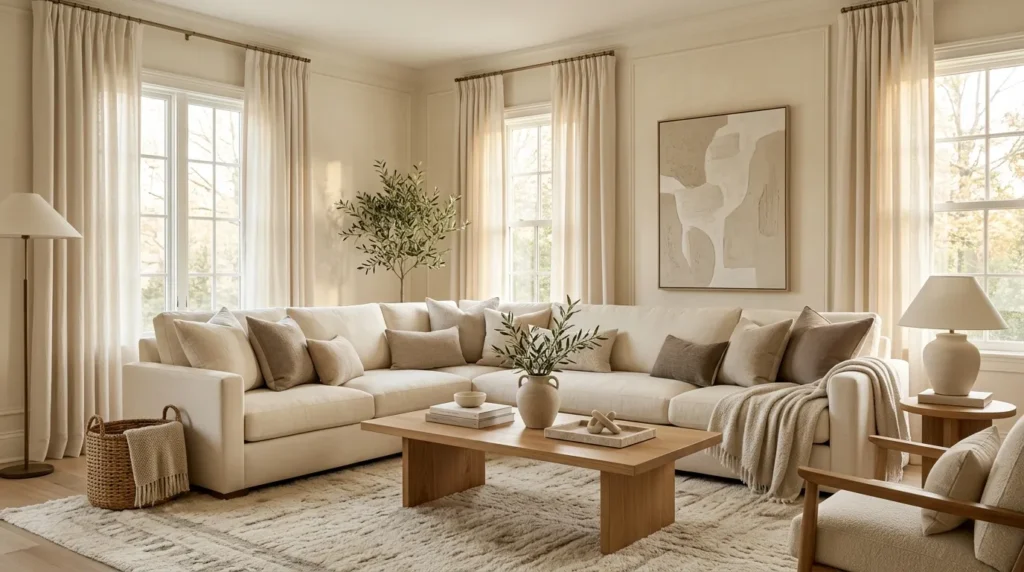
One thing that works especially well is choosing one dominant neutral tone for the largest elements in the room — walls, sofa, rug — and then varying the temperature and texture slightly through smaller pieces. That’s why many designers recommend building a soft neutral room in layers, starting with the biggest, most permanent pieces and working down to smaller styling details, rather than trying to nail the whole palette in one single shopping trip.
This guide walks through ten practical ways to bring soft neutral decor into your living room, from wall color and textiles to lighting and final styling touches. Each idea includes real guidance you can put to use whether you’re starting from scratch or reworking a room you already have. If you’re anything like me, you want a living room that feels calm to be in every single day, not just photogenic for a few weeks. That’s exactly what this guide is built to help you create.
Table of Contents
- Layered Neutral Textiles — The foundation of a rich, non-flat neutral room.
- Warm White Wall Paint — Choosing a white that feels inviting, not sterile.
- Natural Wood Accents — Grounding a soft palette with organic warmth.
- Tonal Sofa Styling — Making a neutral sofa feel intentional, not boring.
- Woven Texture Layers — Bringing organic material into every surface.
- Soft Ambient Lighting — Setting the mood with warmth instead of brightness.
- Plush Area Rug — Anchoring the room underfoot with softness.
- Curated Coffee Table Styling — Small details that finish the whole room.
- Sheer Window Treatments — Letting light filter in softly and evenly.
- Minimal Wall Art — Choosing a few pieces instead of filling every wall.
1. Layered Neutral Textiles
Quick Benefits
- The foundation that keeps a neutral room from feeling flat
- Adds richness and depth without introducing color
- Works with nearly any existing furniture or layout
- Easy to update seasonally without a full redesign
- Creates a cohesive, intentional feel throughout the room
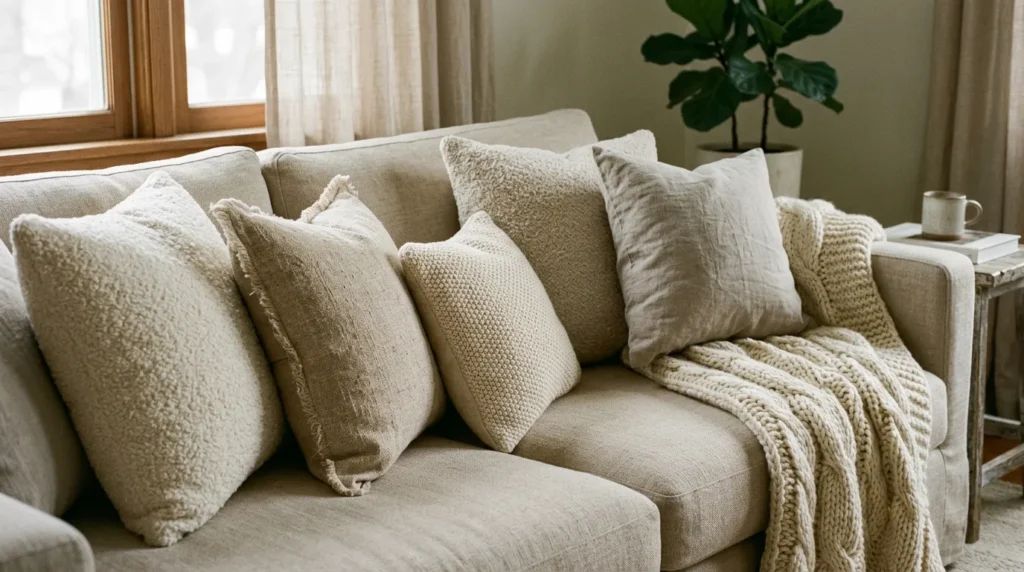
Why It Works In my experience, textiles are what separate a soft neutral living room that feels rich and layered from one that feels empty and unfinished. A single beige sofa with no additional texture reads as plain, but that same sofa layered with a boucle throw pillow, a linen blanket, and a wool pouf suddenly feels considered and warm. A mistake many homeowners make is treating neutral decor as a color choice alone, when it’s really a texture strategy first and a color palette second.
How To Style It Start with your largest textile pieces — the sofa upholstery and area rug — in a shared warm-neutral tone, then layer in variety through smaller pieces: a chunky knit throw, a linen or velvet pillow, a jute or wool pouf. Mix at least three distinct textures in every seating area to avoid flatness. Keep the color family tight (oatmeal, warm white, soft taupe) even as the textures vary widely, which is what keeps the layered look feeling cohesive rather than chaotic.
2. Warm White Wall Paint
Quick Benefits
- Sets a calming, inviting backdrop for the whole room
- Prevents a neutral palette from feeling cold or clinical
- Reflects light beautifully throughout the day
- Works as a flexible base for changing decor over time
- One of the most affordable full-room updates available
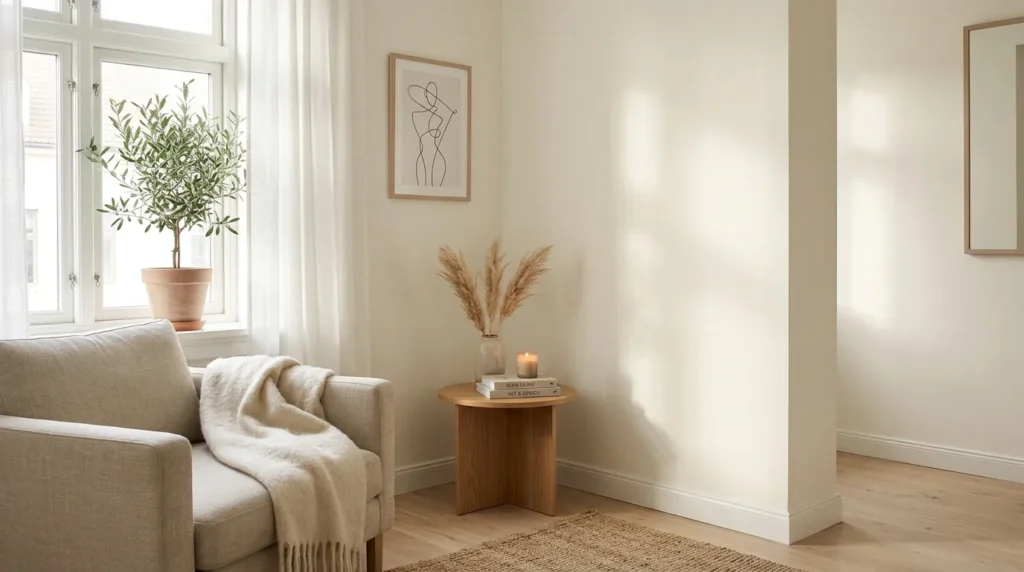
Why It Works A mistake many homeowners make when going neutral is choosing a stark, cool-toned white for the walls, which can push an otherwise warm room toward feeling sterile rather than calm. In my experience, a warm white with subtle cream or beige undertones does a huge amount of quiet work to keep a neutral living room feeling inviting rather than empty. That’s why many designers recommend testing paint swatches directly on the wall in your room’s actual lighting before committing, since undertones shift dramatically between natural and artificial light.
How To Style It Choose a warm white or soft greige with visible cream undertones, and paint large sample swatches on at least two different walls to see how the color shifts throughout the day. Keep trim a shade lighter than the walls in the same warm-white family, rather than a stark bright white, which can create unwanted contrast. If you already love your current wall color, a warm white ceiling and trim can still soften the overall feel without a full repaint.
3. Natural Wood Accents
Quick Benefits
- Grounds a soft palette with organic warmth
- Adds texture without introducing new color
- Balances out an all-fabric, all-neutral room
- Works across coffee tables, shelving, and furniture legs
- Ages beautifully without feeling trend-dependent
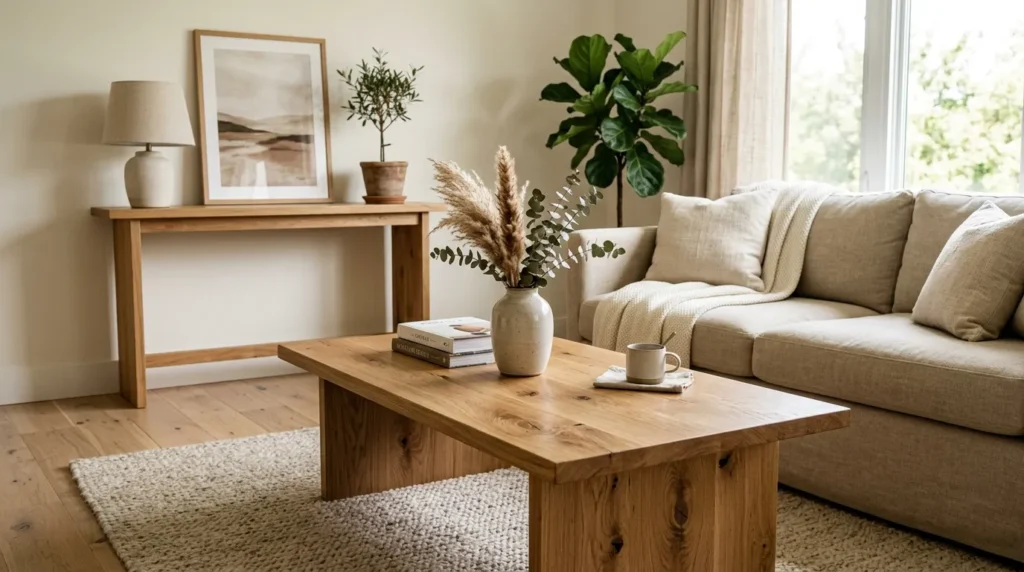
Why It Works A living room built entirely around soft neutral textiles can occasionally feel a little flat without a grounding, organic element, and natural wood is one of the most effective ways to introduce that warmth. I’ve seen this idea transform rooms that felt like an unbroken sea of beige into spaces with genuine depth and structure, simply by adding a wood coffee table, wood-framed art, or a set of wood shelving. In my experience, this is one of the most important — and most often skipped — steps in getting a truly successful neutral room.
How To Style It A wood coffee table, console, or side table in a warm tone like white oak or walnut introduces organic material without disrupting the palette. Wood furniture legs — on a chair or media console — add the same grounding effect in a smaller dose. Keep wood tones limited to two, ideally connected by an undertone (warm to warm, or a deliberate light-to-dark contrast), so the room still feels cohesive rather than mismatched.
4. Tonal Sofa Styling
Quick Benefits
- Makes a neutral sofa feel intentional rather than default
- Creates depth through pillow and throw layering
- Easy to refresh seasonally with small textile swaps
- Works with nearly any sofa shape or fabric
- The visual centerpiece of most living rooms
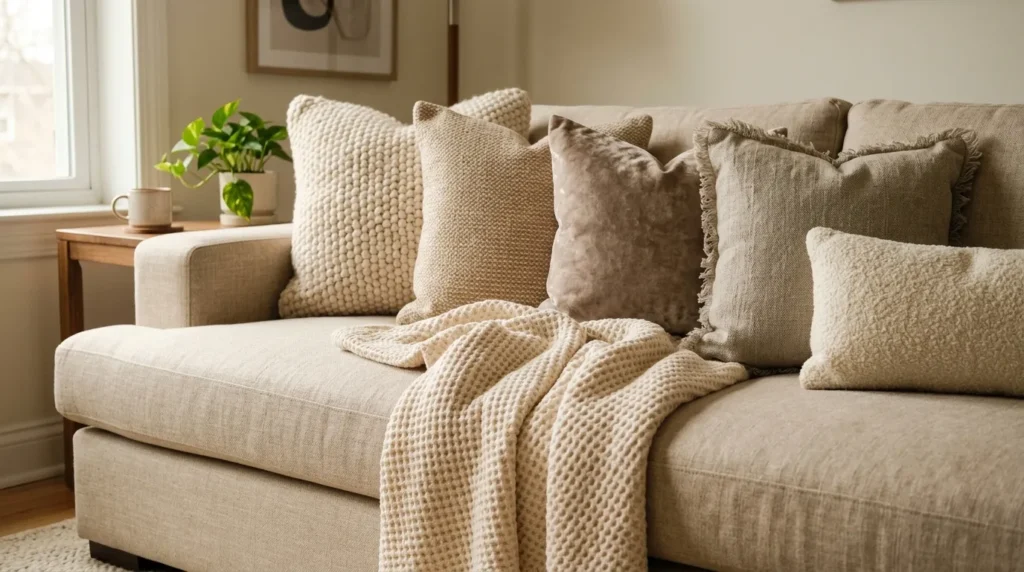
Why It Works A mistake many homeowners make is choosing a neutral sofa and then leaving it completely bare, assuming the fabric alone will carry the design. In my experience, a sofa styled with a tonal but varied mix of pillows and a throw reads as far more intentional and finished than the same sofa left plain. This is where the layered-texture principle really shows up in practice — the sofa is usually the largest single surface in the room, which makes it the most important place to get texture and tone right.
How To Style It Style a two- or three-seat sofa with four to six pillows in varied sizes and textures — a mix of linen, boucle, and a subtle woven pattern — all within the same warm-neutral color family. Add a chunky knit or waffle-weave throw draped over one arm or folded at the back. Avoid pure white or stark contrast pieces, which can visually interrupt the soft, blended look this style depends on.
5. Woven Texture Layers
Quick Benefits
- Introduces organic material and texture throughout the room
- Adds visual interest without adding new color
- Works well on lighting, storage, and small accents
- Inexpensive to incorporate through accessories
- Reinforces the calm, natural feel of soft neutral decor
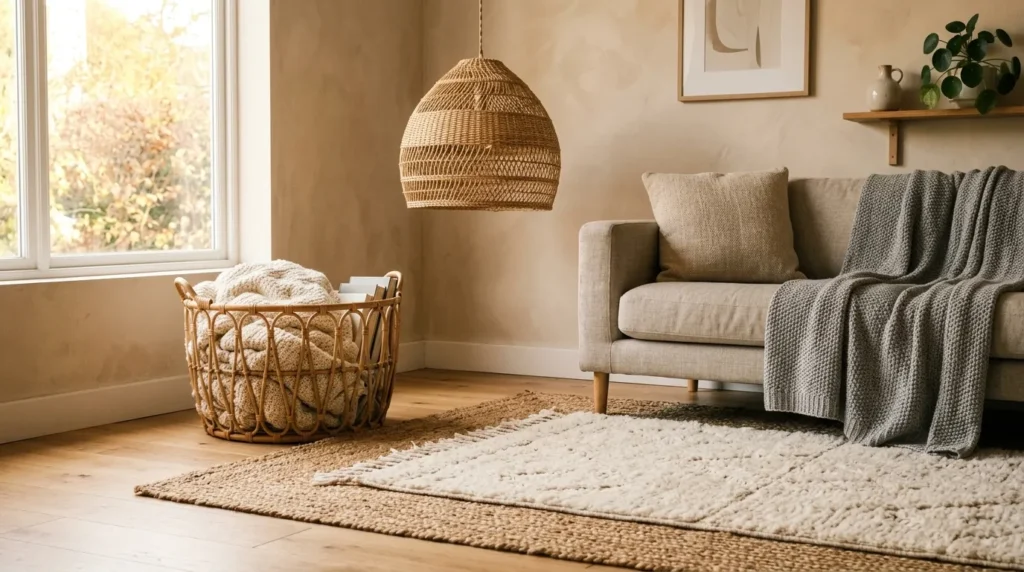
Why It Works Woven natural materials — rattan, seagrass, jute — bring texture and organic softness that a purely upholstered, painted room can lack on its own. I’ve noticed that this is one of the fastest ways to make a neutral living room feel more collected and layered, because texture does a lot of the same visual work that color usually handles in bolder design styles. One simple trick I always suggest is adding at least one woven element to every major surface in the room — a basket on the floor, a woven pendant overhead, a rattan tray on the coffee table.
How To Style It A woven storage basket beside the sofa, a jute or sisal rug layered under a smaller wool rug, and a rattan pendant light are all easy entry points. Keep woven materials in their natural, undyed tones so they read as organic rather than themed. Limit yourself to three or four woven elements throughout the room, spaced out across different surfaces, so the effect feels intentional rather than like a single overwhelming trend.
6. Soft Ambient Lighting
Quick Benefits
- Sets a calming mood rather than a bright, clinical one
- Complements a neutral palette better than harsh overhead light
- Easy and affordable to implement with lamps and bulb swaps
- Extends the room’s usability into the evening
- Enhances the texture and depth built into the rest of the room
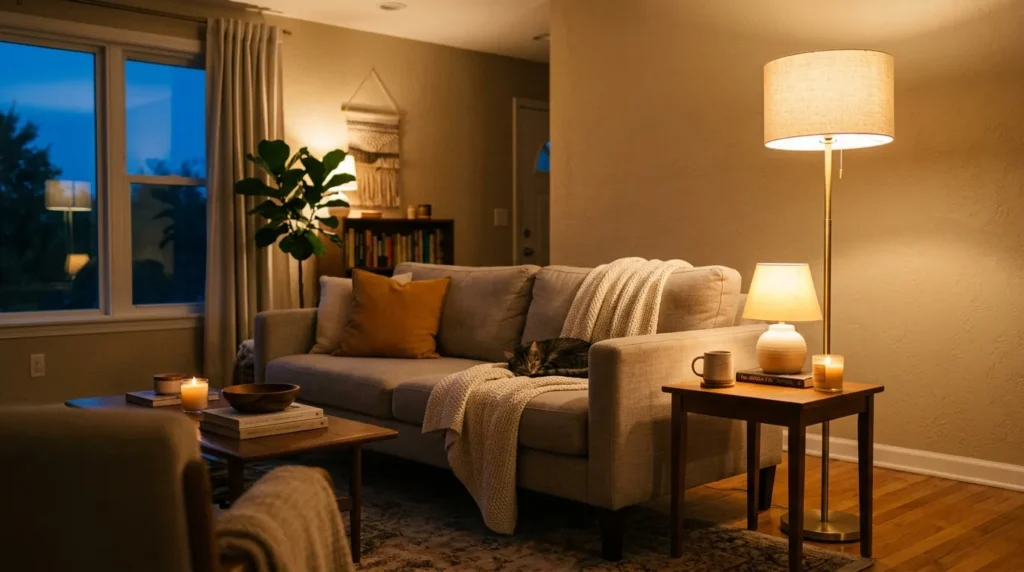
Why It Works A mistake many homeowners make is relying entirely on one bright overhead fixture, which flattens out all the careful texture and layering built into a soft neutral room. In my experience, warm, layered lighting — a floor lamp in one corner, a table lamp on a console, dimmed overhead lighting — does more to enhance a neutral palette than almost any other single change, because it casts soft shadows that actually highlight texture rather than washing it out.
How To Style It Add at least two secondary light sources beyond the main overhead fixture — a floor lamp near a reading chair and a table lamp on a console or side table both work well. Choose warm-toned bulbs (2700K–3000K) throughout, and install a dimmer on the main overhead light if possible. In the evening, rely primarily on the lamps rather than the overhead fixture, which creates the soft, layered glow that defines this style.
7. Plush Area Rug
Quick Benefits
- Anchors the seating area with softness underfoot
- Adds texture and warmth to hard flooring
- Ties together furniture pieces visually
- Available at every price point and pile height
- A foundational piece for a cohesive neutral room
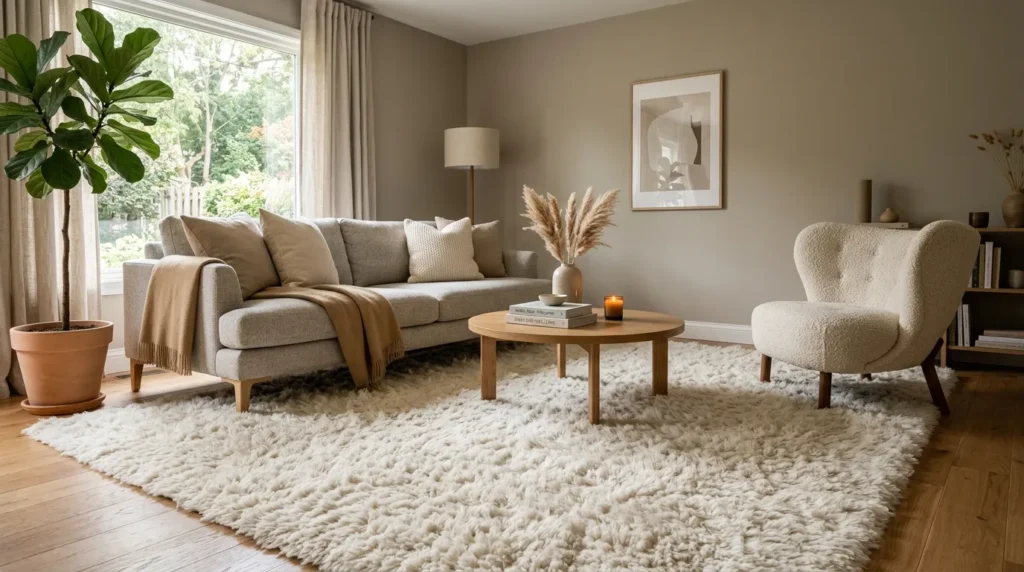
Why It Works A plush area rug does essential grounding work in a soft neutral living room, both visually and literally underfoot. I’ve seen this idea transform rooms that otherwise felt scattered, since a well-sized rug visually unifies the sofa, chairs, and coffee table into one cohesive seating area rather than a loose collection of furniture. In my experience, this is one of those details that people don’t fully appreciate until they compare a room with and without one — the difference in how “finished” the space feels is significant.
How To Style It Choose a rug large enough that at least the front legs of all major seating pieces rest on it, which visually anchors the furniture arrangement. A high-pile wool or shag rug adds the most plush, tactile feel, while a flatweave or lower-pile option works better in higher-traffic households. Stick to a tonal, subtly textured rug rather than a bold pattern to keep the calm, layered look intact.
8. Curated Coffee Table Styling
Quick Benefits
- Finishes the room with small, intentional details
- Turns a functional surface into part of the overall design
- Costs very little beyond a few considered objects
- Easy to refresh seasonally
- Reinforces the calm, uncluttered feel of the whole room
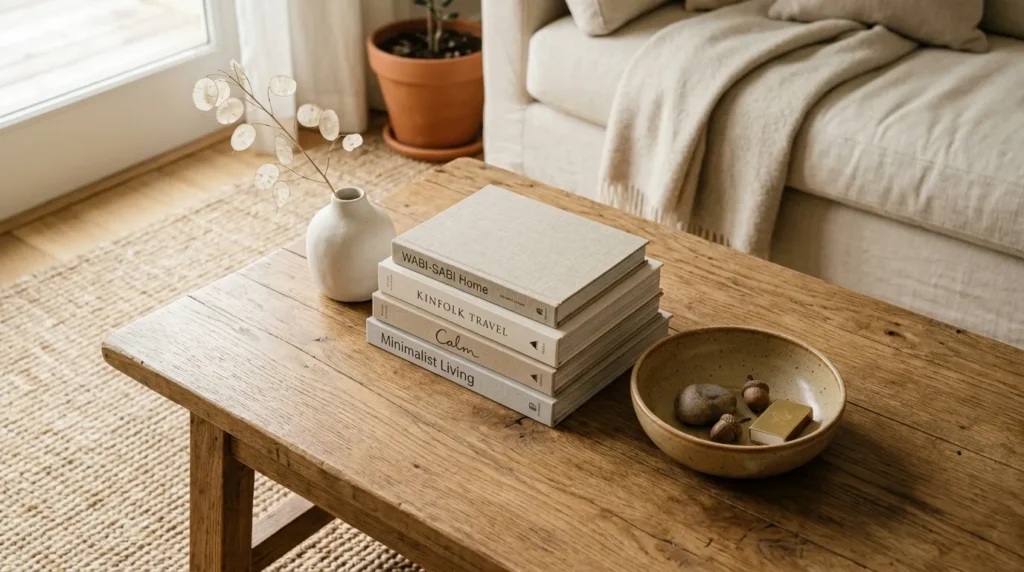
Why It Works One thing that works especially well in a soft neutral living room is treating the coffee table as a small styling opportunity rather than just a functional surface. A mistake many homeowners make is either leaving it completely bare or piling it with remotes, coasters, and clutter. In my experience, a few well-chosen objects — a stack of books, a low ceramic bowl, a small vase — does more to finish the room’s overall look than almost any other detail, precisely because it sits at the visual center of most seating arrangements.
How To Style It Style with an odd number of items — typically three — varying in height and shape: a stack of two or three linen-covered or neutral-spined books, a low ceramic or wood bowl, and a small vase with a single dried stem or branch. Use a tray to contain the grouping and keep it looking organized rather than scattered. Leave at least half the table surface clear for actual use, since an overstyled coffee table quickly starts to feel impractical.
9. Sheer Window Treatments
Quick Benefits
- Softens natural light throughout the day
- Adds gentle texture and movement to the room
- Maintains privacy without blocking light completely
- Complements a soft neutral palette better than heavy drapery
- An affordable, easy-to-install finishing touch
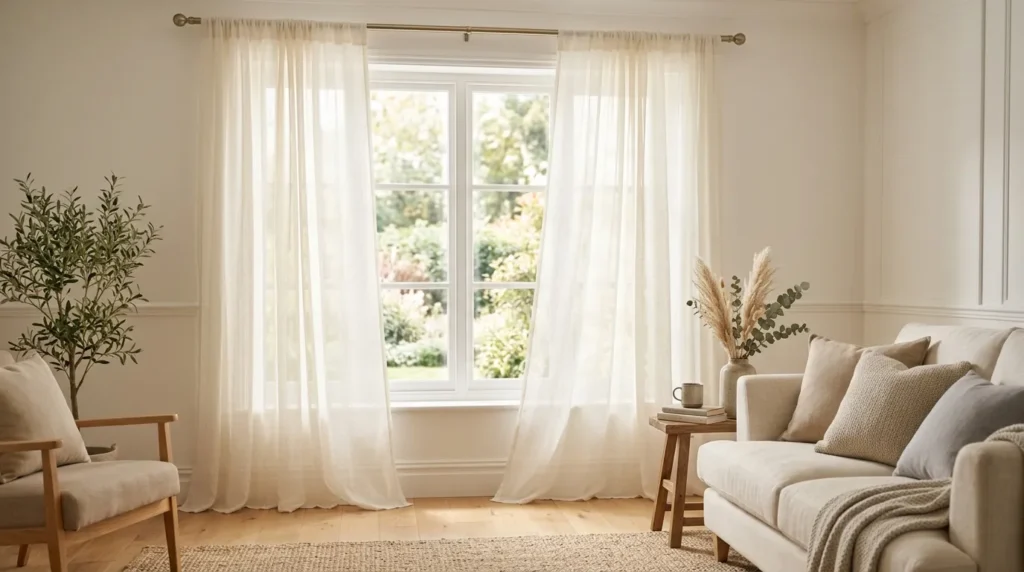
Why It Works That’s why many designers recommend sheer curtains specifically for soft neutral living rooms — they filter and soften incoming daylight rather than blocking it, which keeps the room feeling bright and airy throughout the day. I’ve noticed that heavier, opaque drapery can sometimes feel visually heavy in an otherwise light, layered neutral room, while a sheer panel adds just enough softness and gentle movement without weighing the space down.
How To Style It Choose a lightweight linen or cotton-blend sheer in a warm white or ivory tone, hung from a simple rod mounted slightly above and wider than the window frame. Let the panels rest just at or slightly above the floor for a clean, finished look. If more privacy or light control is needed in the evening, layer a soft neutral blackout curtain behind the sheer panel, which can be drawn separately as needed.
10. Minimal Wall Art
Quick Benefits
- Keeps the room feeling calm rather than visually busy
- Highlights a few meaningful pieces instead of filling every wall
- Reinforces the restrained, intentional feel of the whole design
- Easy to update or rotate seasonally
- Adds personality without disrupting the neutral palette
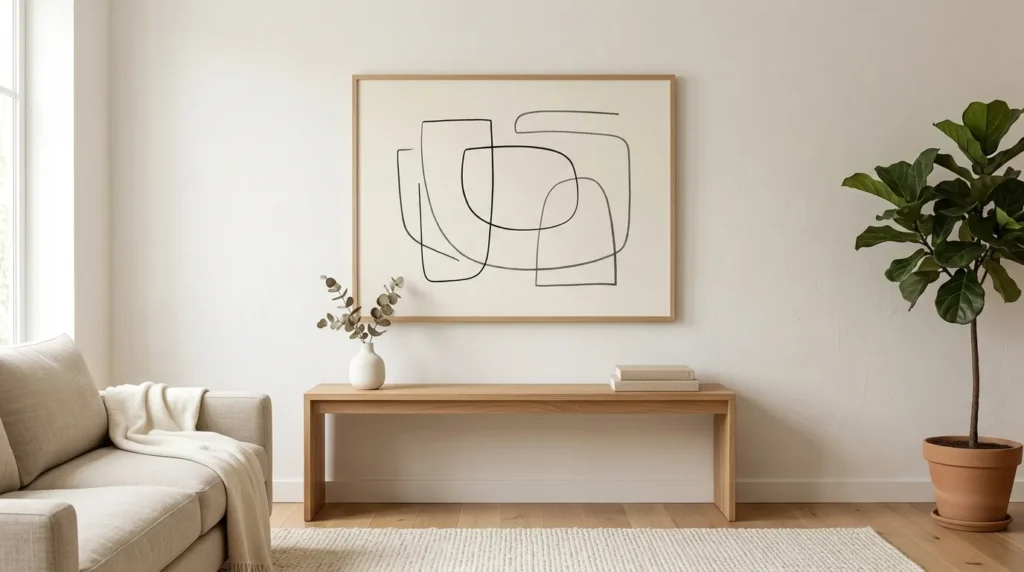
Why It Works A mistake many homeowners make in a neutral room is either leaving walls completely bare or overcompensating with a large, busy gallery wall that introduces visual noise the rest of the room was designed to avoid. In my experience, one or two well-chosen, larger-scale pieces of art do far more for a soft neutral living room than a dozen small frames scattered across a wall. This restraint is part of what gives soft neutral rooms their calm, considered feel — every element, including the art, earns its place.
How To Style It Choose one or two larger pieces of art in tonal, muted colors — abstract linework, soft landscape photography, or textured fiber art all work well — rather than a full gallery wall. Hang art at eye level, roughly with the center of the piece around fifty-seven to sixty inches from the floor, above the sofa or a console table. Leave the surrounding wall space intentionally open rather than filling it with additional smaller pieces.
Frequently Asked Questions
How do I keep a neutral living room from feeling boring? Layering texture — through pillows, throws, rugs, and woven accessories — is the key to avoiding a flat, boring neutral room. Varying material and texture while keeping the color palette tight is what creates richness without relying on bold color.
What’s the best wall color for a soft neutral living room? A warm white or soft greige with visible cream undertones tends to work best, since it keeps the room feeling inviting rather than cold or clinical. Testing samples in your room’s actual lighting before committing is always worth the extra step.
How many different neutral tones should I use in one room? Two to three closely related tones usually work best — for example, warm white walls, an oatmeal sofa, and a soft taupe rug. Using too many slightly different neutrals can start to look mismatched rather than intentionally layered.
Can a soft neutral living room work with dark flooring? Yes — dark flooring can actually provide helpful grounding and contrast for a light, neutral palette above it. Just be sure to include enough lighter textiles and natural wood tones to keep the overall room feeling balanced rather than top-heavy.
Is it necessary to add color at all in a neutral room? No, though a small amount of muted color — through a single throw pillow, a piece of art, or fresh greenery — can add subtle interest without disrupting the calm palette. It’s entirely optional and comes down to personal preference.
What kind of lighting works best for this style? Warm-toned bulbs and layered lighting sources — a mix of table lamps, floor lamps, and dimmed overhead lighting — work best. Avoid relying solely on bright, cool-toned overhead lighting, which can flatten the texture this style depends on.
How do I add personality to a neutral living room without disrupting the palette? Personal touches like meaningful art, a few sentimental objects, or a favorite textured throw can be layered in without introducing bold color, as long as they stay within the room’s warm-neutral tonal range. Restraint in quantity is what keeps the room feeling curated rather than cluttered.
Final Thoughts
A soft neutral living room isn’t about playing it safe — it’s about layering warmth, texture, and light with real intention. From tonal textiles and natural wood to soft ambient lighting and a few carefully chosen finishing touches, each idea on this list works together to create a room that feels genuinely calming to spend time in.
Start with one or two ideas and gradually build a space that reflects your style and supports everyday comfort. The goal isn’t a flat, forgettable neutral room — it’s one that feels rich, restful, and unmistakably yours.
Related Articles
- 10 Modern Living Room Ideas with Natural Wood Finishes
- How to Decorate a Bedroom Like a Luxury Retreat
- Neutral Home Styling on a Budget
- Small Living Room Layouts That Actually Work
- 10 Bathroom Decor Ideas That Add Everyday Luxury