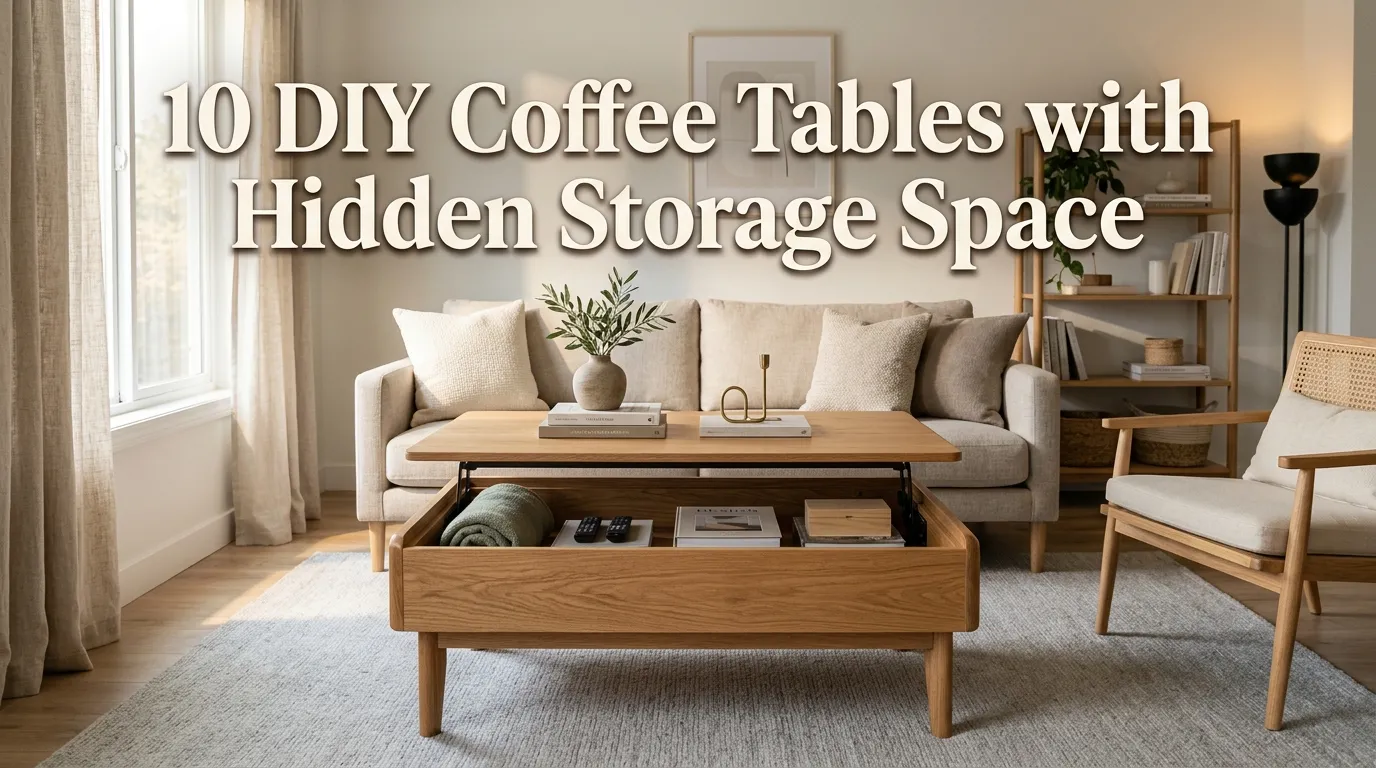
10 DIY Coffee Tables with Hidden Storage Space
There’s a specific kind of living room clutter that never quite has a home — remotes, chargers, coasters, the blanket nobody wants to fold, a stack of mail that migrated from the kitchen counter. In my experience, a coffee table with hidden storage solves more of that daily clutter than almost any other single piece of furniture in the room. A mistake many homeowners make is buying a coffee table purely for looks and then layering on separate baskets, trays, and organizers to manage everything it doesn’t hold — when the table itself could have been doing that work from the start.
I’ve noticed that the DIY coffee tables getting saved and built the most right now aren’t complicated furniture-making projects. They’re smart, achievable builds — a lift-top mechanism, a hinged lid, a few well-placed drawers — that add real function without requiring advanced woodworking skills. That’s the real appeal of building your own storage coffee table: you can design the storage exactly around what your family actually needs to hide, whether that’s a laptop and remotes or board games and extra throw blankets.
One thing that works especially well is choosing a storage mechanism that matches your skill level before worrying about the finish or style. That’s why many DIYers recommend starting with a simple hinged-lid or removable-top design before attempting drawers or a lift-top mechanism, which involve more precise measuring and hardware installation. Once you’re comfortable with the basics, the more involved builds become a lot more approachable.
This guide walks through ten practical DIY coffee table ideas with built-in hidden storage, from beginner-friendly builds to slightly more advanced projects. Each idea includes real building guidance, material notes, and styling tips, so you know what you’re getting into before you start. If you’re anything like me, you want a project you can realistically finish in a weekend or two, not just admire in a photo. That’s exactly what you’ll find below.
Table of Contents
- Lift-Top Storage Table — A hinged tabletop that doubles as a laptop desk.
- Drawer Base Coffee Table — Built-in drawers for the most everyday-used items.
- Hinged Trunk Coffee Table — Repurposing or building a trunk-style storage base.
- Storage Ottoman Combo — Soft seating and hidden storage in one piece.
- Sliding Panel Table — A clever sliding top that reveals a storage cavity.
- Basket Shelf Coffee Table — An open lower shelf styled with woven baskets.
- Cabinet Door Table — Enclosed storage behind simple hinged doors.
- Hollow Crate Coffee Table — Building a table from stacked or joined wood crates.
- Rolling Storage Cart Table — A mobile, multi-tiered storage-forward design.
- Nesting Table Storage Set — Multiple small tables that tuck away and store separately.
1. Lift-Top Storage Table
Quick Benefits
- Doubles as a laptop or dining surface when lifted
- Hides clutter completely beneath a flat, clean tabletop
- A popular, functional design for small living spaces
- Works well for remote work or eating in front of the TV
- A moderate DIY project with a big functional payoff
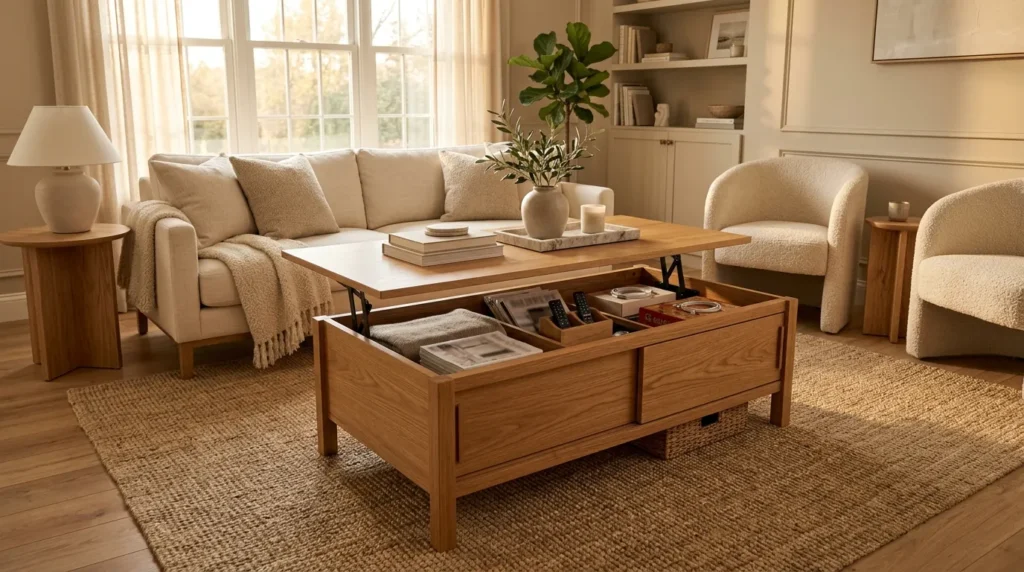
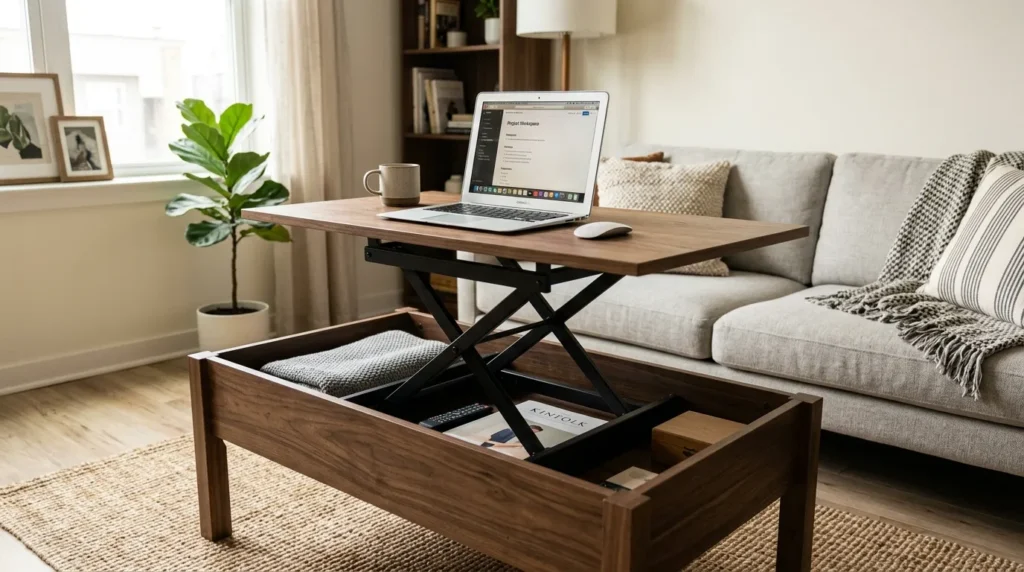
Why It Works In my experience, a lift-top coffee table is one of the most genuinely useful DIY furniture builds you can take on, because it solves two problems at once: hidden storage and a raised, usable surface for laptops, meals, or games. A mistake many homeowners make is assuming a lift-top mechanism is too advanced for a first furniture project, but modern hardware kits have made this far more approachable than it used to be, with pre-made hinges designed specifically for this purpose.
How To Style It Build a simple rectangular table base using plywood or solid wood, then install a lift-top hardware kit (widely available online and at hardware stores) to attach the tabletop with a hinge-and-support mechanism that holds it level when raised. Use the storage cavity beneath for a stack of magazines, remotes, or a laptop and charger, keeping the interior loosely organized with a small tray or divider. Finish with a wood stain or paint that matches your existing furniture, and add a few books and a small tray on top when the table is in its lowered position.
2. Drawer Base Coffee Table
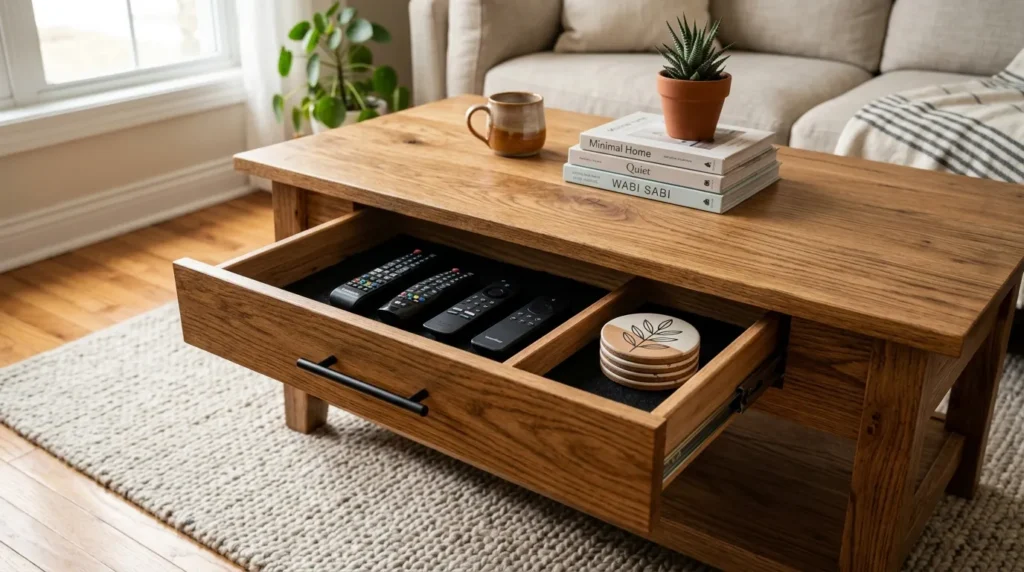
Quick Benefits
- Keeps everyday items like remotes and coasters within easy reach
- A traditional, dependable storage method
- Works well in both modern and classic living room styles
- Can be scaled with one, two, or several drawers
- A satisfying intermediate-level woodworking project
Why It Works Drawers remain one of the most functional storage solutions because they keep items visible and easy to grab without needing to lift a heavy tabletop or dig through an open cavity. I’ve seen this idea transform coffee tables from purely decorative pieces into genuinely useful daily storage, especially for households that need quick access to small, frequently used items. A mistake many homeowners make is adding too many drawers to a coffee table, which can make the piece feel bulky; one or two well-sized drawers is usually plenty for most living rooms.
How To Style It Build a simple table frame with a solid base, then construct one or two drawer boxes using plywood, mounted on basic drawer slides for smooth operation. Add simple pulls or knobs that match your other hardware finishes throughout the room. Use the drawers for remotes, coasters, and charging cables, and keep the tabletop itself relatively clear so the table maintains a clean, finished look even with storage tucked away below.
3. Hinged Trunk Coffee Table
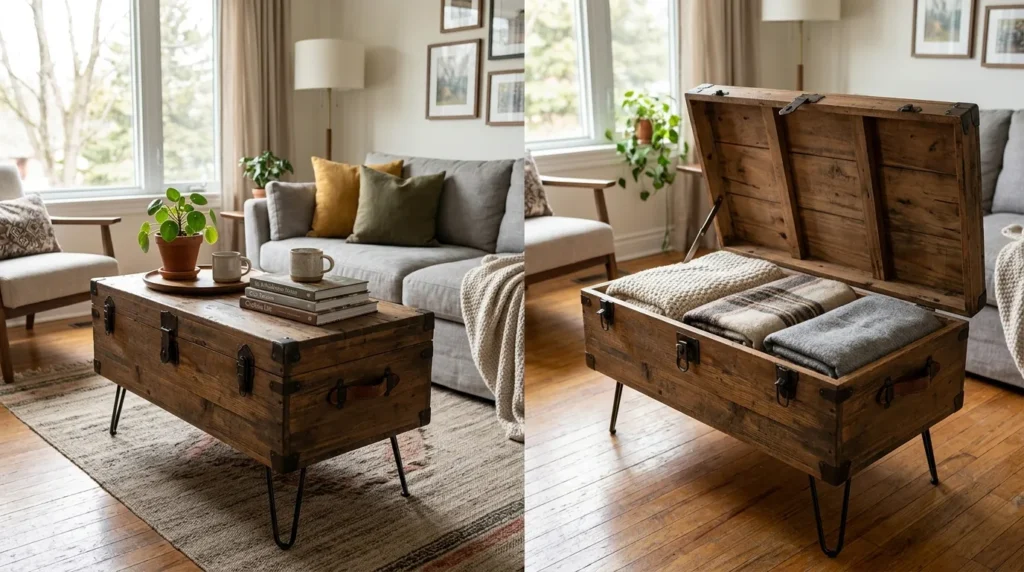
Quick Benefits
- Offers generous, deep storage for larger items
- Adds vintage or rustic character to a living room
- Can be built new or repurposed from a secondhand trunk
- Great for storing blankets, board games, or seasonal items
- A relatively low-cost, high-storage-capacity option
Why It Works A trunk-style coffee table brings both storage capacity and character that a flat tabletop design simply can’t match. One simple trick I always suggest for anyone who needs to store larger items — extra throw blankets, board games, out-of-season decor — is a trunk-based design specifically, since the deep, uninterrupted cavity holds far more than a shallow drawer or lift-top compartment ever could. In my experience, this is also one of the easiest builds for beginners, since a secondhand trunk can often be repurposed with just a new base or legs added.
How To Style It Source a vintage or new wood trunk, and attach simple hairpin or turned wood legs to raise it to standard coffee table height, typically around sixteen to eighteen inches. If building from scratch, construct a basic box frame with a hinged lid, reinforcing corners for stability given the added weight of stored items. Style the top with a tray, a stack of books, and a small plant when closed, and use the interior for bulkier items that don’t have another obvious home in the living room.
4. Storage Ottoman Combo
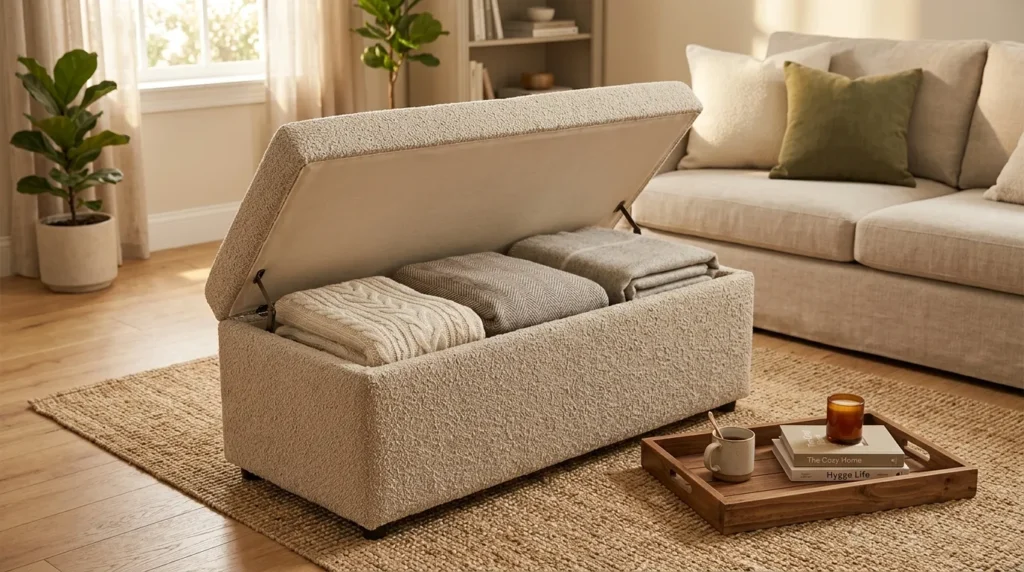
Quick Benefits
- Combines soft seating with hidden storage in one piece
- Works well in smaller living rooms needing multi-purpose furniture
- Adds a cozy, upholstered texture to the room
- Provides extra seating when guests come over
- A moderately simple build using basic upholstery techniques
Why It Works A storage ottoman does more work per square foot than almost any other piece on this list, functioning as a coffee table, extra seating, a footrest, and hidden storage all at once. That’s why many designers recommend this option specifically for smaller living rooms, where every piece of furniture needs to earn its space by serving more than one purpose. In my experience, this is also one of the more forgiving builds for anyone newer to DIY furniture projects, since basic upholstery techniques are more approachable than they might initially seem.
How To Style It Build a simple wood box frame with a hinged lid, then upholster the lid and, optionally, the sides with a durable fabric like performance linen or boucle, using basic foam padding and a staple gun. Add a large wood or acrylic tray on top when in use as a coffee table, which protects the upholstery and gives you a stable surface for drinks and decor. Use the interior for blankets, pillows, or board games that would otherwise clutter open shelving elsewhere in the room.
5. Sliding Panel Table
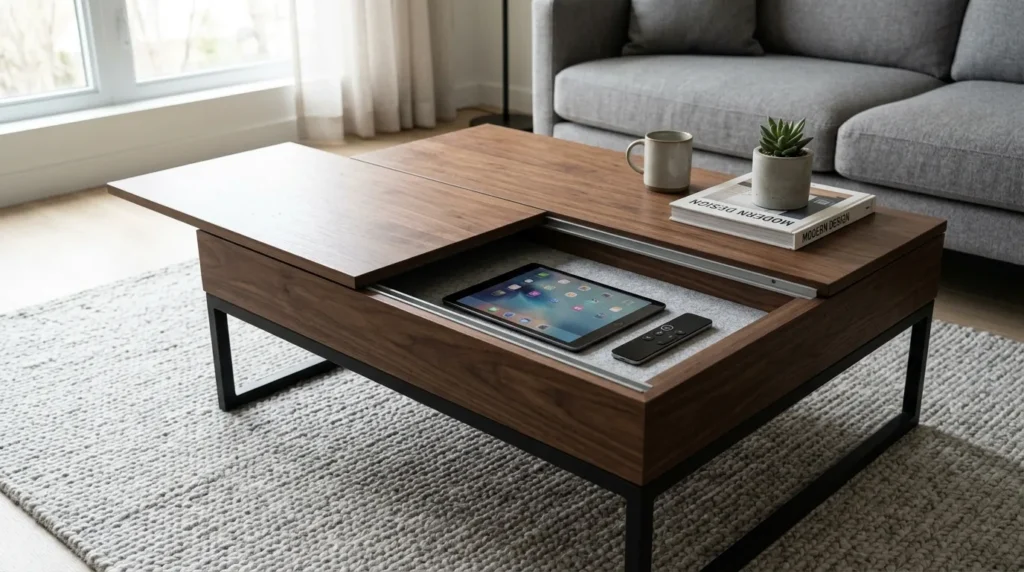
Quick Benefits
- A clever, modern mechanism that hides storage seamlessly
- Keeps the tabletop looking sleek and uninterrupted
- Works especially well in minimalist or modern living rooms
- Adds a unique, conversation-starting design detail
- A moderately advanced but very achievable build
Why It Works A sliding panel design hides its storage cavity beneath a section of the tabletop that slides open on a track, rather than lifting or opening on a hinge. I’ve noticed this style trending in more minimalist, design-forward spaces, since the mechanism stays completely invisible when closed, preserving a clean, uninterrupted tabletop surface. A mistake many homeowners make is assuming a sliding mechanism requires professional-level skill; with a basic drawer slide or barn-door-style track hardware, this is a very achievable weekend project for anyone comfortable with basic tools.
How To Style It Build a simple table frame with a shallow storage cavity beneath a portion of the top, then mount a sliding wood panel on basic drawer slides or a small track system so it glides smoothly open and closed. Keep the sliding panel flush with the surrounding tabletop for the cleanest look. Use the hidden cavity for smaller, flatter items like remotes, magazines, or a tablet, since the shallow depth typically suits slim items better than bulkier ones.
6. Basket Shelf Coffee Table
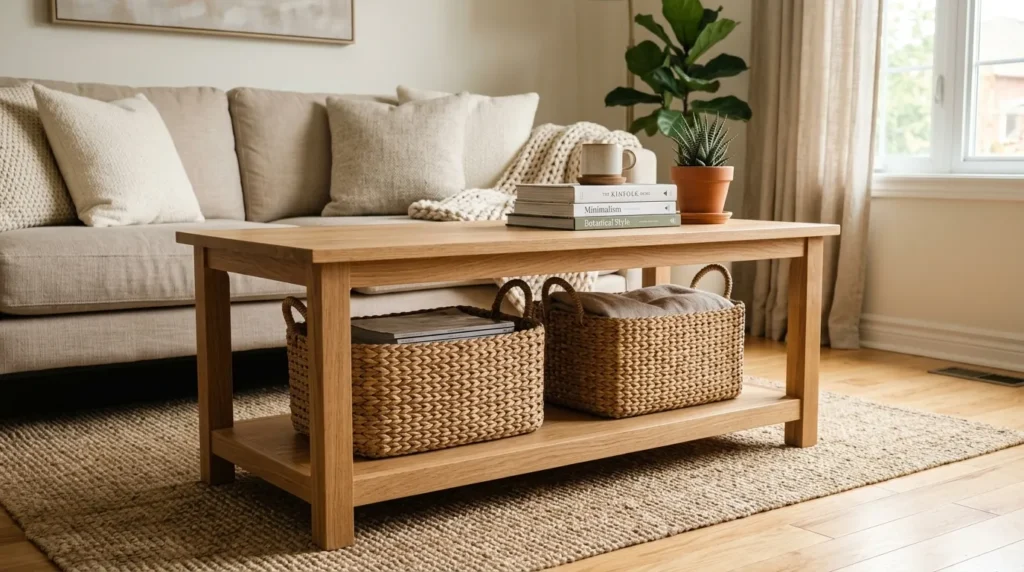
Quick Benefits
- One of the simplest, most beginner-friendly storage builds
- Adds warm, textured styling alongside genuine function
- Works well for organizing blankets, toys, or magazines
- Requires minimal woodworking experience or hardware
- A budget-friendly option using basic materials
Why It Works Not every hidden-storage solution needs a hinge, a slide, or a lift mechanism — sometimes an open lower shelf styled with a few woven baskets does the job just as effectively, while being dramatically easier to build. In my experience, this is the ideal project for anyone newer to DIY furniture, since it requires only a simple table frame with a lower shelf, no specialized hardware at all. A mistake many homeowners make is assuming “hidden storage” always means fully enclosed storage; baskets accomplish the same decluttering goal with a fraction of the build complexity.
How To Style It Build a simple table frame with an open lower shelf positioned a few inches off the ground, sized to fit two or three woven baskets side by side. Choose baskets in a natural, textured material like seagrass or rattan, which adds warmth to the room while concealing whatever’s stored inside. Use one basket for blankets, one for remotes and odds and ends, and one for kids’ toys or books, keeping each basket assigned to a specific category to avoid it becoming an all-purpose catch-all.
7. Cabinet Door Table
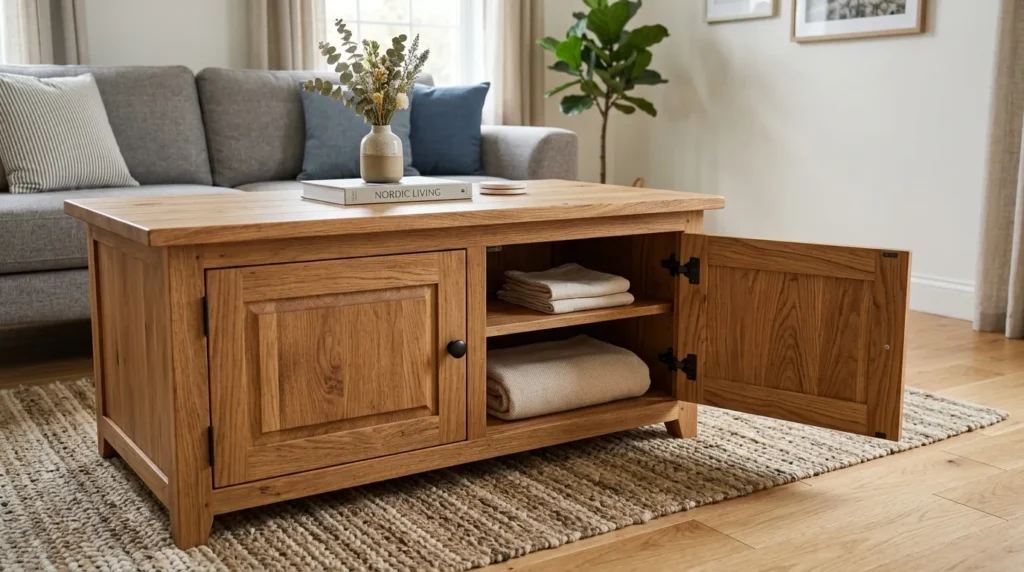
Quick Benefits
- Fully conceals storage behind simple hinged doors
- Adds a more furniture-like, finished look than open shelving
- Works well for storing items you’d rather not display
- Can include interior shelving for better organization
- A moderate build with a polished final result
Why It Works A cabinet-style coffee table with hinged doors offers a more finished, furniture-like appearance than a trunk or lift-top design, since the enclosed doors read less like a storage container and more like a genuine piece of casegoods furniture. I’ve seen this idea transform living rooms where the homeowner wanted a table that looked entirely decorative from the outside while still hiding a meaningful amount of storage inside. This build takes slightly more precision than an open-shelf design, but door hardware kits make the process considerably more approachable than it once was.
How To Style It Build a simple box frame with an open front, then attach one or two hinged doors using basic cabinet hinges, adding a small interior shelf if you want to divide the storage into two levels. Simple pulls or knobs on the exterior tie the piece to your existing hardware finishes. Use the interior for items you’d rather keep out of sight entirely, like cables, chargers, or a stack of mail, and keep the tabletop styled simply on top to maintain the piece’s clean, furniture-like presence.
8. Hollow Crate Coffee Table
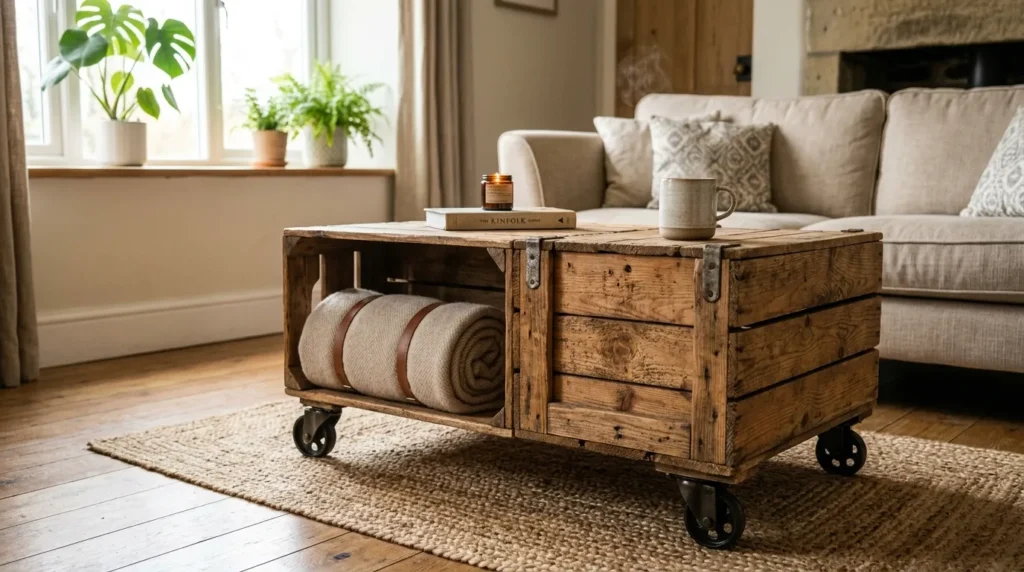
Quick Benefits
- A budget-friendly build using widely available wood crates
- Adds rustic, textured character to a living room
- Naturally creates a storage cavity without complex joinery
- Highly customizable in size and finish
- One of the most affordable options on this list
Why It Works Wood crates — whether purchased new, salvaged, or repurposed from shipping materials — are naturally hollow, which makes them an easy starting point for a storage coffee table without needing to build a storage cavity from scratch. In my experience, this is one of the most budget-friendly builds available, since the crates themselves do most of the structural work already. A mistake many homeowners make is overlooking crates as a “real” furniture material, but with the right finish and hardware, a crate-based table can look genuinely intentional rather than improvised.
How To Style It Join two or more wood crates side by side or stacked, securing them with wood screws or brackets, then attach a flat top made from plywood or a reclaimed wood plank. Add simple wheels to the base for easy mobility, which is a popular styling choice with this particular build. Sand and stain or paint the crates to match your existing furniture, and use the open crate compartments for magazines, blankets, or baskets sized to fit the crate openings.
9. Rolling Storage Cart Table
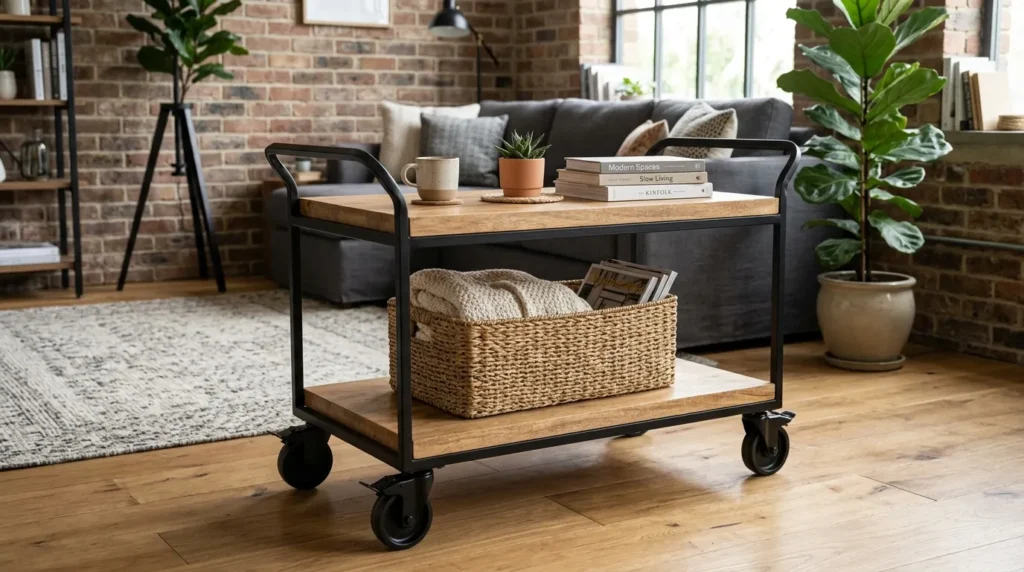
Quick Benefits
- Fully mobile, making it easy to reposition as needed
- Multi-tiered design maximizes storage in a compact footprint
- Works well as a flexible coffee table or side table
- A relatively simple build using basic materials and casters
- Great for small or frequently rearranged living rooms
Why It Works A rolling storage cart brings genuine flexibility to a living room, since it can be repositioned in seconds rather than staying fixed in one spot. One simple trick I always suggest for smaller or frequently rearranged living rooms is a cart-style table specifically, because the mobility solves a problem that fixed furniture can’t: the need to shift furniture around for cleaning, entertaining, or simply changing up the room’s layout. In my experience, the multi-tiered design also tends to maximize storage more efficiently than a single-level table of the same footprint.
How To Style It Build a simple two- or three-tiered frame using plywood or solid wood shelves, then attach locking casters to the base for controlled mobility. Use the lower tiers for enclosed storage with small bins or baskets, and keep the top tier styled simply for everyday coffee table use. This design works especially well finished in a natural wood tone with black metal casters and side rails for a modern, slightly industrial look.
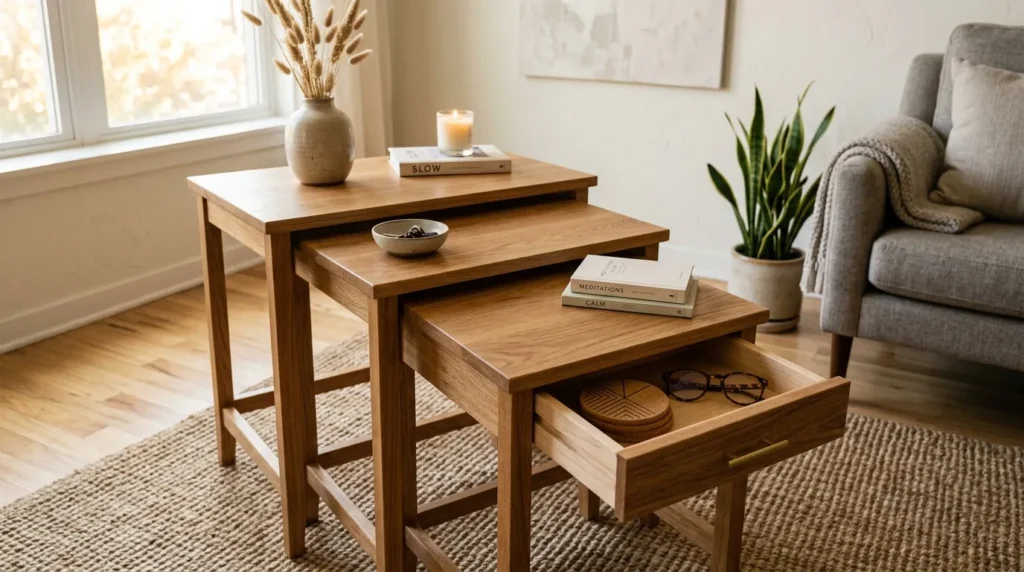
10. Nesting Table Storage Set
Quick Benefits
- Offers flexible, expandable surface space when needed
- Smaller tables tuck away to save floor space when not in use
- Each table can include its own small storage compartment
- Works well in smaller living rooms or apartments
- A beginner-friendly build using simple, repeated construction steps
Why It Works A nesting table set takes a slightly different approach to hidden storage: rather than one larger table with a single storage cavity, it uses two or three smaller tables of graduated size, each with its own small storage compartment, that tuck neatly beneath one another when not needed. That’s why many designers recommend this option specifically for smaller living rooms or apartments, where a single large coffee table might feel oversized, but the flexibility of multiple smaller tables solves both the space and storage problem at once.
How To Style It Build two or three simple table frames in graduated sizes, each with a shallow drawer or open compartment for small items like coasters, remotes, or reading glasses. Finish each table consistently, whether in matching wood tones or a subtle graduated color scheme, so the set reads as intentional when nested together. Pull the smaller tables out individually when extra surface space is needed for guests, then tuck them back beneath the largest table when the room needs to feel more open.
Frequently Asked Questions
What’s the easiest DIY coffee table with storage for a beginner? A basket shelf coffee table is typically the most beginner-friendly option, since it requires only a simple table frame with an open lower shelf and no specialized hardware. A hinged trunk-style table is a close second, especially if built from a repurposed secondhand trunk.
Do I need special tools to build a lift-top coffee table? Basic tools like a drill, saw, and screwdriver are usually sufficient, especially when using a pre-made lift-top hardware kit, which simplifies the hinge and support mechanism considerably. These kits are widely available online and typically include installation instructions.
How much storage can a DIY coffee table realistically hold? This varies significantly by design — a shallow sliding panel table holds mostly flat items like remotes or magazines, while a deep trunk-style or cabinet-door table can hold considerably more, including blankets, board games, or seasonal decor.
What materials work best for a budget-friendly DIY coffee table? Plywood, basic pine boards, and repurposed wood crates are all affordable, widely available options. Adding a wood stain or paint finish can make even budget materials look considerably more polished once the build is complete.
Is a storage ottoman coffee table sturdy enough for everyday use? Yes, when built with a solid wood frame and topped with a sturdy tray for daily use. The tray protects the upholstery from spills and scratches while still allowing the ottoman lid to open easily whenever storage is needed.
Can I build a coffee table with hidden storage without power tools? It’s more challenging, but small-scale builds like a basket shelf table or a simple crate-based table can be assembled with mostly hand tools and basic hardware. Larger builds involving drawers or lift-top mechanisms generally benefit from at least a basic drill and saw.
How do I keep hidden coffee table storage from becoming disorganized clutter? Assigning each compartment, drawer, or basket to a specific category — blankets in one, remotes and cables in another — helps prevent the storage from becoming a catch-all. Small dividers or trays inside larger cavities also help keep items separated and easy to find.
Final Thoughts
A DIY coffee table with hidden storage solves two problems at once: it gives your living room a genuine, functional focal point, and it clears away the everyday clutter that tends to pile up on open surfaces. Whether you start with a simple basket shelf design or work up to a lift-top or drawer-based build, each of these ten ideas is achievable with basic tools and a weekend or two of focused work.
Start with one or two ideas and gradually build a space that reflects your style and supports everyday comfort. The goal isn’t a showroom-perfect piece of furniture — it’s a coffee table that actually earns its place in your living room, every single day.
Related Articles
- 10 Modern Living Room Ideas with Natural Wood Finishes
- Small Living Room Layouts That Actually Work
- DIY Accent Wall Ideas Anyone Can Do
- Neutral Home Styling on a Budget
- 10 DIY Fire Pit Ideas Using Budget-Friendly Materials