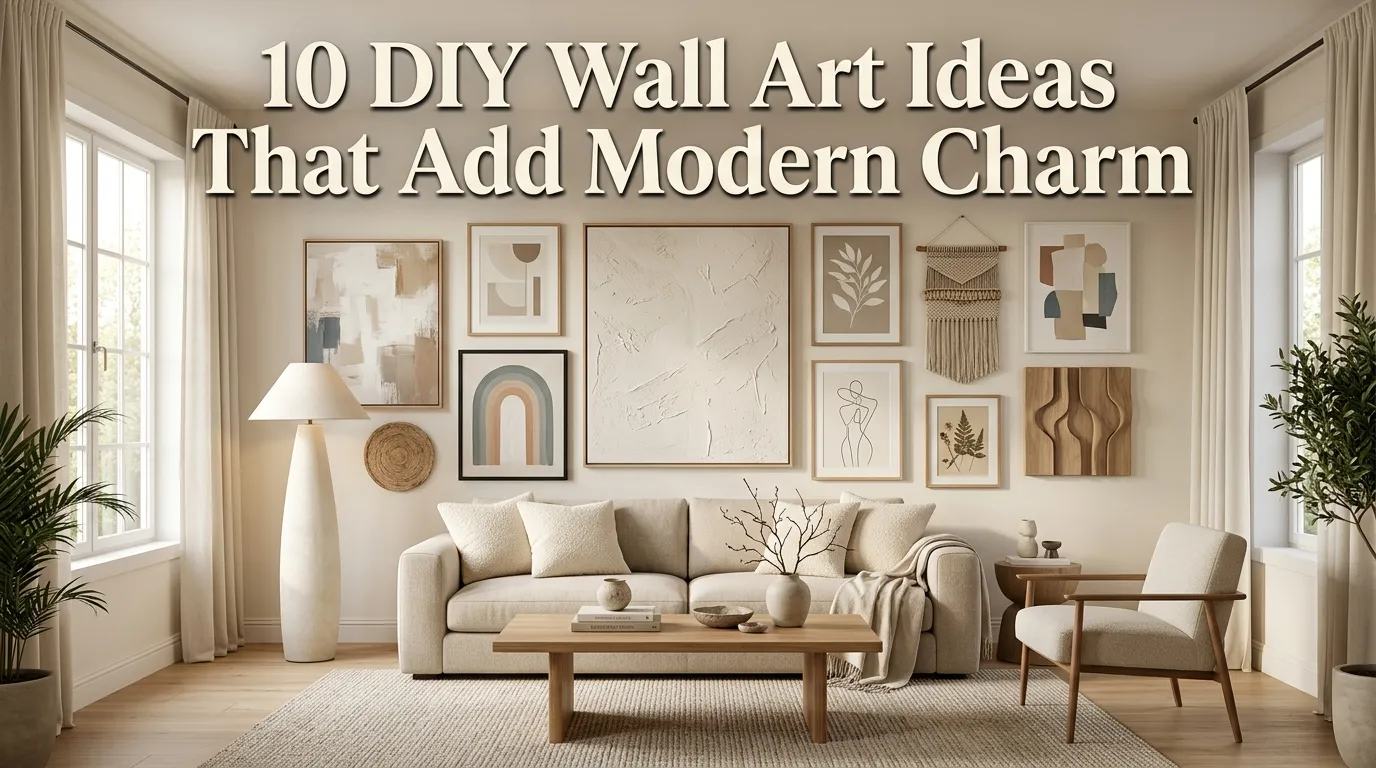
10 DIY Wall Art Ideas That Add Modern Charm
There’s a particular kind of satisfaction that comes from looking at a piece of art on your wall and knowing you made it yourself. In my experience, DIY wall art almost always reads as more interesting than store-bought pieces, not because it’s more polished, but because it’s more personal. A handmade piece carries a texture and imperfection that mass-produced prints simply can’t replicate.
I’ve noticed that a lot of people avoid DIY wall art because they assume it requires real artistic skill, expensive supplies, or hours of free time they don’t have. That’s rarely true. Some of the most striking modern wall art projects rely on simple techniques — layering paint, arranging natural materials, or working with texture instead of detailed drawing — that anyone can execute with a little patience, regardless of artistic background.
A mistake many homeowners make when trying DIY art is overcomplicating the concept, reaching for intricate designs that end up looking amateurish instead of intentional. Modern wall art actually favors simplicity: clean shapes, limited color palettes, and confident, minimal compositions tend to look far more polished than busy, detailed pieces made without formal training.
This guide walks through ten DIY wall art ideas that consistently add modern charm to any room — practical, tested projects covering paint, texture, natural materials, and mixed media that work whether you’re a complete beginner or someone who just wants a quick weekend project. If you’re anything like me, you want art that looks intentional and elevated without pretending to be something it’s not. That’s exactly what these ideas are built around.
Table of Contents
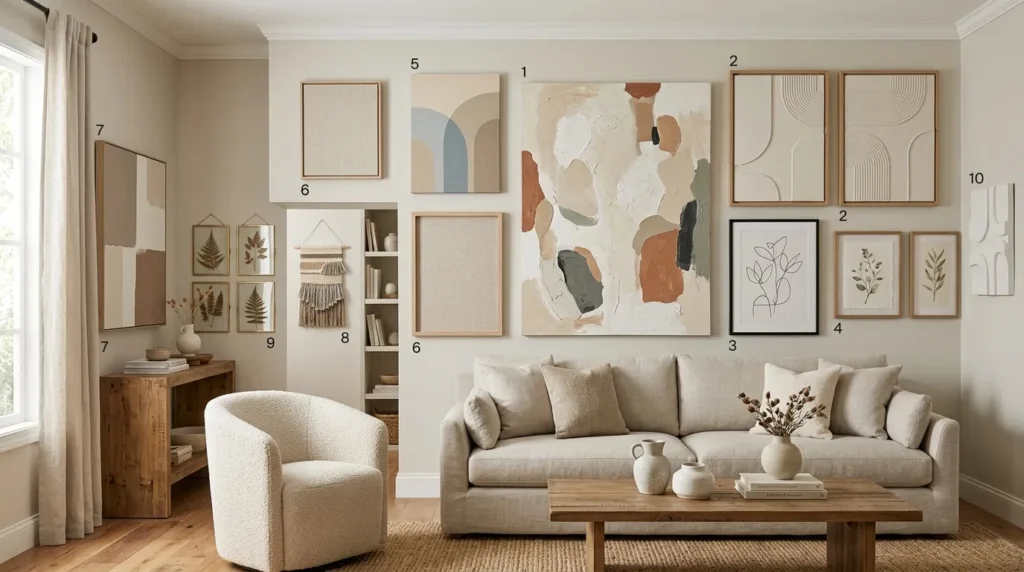
- Abstract Paint Pour Art — Fluid, poured paint creates organic modern patterns with no drawing skill required.
- Minimalist Line Drawings — Simple black line art brings clean, gallery-style charm to any wall.
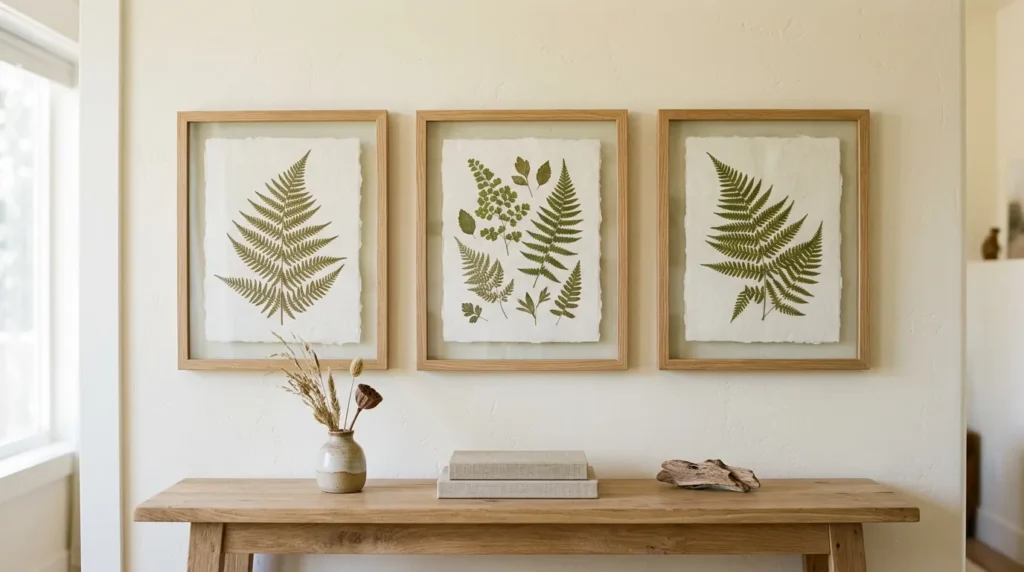
- Pressed Botanical Frames — Dried flowers and leaves framed simply add natural, modern texture.
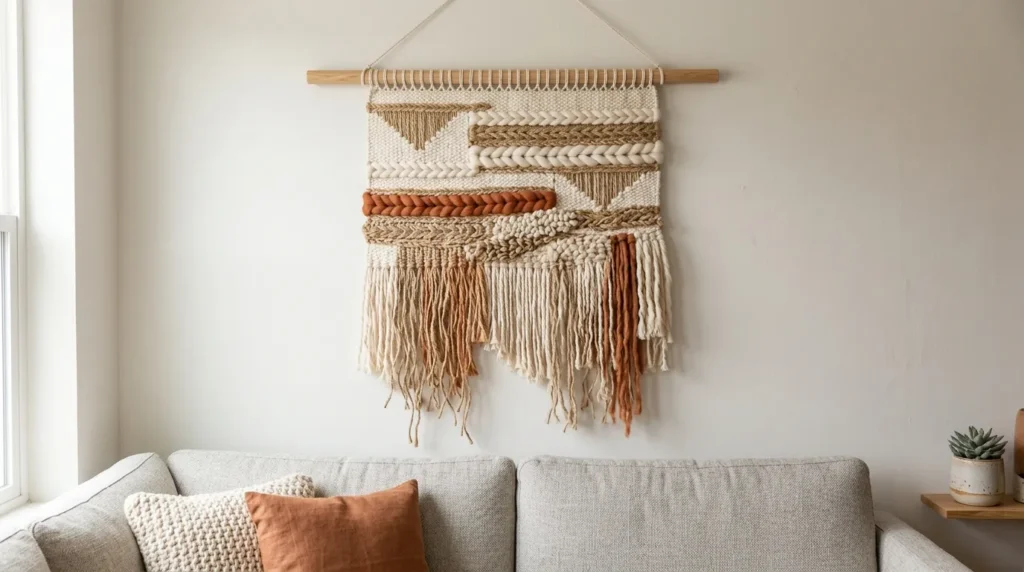
- Woven Fiber Wall Art — Handwoven textile pieces bring tactile depth and warmth.
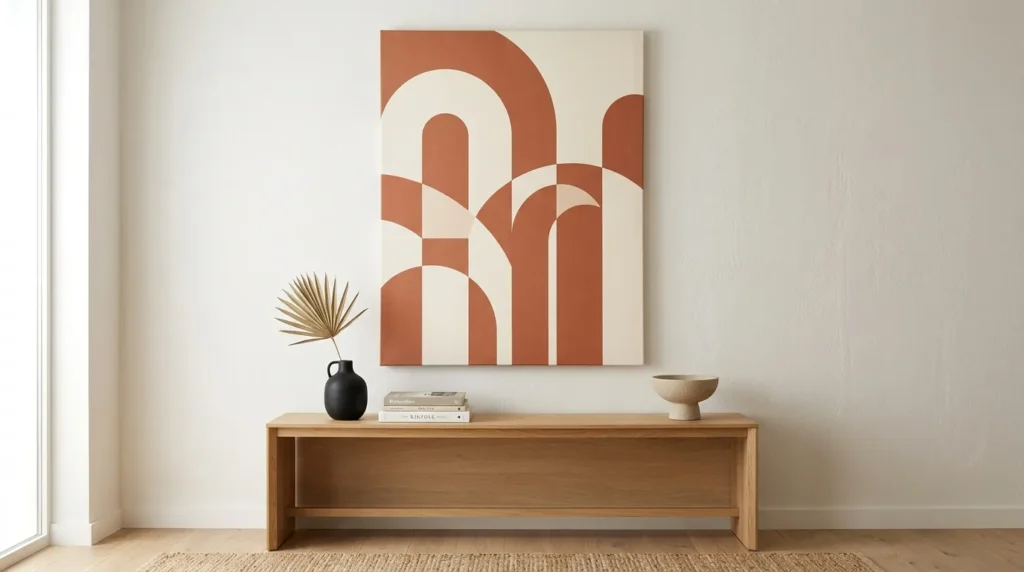
- Geometric Shape Canvases — Bold, simple shapes create confident modern statement pieces.
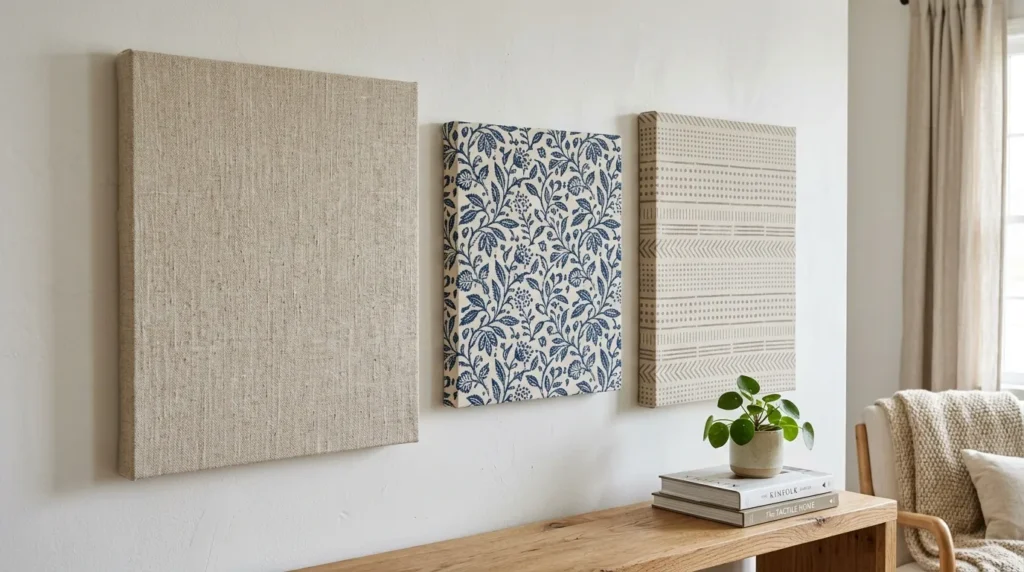
- Fabric-Wrapped Canvas Art — Wrapped textiles turn simple canvases into textured wall pieces.
- Watercolor Wash Panels — Soft, layered watercolor creates dreamy, abstract modern art.
- Clay Wall Sculptures — Sculptural clay pieces add dimension beyond flat wall art.
- Vintage Map or Paper Collage — Layered paper elements create depth and personal history.
- Statement Word or Type Art — Simple typography adds a modern, graphic focal point.
1. Abstract Paint Pour Art
Quick Benefits
- Requires no drawing or painting skill
- Creates unique, one-of-a-kind results every time
- Works with inexpensive craft-store supplies
- Produces bold, modern color combinations
- Finishes in a single afternoon
Why It Works
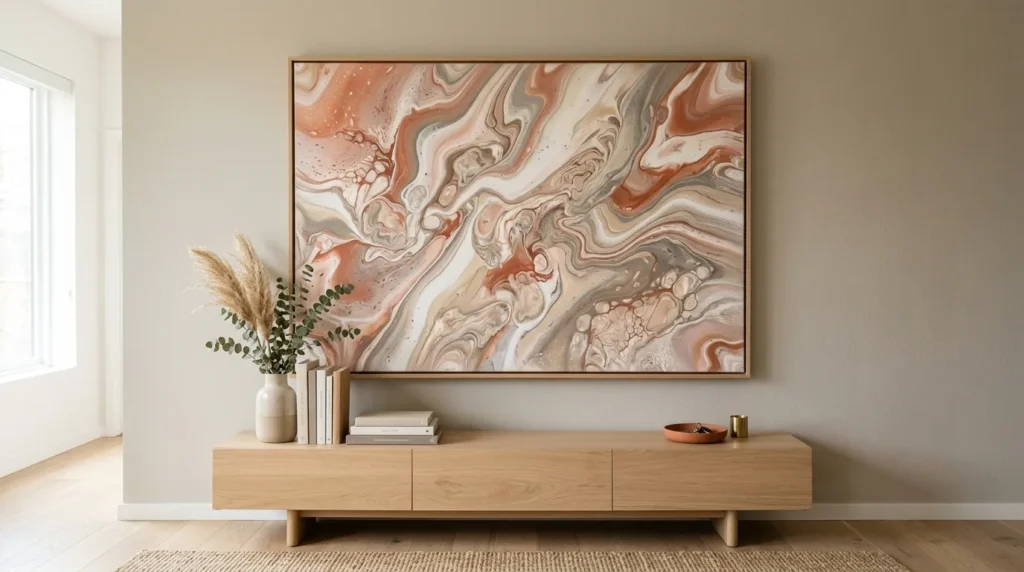
One simple trick I always suggest for anyone nervous about DIY art is starting with a paint pour, since the technique does most of the visual work for you. Pouring and tilting fluid acrylic paint creates organic, marbled patterns that look intentional and modern, without requiring any traditional painting skill. The unpredictability is actually the appeal — no two pours ever turn out exactly the same.
How To Style It
Choose two to three complementary paint colors, mixed with a pouring medium to achieve a fluid, honey-like consistency, and pour them onto a canvas in a layered pattern before tilting to spread the paint. Stick to a limited, cohesive color palette — three colors that already work together in your room tend to produce a far more elevated result than five random shades. Once dry, frame the canvas simply or hang it unframed for a clean, modern gallery look.
2. Minimalist Line Drawings
Quick Benefits
- Achievable with very basic drawing ability
- Creates a clean, gallery-style aesthetic
- Inexpensive — just paper, ink, and a frame
- Works beautifully in sets or singles
- Easy to match to any room’s color palette
Why It Works
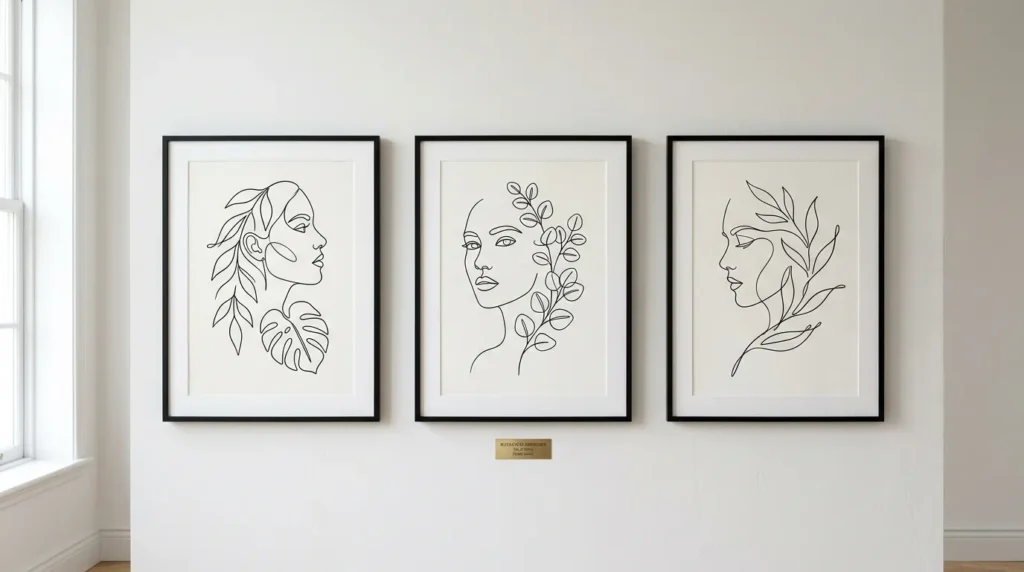
A mistake many homeowners make when attempting DIY art is assuming detailed realism is the goal. Minimalist line drawings prove the opposite — a single continuous black line, sketching a simple form like a face profile, a plant, or an abstract shape, reads as confidently modern precisely because of its restraint. I’ve noticed that simple line art consistently looks more sophisticated than more detailed attempts made without formal training.
How To Style It
Use a fine black pen or brush marker on heavy white or cream paper, and practice a single continuous line technique — lifting the pen as little as possible — for a loose, organic feel. Keep the subject simple: a face in profile, a leaf, a basic figure, or a completely abstract squiggle all work well in this style. Frame the finished piece in a thin black or natural wood frame, and consider making a set of two or three for a cohesive gallery moment.
3. Pressed Botanical Frames
Quick Benefits
- Uses materials you can gather for free
- Adds natural texture and organic color
- Simple process with minimal supplies
- Feels personal and seasonally connected
- Works beautifully in sets
Why It Works
That’s why many designers recommend pressed botanicals as one of the most approachable DIY art projects — the “artistic” work is really just careful arrangement, since the plant itself provides all the visual interest. Pressed leaves and flowers bring a soft, organic quality to a wall, and because you’re using real, gathered materials, each piece feels personal in a way that printed art doesn’t.
How To Style It
Press leaves, ferns, or flowers between heavy books for one to two weeks until fully flattened and dried. Arrange the pressed pieces simply on cream or white cardstock, using minimal glue dots to secure them in place, and frame under glass to protect them long-term. A set of three matching frames, each with a single pressed leaf or a small cluster, creates a cohesive, modern botanical display.
4. Woven Fiber Wall Art
Quick Benefits
- Adds texture that flat art can’t achieve
- Works with beginner-friendly weaving techniques
- Brings a handmade, artisanal feel
- Pairs beautifully with neutral color schemes
- Scales easily from small to large pieces
Why It Works
I’ve seen this idea transform plain walls into ones that feel layered and intentional: simple woven fiber art. Unlike flat paintings or prints, woven pieces add real dimension to a wall, catching light and shadow differently throughout the day. Beginner weaving techniques, using a basic frame loom, are far more approachable than most people expect, and the textured, slightly imperfect result is exactly what gives handmade weaving its charm.
How To Style It
Use a simple wood dowel or embroidery hoop as your base, and weave a mix of natural fibers like cotton cord, jute, and roving wool in a limited, neutral color palette. Keep the design simple for a first attempt — horizontal bands of varying texture look modern and intentional without requiring complex knotting techniques. Let the fringe hang loose at the bottom for texture, and trim it evenly once you’re happy with the length.
5. Geometric Shape Canvases
Quick Benefits
- Achievable with painter’s tape and a steady hand
- Creates bold, confident modern statements
- Easy to customize to any color scheme
- Looks polished even for beginners
- Works well as a single large piece
Why It Works
One thing that works especially well for a confident, modern look is embracing simple geometric shapes instead of attempting representational art. A large circle, a set of overlapping arches, or a clean grid pattern reads as intentional and gallery-worthy, largely because the sharp, clean edges signal precision even when the concept itself is simple.
How To Style It
Sketch your geometric design lightly in pencil first, then use painter’s tape to mask off clean edges before filling in each section with acrylic paint. Stick to two or three colors maximum for the strongest visual impact, and consider working on a larger canvas, since bold geometric shapes tend to look more striking at scale. Remove the tape carefully while the paint is still slightly tacky for the cleanest possible lines.
6. Fabric-Wrapped Canvas Art
Quick Benefits
- No painting or drawing skill required
- Adds texture and pattern instantly
- Uses fabric remnants or inexpensive yardage
- Quick to complete in under an hour
- Easy to match to existing decor fabrics
Why It Works
A mistake many homeowners make is assuming wall art always has to be painted or drawn. Fabric-wrapped canvases skip that step entirely — the fabric itself becomes the art, stretched and secured over a simple wood frame or canvas. This approach is especially useful if you already have a fabric you love, like a remnant from curtains or upholstery, and want to echo that pattern or texture on the wall.
How To Style It
Choose a piece of fabric with texture or subtle pattern, such as a linen weave, a block print, or a woven natural fiber, and stretch it tautly over a wood canvas frame, securing the edges on the back with a staple gun or strong fabric glue. A grouping of two or three fabric-wrapped canvases in coordinating but not identical fabrics creates a layered, textile-forward gallery wall. Keep the frame edges clean and taut for the most polished finished look.
7. Watercolor Wash Panels
Quick Benefits
- Forgiving medium for total beginners
- Creates soft, dreamy modern abstracts
- Inexpensive supplies and quick drying time
- Works beautifully in soft, neutral palettes
- Easy to make in a coordinated series
Why It Works
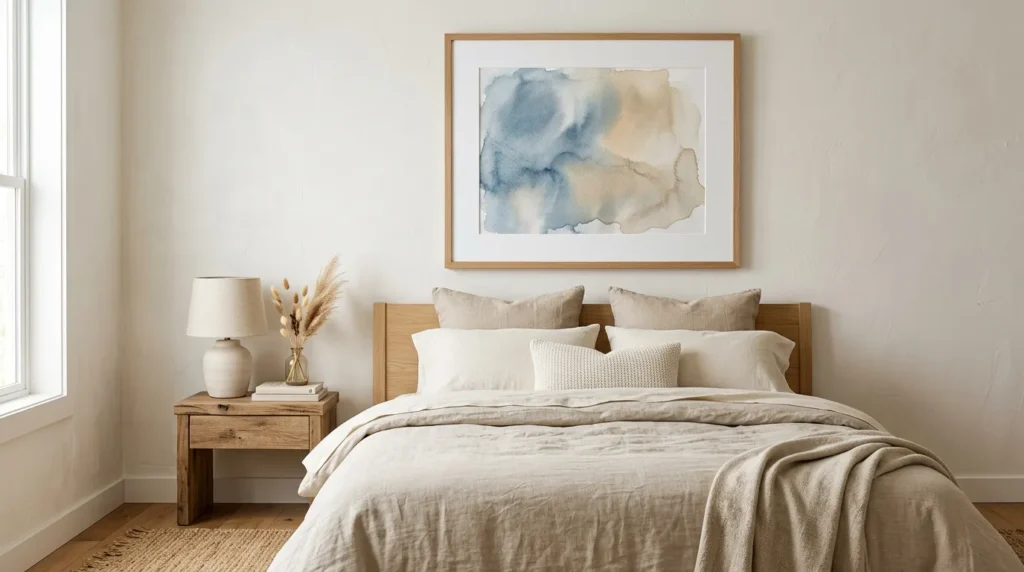
I’ve noticed that watercolor washes are one of the most forgiving mediums for anyone new to painting, since the technique itself embraces imperfection and blending rather than requiring precise control. Loose, layered washes of soft color create a dreamy, abstract effect that reads as modern and intentional, even when the process is essentially just letting water and pigment move naturally across the paper.
How To Style It
Wet heavy watercolor paper first, then drop in soft, complementary colors and let them bleed and blend naturally rather than controlling the edges precisely. Working in a muted, tonal palette — soft blues, warm sands, or dusty pinks — tends to produce a more sophisticated, modern result than bright, high-contrast color combinations. Frame the finished piece with a generous white mat to let the soft color washes breathe, and consider a series of three for a coordinated, gallery-style display.
8. Clay Wall Sculptures
Quick Benefits
- Adds sculptural dimension beyond flat art
- Requires only basic hand-building skills
- Creates a tactile, organic modern piece
- Pairs beautifully with neutral, textured walls
- Feels distinctly handmade and current
Why It Works
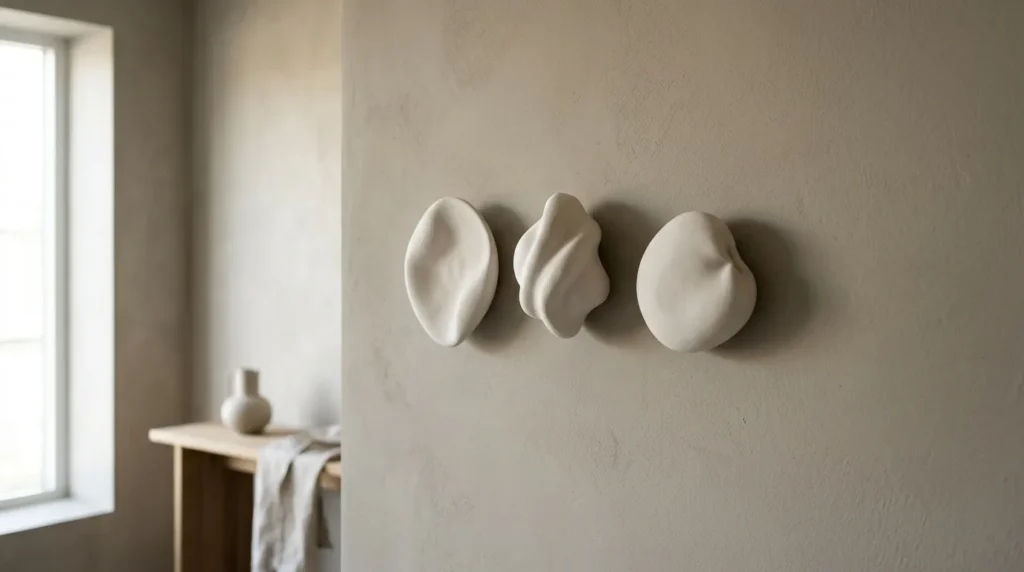
That’s why many designers recommend clay wall sculptures for anyone wanting to move beyond flat, framed art entirely. Simple hand-built clay forms, mounted directly to the wall, add real dimension and shadow play that no painting can achieve. This project has become especially popular in modern interiors because the slightly imperfect, handmade quality of clay pairs so naturally with the organic, textured aesthetic currently favored in home decor.
How To Style It
Roll air-dry clay into a simple, organic shape, such as a soft arch, a wavy line, or an abstract blob, and use a small hook or wire loop embedded in the back before it dries for easy wall mounting. Keep the color natural and unglazed, or apply a simple white or terracotta wash for subtle color. A cluster of two or three small clay pieces arranged with intentional spacing creates more visual interest than a single piece alone.
9. Vintage Map or Paper Collage
Quick Benefits
- Adds depth and a sense of personal history
- Uses inexpensive or found paper materials
- Works well in both modern and eclectic spaces
- Highly customizable to personal interests
- Inexpensive compared to framed art prints
Why It Works
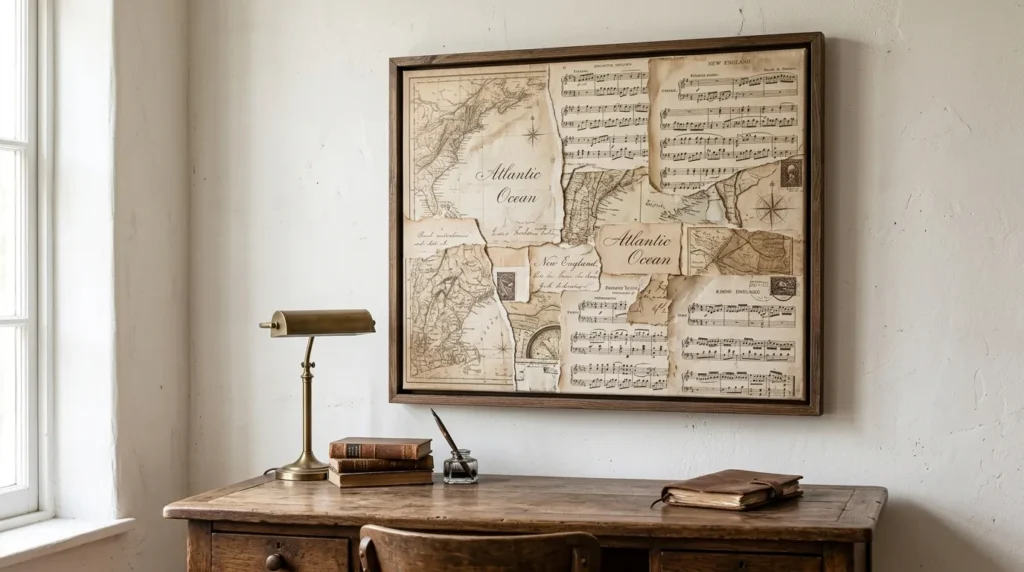
A mistake many homeowners make with collage is assuming it will look busy or chaotic. In reality, a well-edited paper collage — using vintage maps, sheet music, or old book pages layered thoughtfully — can read as sophisticated and intentional rather than cluttered, especially when the color palette is kept tight and the composition includes some empty space to let the eye rest.
How To Style It
Gather vintage or vintage-style paper materials, such as old maps, sheet music, or botanical illustration pages, and layer them onto a canvas or heavy board using a thin layer of decoupage glue. Keep the overall composition simple, focusing on one central image or a loose grid rather than covering every inch with overlapping paper. Seal the finished piece with a matte decoupage topcoat for durability, and frame it simply to keep the focus on the layered paper itself.
10. Statement Word or Type Art
Quick Benefits
- Adds a bold, graphic focal point
- Simple to execute with stencils or tape
- Personalizes the space with meaningful text
- Works well as a single large piece
- Pairs beautifully with minimalist rooms
Why It Works
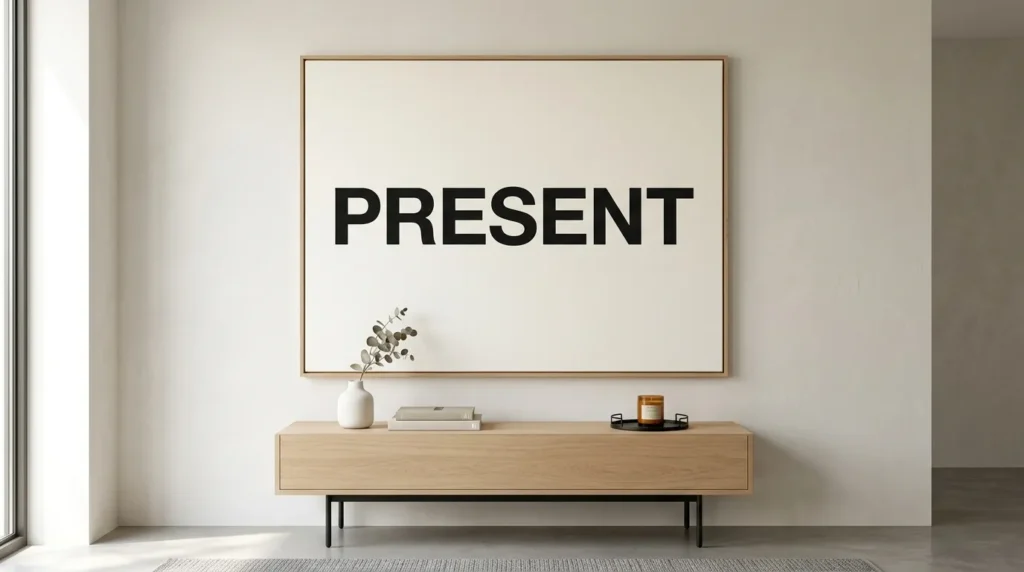
One thing that works especially well for a bold, modern statement is simple typography art — a single word or short phrase, rendered in a clean, confident font. Unlike busy motivational quote prints, a well-executed single-word piece reads as intentional and graphic, especially when the typography itself, rather than the words, is doing the visual work.
How To Style It
Choose a short, meaningful word or phrase, and use letter stencils or painter’s tape to create clean, sharp edges directly on canvas or heavy paper. Stick to a simple, bold font in a single color against a contrasting background — black on cream or white on a warm terracotta both read as confidently modern. Keep the composition large and centered rather than small and tucked into a corner, since typography art relies on scale for impact.
Frequently Asked Questions
Do I need artistic skill to make modern DIY wall art?
No. Many of the most effective modern DIY art techniques, like paint pours, fabric-wrapped canvases, and geometric shapes, rely on process and materials rather than traditional drawing or painting skill, making them accessible to complete beginners.
What is the cheapest DIY wall art idea to start with?
Pressed botanicals and paper collage are among the least expensive options, since they often use materials you can gather for free, like leaves, flowers, or old book pages, combined with basic frames or canvases you likely already have.
How do I keep DIY wall art from looking amateurish?
Simplicity is the key. Limiting your color palette to two or three shades, choosing clean or minimal compositions over detailed ones, and framing the finished piece well all go a long way toward making DIY art look polished and intentional rather than unfinished.
Should DIY wall art match my existing decor exactly?
It doesn’t need to match exactly, but choosing colors that already exist somewhere else in the room — a pillow, a rug, or an accent wall — helps the piece feel cohesive rather than randomly placed.
What size should my DIY wall art be?
For a single statement piece, err on the side of larger rather than smaller, since undersized art is one of the most common styling mistakes. For a gallery arrangement, a mix of two or three sizes tends to look more intentional than uniformly sized pieces.
How long do most DIY wall art projects take to complete?
Many of these projects, including paint pours, fabric-wrapped canvases, and typography art, can be completed in a single afternoon. Pressed botanicals require one to two weeks of drying time before framing, so plan slightly ahead for that project.
Can I create a cohesive gallery wall using different DIY techniques?
Yes, as long as you unify the pieces through a consistent color palette and frame style. Mixing a paint pour, a line drawing, and a pressed botanical can look intentional and layered when the colors and framing tie everything together.
Final Thoughts
Modern DIY wall art doesn’t require formal training or an expensive studio setup — it requires restraint, a limited color palette, and a willingness to let simple techniques do the visual work. Every idea in this list, from an abstract paint pour to a single striking word in bold typography, works because it embraces simplicity instead of fighting against it. None of these projects require more than a weekend and a modest supply run.
Start with one or two ideas and gradually build a wall that reflects your own hand, not just something pulled from a catalog. Maybe that means finally trying the paint pour technique you’ve been curious about, or pressing the flowers from your last bouquet instead of letting them go to waste. Small, consistent creative projects compound into a home that feels personal, current, and completely yours.
Your walls don’t need expensive art to feel modern and finished — they just need a little of your own hand in the process.
Related Articles
- Bedroom Wall Decor Ideas That Feel Warm and Inviting
- Modern Bedroom Ideas with Neutral Colors
- Small Living Room Layouts
- Neutral Home Styling Guide
- DIY Accent Wall Ideas