
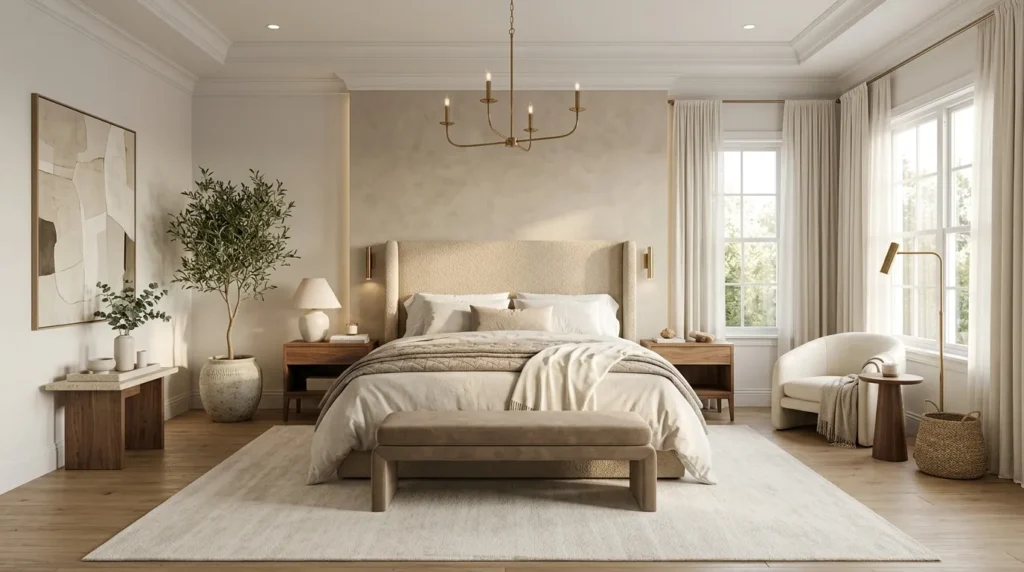
How to Decorate a Bedroom Like a Luxury Retreat
There’s a specific feeling I chase every time I redesign a bedroom, and it has nothing to do with square footage or a designer budget. It’s that moment you walk in after a long day, the door closes behind you, and the room itself seems to exhale with you. In my experience, that feeling — the boutique-hotel, luxury-retreat feeling — comes down to a handful of deliberate choices, not an expensive renovation. A mistake many homeowners make is assuming a luxury bedroom requires custom furniture or a total overhaul, when in reality, the bedrooms that feel the most restful are almost always the ones with the fewest distractions and the most intentional details.
I’ve noticed that the bedrooms getting saved and pinned the most right now share a quiet, layered quality. They’re not loud or trend-heavy — they lean on texture, warmth, and restraint instead. Rich bedding in a soft neutral palette, lighting that flatters rather than exposes, and just enough personality to feel like yours without feeling cluttered. That’s the difference between a bedroom that looks nice in photos and one that actually feels like a retreat to sleep in every night.
One thing that works especially well is thinking about your bedroom the way a luxury hotel designer would: what does the guest touch, see, and smell in the first thirty seconds? That’s usually the bedding, the lighting, and the overall sense of order in the room. That’s why many designers recommend starting there instead of with big furniture purchases — the return on a great duvet and better lighting is almost always higher than people expect.
This guide walks through ten realistic, achievable ways to bring luxury-retreat energy into your bedroom, whether you’re working with a primary suite or a small guest room. Each idea includes practical styling guidance you can put to use this weekend. If you’re anything like me, you don’t want vague mood-board inspiration — you want to know exactly what to buy, where to place it, and why it works. That’s what you’ll find below.
Table of Contents
- Layered Bedding Textures — The single biggest driver of a luxury-hotel feel.
- Warm Dimmable Lighting — Why overhead light is working against your relaxation.
- Statement Headboard — Anchoring the room with one confident focal point.
- Curated Nightstand Styling — Turning bedside clutter into intentional decor.
- Natural Wood Tones — Adding warmth without relying on color.
- Soft Neutral Palette — Why a quiet color scheme reads as more expensive.
- Plush Area Rug — The underfoot detail most bedrooms skip.
- Blackout Window Treatments — Function and softness working together.
- Layered Ambient Scent — Bringing a signature fragrance into your space.
- Minimal Personal Touches — Editing decor down to what actually matters.
1. Layered Bedding Textures
Quick Benefits
- The fastest, highest-impact change you can make to any bedroom
- Instantly elevates the room’s perceived quality
- Adds visual depth without adding clutter
- Works with nearly any existing furniture or wall color
- Easy to refresh seasonally without a full redesign
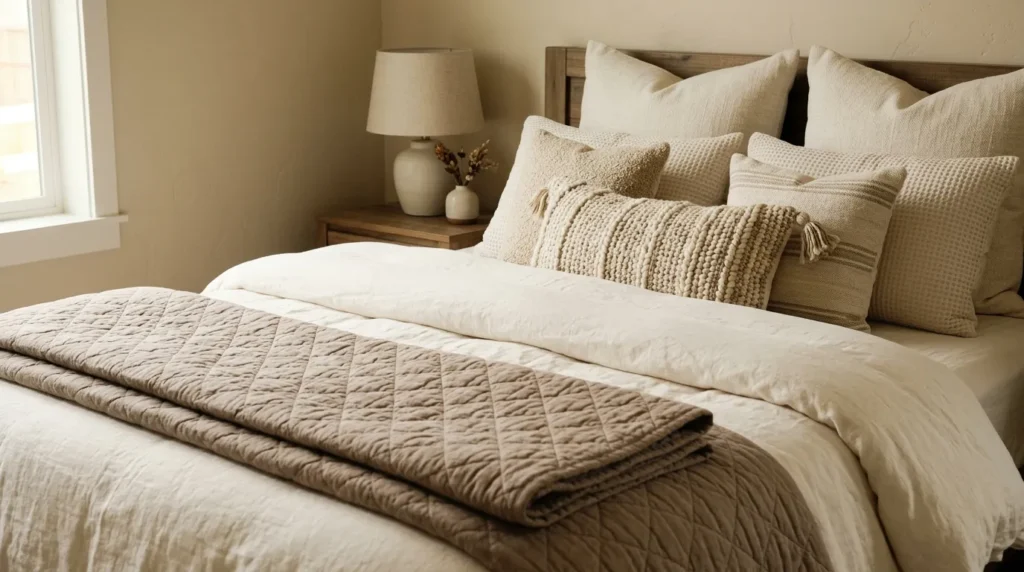
Why It Works In my experience, nothing signals “luxury retreat” faster than a well-made bed layered with varied textures. A flat, single-layer duvet reads as basic no matter how nice the fabric is, while a bed with a textured coverlet, a duvet, and a mix of pillow shapes and fabrics immediately looks intentional and expensive. This is the same principle boutique hotels rely on — layering, not necessarily cost, is what creates that plush, inviting look. A mistake many homeowners make is buying one nice duvet and stopping there, missing the textural contrast that actually creates the luxury effect.
How To Style It Start with a fitted sheet and flat sheet in a soft, breathable cotton or linen, then layer a duvet in a slightly heavier weave. Add a woven or quilted coverlet at the foot of the bed for texture and color contrast. Mix pillow sizes and shapes: two standard sleeping pillows, two larger euro shams behind them, and one or two smaller lumbar or accent pillows in a contrasting texture. Keep the palette tonal — ivory, oatmeal, warm white — rather than introducing multiple competing patterns.
2. Warm Dimmable Lighting
Quick Benefits
- Softens harsh overhead lighting that disrupts relaxation
- Creates a calming atmosphere for winding down
- Supports a healthier evening routine and better sleep
- Works with simple bulb swaps or plug-in fixtures
- One of the most affordable full-room mood changes
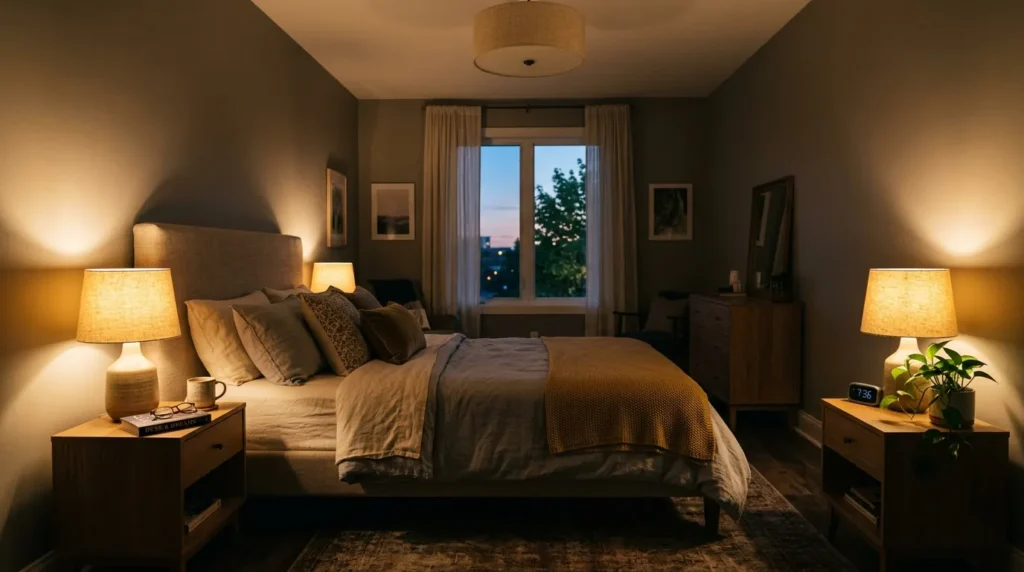
Why It Works A mistake many homeowners make is relying on a single bright overhead fixture as the bedroom’s only light source. Bright, cool-toned overhead lighting is functional for cleaning or getting dressed, but it does the opposite of what a bedroom needs in the evening. I’ve seen this idea transform spaces more than almost any other change on this list, simply by adding warmer, lower light sources at multiple heights. Layered lighting — overhead, bedside, and ambient — is exactly what hotel rooms use to feel calm rather than clinical.
How To Style It Swap any exposed bulbs to warm white (2700K–3000K) rather than cool daylight tones, and add a dimmer switch if your setup allows it. Place a lamp on each nightstand at a height that sits just below eye level when seated in bed. For extra ambiance, a small plug-in sconce or a battery-operated wall light near a reading chair adds a soft secondary glow without additional wiring.
3. Statement Headboard
Quick Benefits
- Anchors the entire room around one focal point
- Adds texture, shape, or color without overwhelming the space
- Elevates even simple, budget-friendly bedding
- Works across upholstered, wood, and woven styles
- A one-time investment with long-term visual payoff
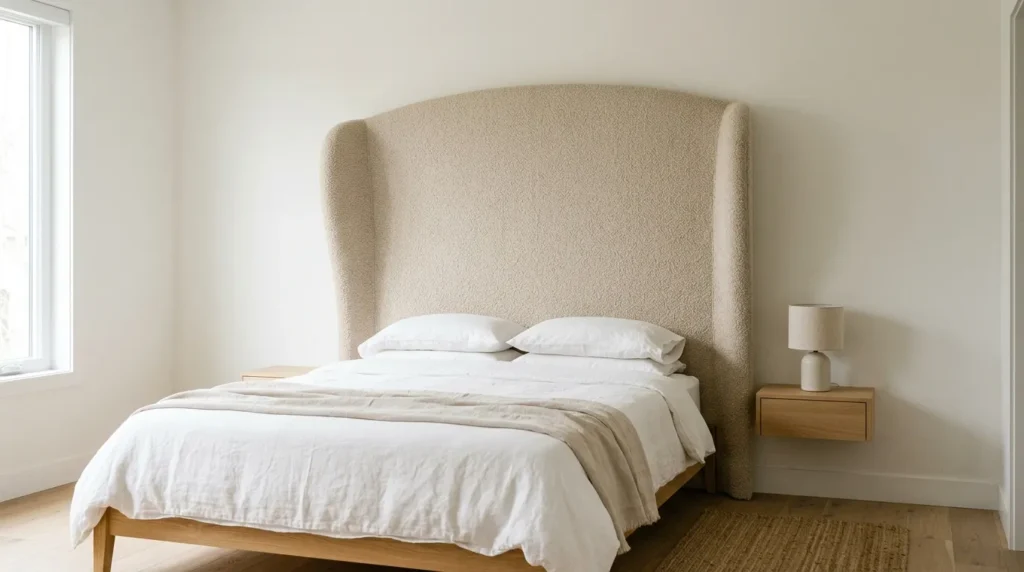
Why It Works The headboard sits directly behind the largest piece of furniture in the room, which means it does an outsized amount of visual work. One simple trick I always suggest is choosing a headboard with genuine presence — a tall upholstered panel, a curved silhouette, or a natural wood frame with visible grain — rather than a plain, low-profile option. That’s why many designers recommend treating the headboard as a true design decision rather than an afterthought purchase; it sets the tone for every other choice in the room.
How To Style It An upholstered headboard in a nubby boucle or linen adds softness and hotel-like comfort, while a curved wood or cane headboard introduces natural texture and warmth. Choose a headboard that extends slightly wider than the mattress for visual balance, and keep the wall behind it simple — one piece of art or nothing at all — so the headboard itself remains the focal point rather than competing with a busy gallery wall.
4. Curated Nightstand Styling
Quick Benefits
- Turns bedside clutter into an intentional vignette
- Costs little to nothing beyond editing what’s visible
- Makes the room feel finished and cared for
- Reinforces a calming bedtime routine
- Easy to update seasonally with small swaps
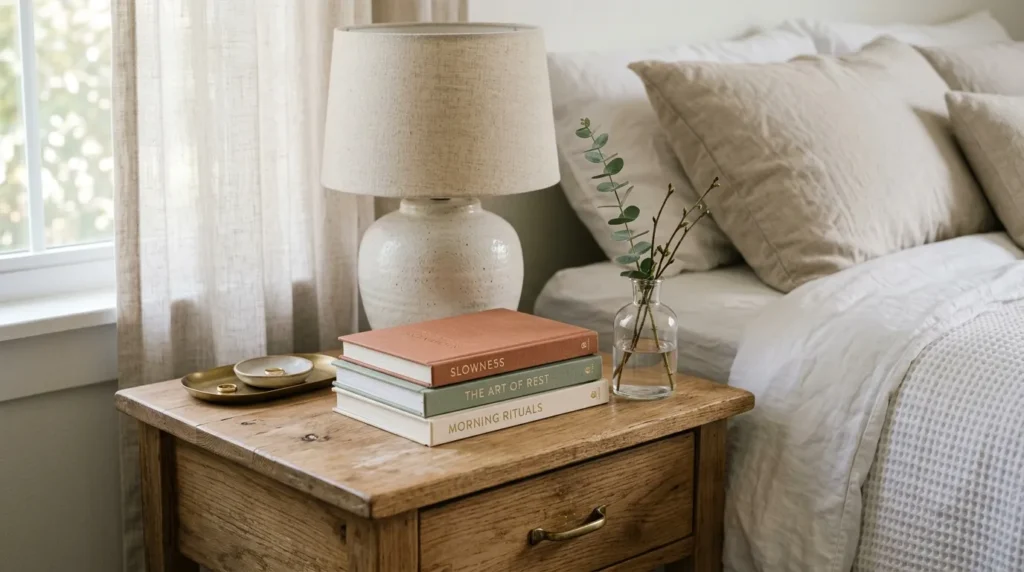
Why It Works Most nightstands accumulate a chaotic mix of chargers, half-read books, and empty water glasses. In my experience, editing this single surface down to a few intentional objects is one of the most underrated luxury upgrades available, because it’s the last thing you see before falling asleep and the first thing you see in the morning. A mistake many homeowners make is thinking a nightstand needs to hold everything they might want at 2am; in reality, a nightstand with fewer, more considered objects reads as far more restful.
How To Style It Limit each nightstand to three to five items: a lamp, a small stack of books or a single object, and a small dish or tray for jewelry and odds and ends. Keep cords tucked behind furniture where possible, and store daily clutter — chargers, remotes, medications — in a drawer rather than on the surface. A small vase with a single stem or a scented candle adds a soft, finishing touch without crowding the space.
5. Natural Wood Tones
Quick Benefits
- Adds warmth to rooms that lean heavily on soft textiles
- Balances out an all-white or all-neutral color scheme
- Introduces organic texture without pattern or color
- Works across modern, traditional, and transitional styles
- Ages well without going out of style
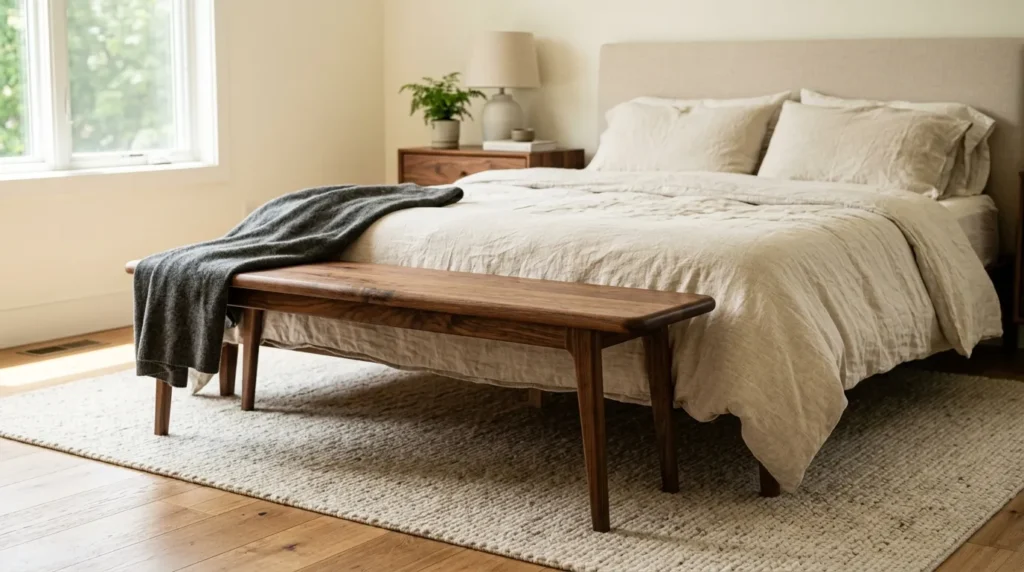
Why It Works Bedrooms built entirely around soft textiles — linen, cotton, wool — can start to feel a little flat without a grounding element. In my experience, natural wood tones are one of the most effective ways to add that grounding warmth, whether through a bed frame, nightstands, or a bench at the foot of the bed. I’ve noticed this pairing especially often in the luxury-retreat style bedrooms getting saved most on Pinterest right now: soft neutral textiles paired with warm, visible wood grain.
How To Style It A wood bed frame, a pair of wood nightstands, or a simple wood bench at the foot of the bed all introduce warmth without adding visual noise. Choose a wood tone that complements your existing floor — a close match feels cohesive, while a deliberate contrast (light oak floor, walnut nightstands) adds intentional depth. Avoid mixing more than two or three distinct wood tones in one room to keep the look calm rather than busy.
6. Soft Neutral Palette
Quick Benefits
- Reads as calmer and more expensive than bold color schemes
- Creates a cohesive, hotel-like backdrop for texture to shine
- Easier to update and accessorize over time
- Works well with natural light at any time of day
- Timeless rather than trend-dependent
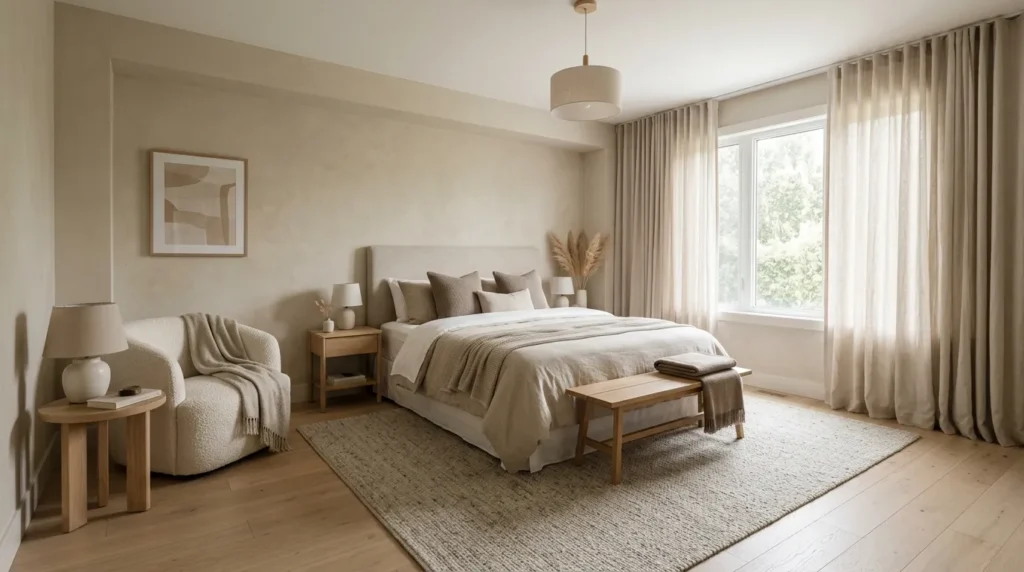
Why It Works That’s why many designers recommend a soft neutral palette specifically for bedrooms meant to feel restful rather than energizing. Warm whites, oatmeal, soft taupe, and muted sage create a quiet backdrop that lets texture and lighting do the visual work instead of color. A mistake many homeowners make is choosing a bold accent wall for the bedroom, which can feel stimulating rather than calming over time — exactly the opposite of what a retreat-style room is meant to do.
How To Style It Choose one dominant neutral for walls and larger furniture pieces, then vary the tone slightly through textiles — a slightly warmer or cooler version of the same palette in the rug, curtains, and bedding. Introduce depth through texture rather than contrast: a bouclé chair, a linen duvet, and a wool rug in similar tones create richness without needing bold color. Save any deeper color for small, easily changeable accents like a single throw pillow or a vase.
7. Plush Area Rug
Quick Benefits
- Softens hard flooring underfoot each morning
- Adds warmth, texture, and sound absorption to the room
- Anchors the bed visually within the larger space
- Available at every price point and pile height
- An easy, renter-friendly upgrade
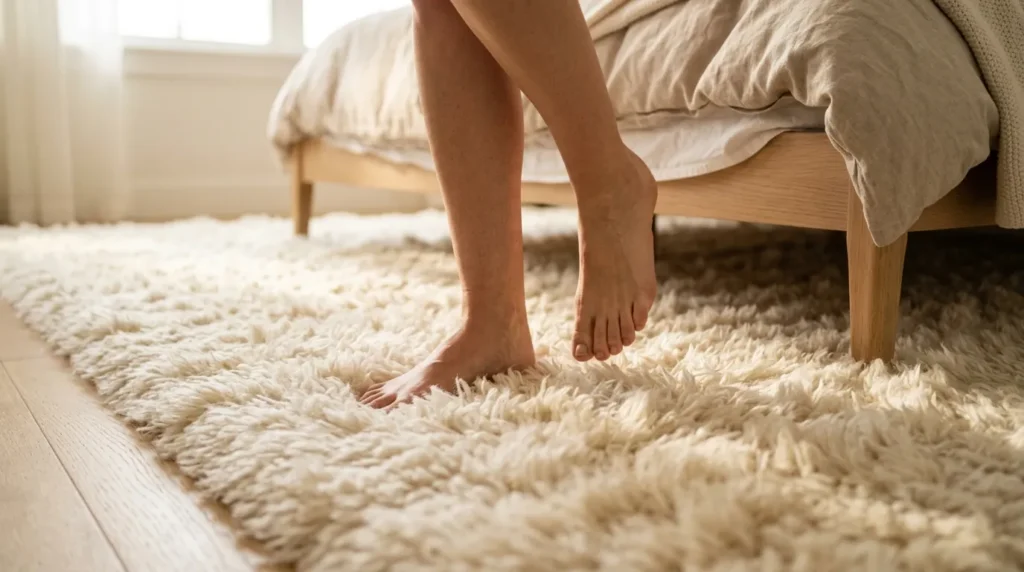
Why It Works I’ve seen this idea transform spaces that otherwise felt unfinished, especially bedrooms with hardwood or laminate flooring and no rug at all. A plush area rug does double duty: it adds a layer of texture and warmth to the room’s overall look, and it makes the literal experience of getting out of bed each morning noticeably more comfortable. In my experience, this is one of those upgrades that people don’t think about until they’ve lived with it, and then can’t imagine going back.
How To Style It Choose a rug large enough to extend at least a foot beyond each side of the bed, so your feet land on rug rather than bare floor when getting up. A high-pile wool or shag rug adds the most plush, luxurious feel underfoot, while a lower-pile option works better under furniture with wheels or in high-traffic layouts. Stick to a neutral, tonal rug for a calming effect, or introduce subtle pattern if the rest of the room is very simple.
8. Blackout Window Treatments
Quick Benefits
- Supports genuinely better, deeper sleep
- Adds softness and drape to the room’s architecture
- Blocks outside light and noise more effectively than blinds alone
- Works well layered with sheer curtains for daytime softness
- A functional upgrade that also elevates the room’s look
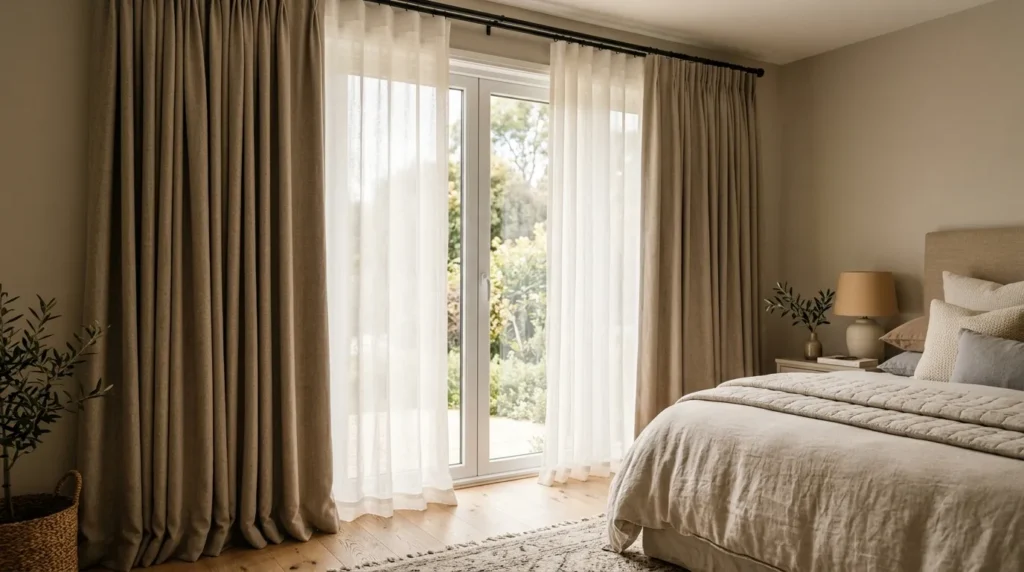
Why It Works A mistake many homeowners make is treating window treatments as purely decorative, when in a bedroom, they’re doing real functional work too. Blackout curtains block outside light and street noise, both of which meaningfully affect sleep quality, while also adding soft, floor-length fabric that most bedrooms are missing entirely. One simple trick I always suggest is hanging curtains higher and wider than the window frame itself, which makes the window — and the whole room — feel larger and more considered.
How To Style It Choose blackout curtains in a soft neutral or tonal color that complements your bedding, and hang the rod a few inches above the window frame and several inches beyond each side. For a softer daytime look, layer a sheer curtain underneath the blackout panel, so you can adjust for privacy and light throughout the day. Floor-length or slightly puddled curtains read as more luxurious than panels that stop short of the floor.
9. Layered Ambient Scent
Quick Benefits
- Engages a sense most bedroom decor ideas overlook
- Instantly signals “retreat” the moment you walk in
- Supports a calming wind-down routine before sleep
- Inexpensive relative to its impact
- Easy to rotate seasonally
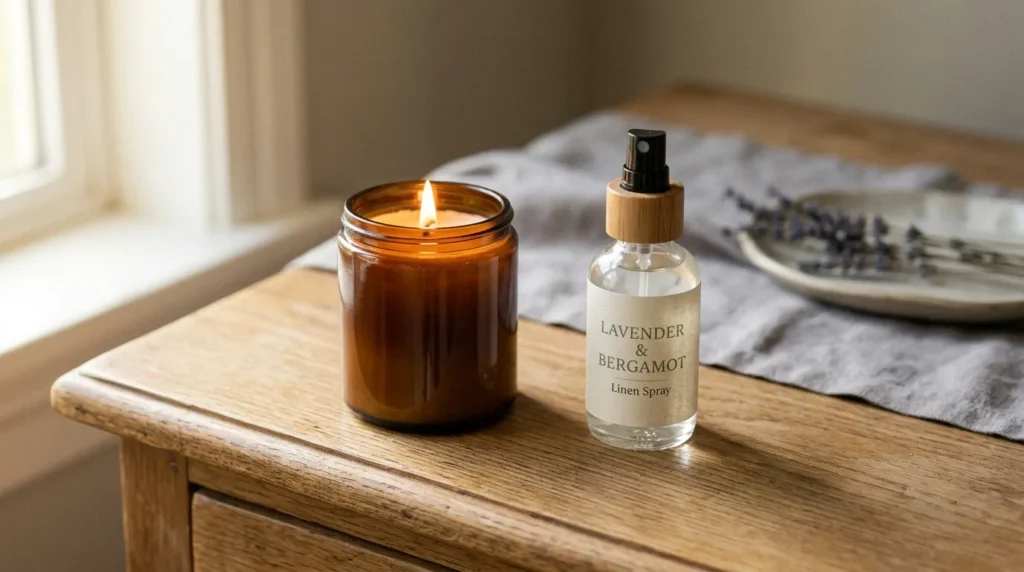
Why It Works Scent is one of the fastest, most overlooked ways to change how a bedroom feels. That’s why many designers recommend layering fragrance in a bedroom the same way a luxury hotel does — through a candle, a diffuser, or a linen spray rather than one single strong source. A calming scent, lit or diffused during your evening routine, does real psychological work in signaling to your body that it’s time to unwind, on top of simply making the room smell inviting.
How To Style It Choose one calming scent family — lavender, sandalwood, or a soft vanilla-musk — rather than layering multiple competing fragrances. A candle on the dresser or nightstand, paired with a linen spray for pillows, creates a full sensory routine without overwhelming the space. Replace candles and diffuser oils regularly, since a stale or empty vessel undercuts the very effect you’re going for.
10. Minimal Personal Touches
Quick Benefits
- Keeps the room feeling like a retreat rather than storage
- Makes the space feel personal without feeling cluttered
- Easier to keep tidy and calm day to day
- Highlights the few objects you do choose to display
- Reinforces the quiet, editted feel of a true luxury space
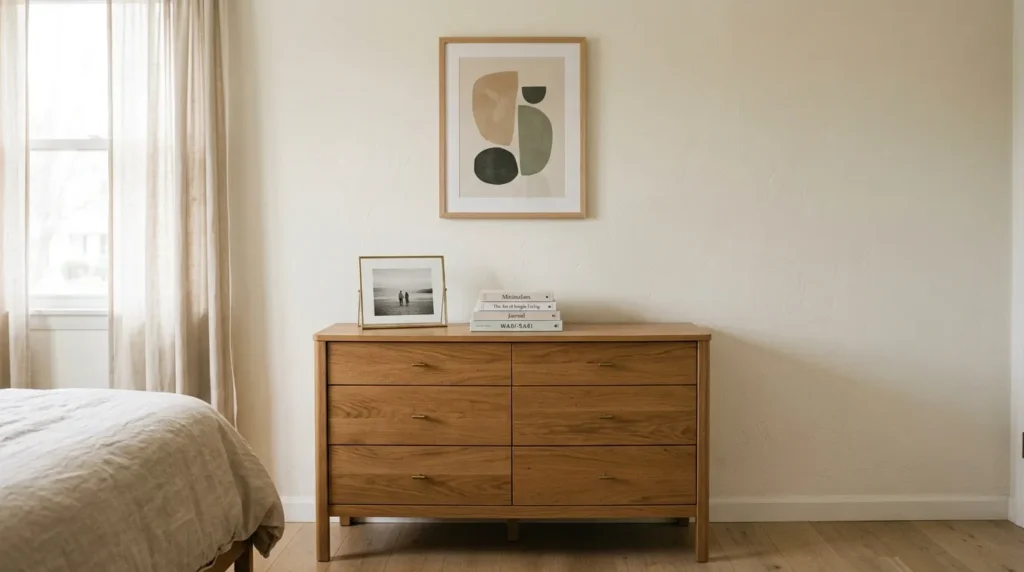
Why It Works A mistake many homeowners make is filling every surface with photos, souvenirs, and sentimental objects, which can make a bedroom feel busy rather than restful. In my experience, the most luxurious-feeling bedrooms include personal touches, but in careful moderation — one meaningful piece of art, a small stack of favorite books, a single framed photo — rather than an entire life’s worth of memorabilia on display. This restraint is what separates a genuinely calming space from one that’s simply full.
How To Style It Choose two or three personal items maximum to display at any given time, and rotate them seasonally rather than displaying everything at once. A single piece of meaningful art above the dresser, one framed photo on the nightstand, or a small collection of books with sentimental value are enough to make the room feel like yours. Store the rest in albums, boxes, or another room, where they can be enjoyed intentionally rather than functioning as background clutter.
Frequently Asked Questions
What’s the fastest way to make a bedroom feel more luxurious? Upgrading your bedding with layered textures and adding warmer, dimmable lighting are typically the fastest, most noticeable changes. Both can be done in a single afternoon without any furniture changes.
Do I need expensive furniture to achieve a luxury-retreat look? No — the effect comes more from thoughtful layering, lighting, and editing than from expensive individual pieces. A well-chosen duvet and a warm lamp often outperform costly furniture in creating that retreat feeling.
What color palette works best for a calming bedroom? Soft, warm neutrals like oatmeal, warm white, taupe, and muted sage tend to create the calmest, most cohesive backdrop. These tones also make it easier to layer in texture without visual competition.
How many pillows should be on a luxury-style bed? Most retreat-style beds use four to six pillows total: two sleeping pillows, two euro shams behind them, and one or two smaller accent pillows. More than that can start to feel cluttered rather than plush.
Is a rug necessary if I already have carpet? It’s optional with carpet, though a small layered rug can still add visual definition and texture around the bed. In rooms with hardwood or laminate flooring, a rug is one of the more impactful additions on this list.
How do I add scent to a bedroom safely? Candles, reed diffusers, and linen sprays are all effective and low-risk when used as directed. Choose one calming scent family and avoid mixing multiple strong fragrances in a small space.
Can a small bedroom still feel like a luxury retreat? Yes — in many cases, small bedrooms benefit even more from this approach, since editing down clutter and layering texture thoughtfully makes limited space feel calmer and more intentional rather than cramped.
Final Thoughts
A bedroom that feels like a luxury retreat isn’t built through one big renovation — it’s built through a handful of intentional layers: better bedding, warmer lighting, a considered headboard, and a little restraint everywhere else. Each idea on this list works on its own, but layered together, they add up to a room that genuinely feels like a place to rest and recharge.
Start with one or two ideas and gradually build a space that reflects your style and supports everyday comfort. The goal isn’t a showroom-perfect bedroom — it’s one that feels like your own private retreat every single night.
Related Articles
- Cozy Neutral Bedroom Ideas for a Calming Retreat
- Small Bedroom Layouts That Actually Work
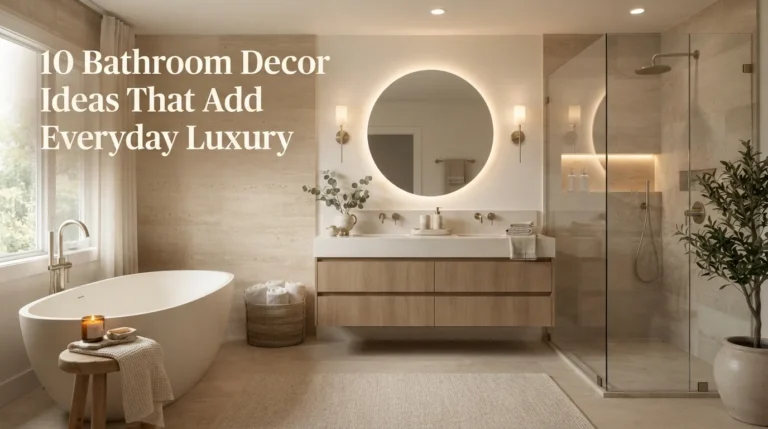
- 10 Bathroom Decor Ideas That Add Everyday Luxury
- Neutral Home Styling on a Budget
- 10 Modern Living Room Ideas with Natural Wood Finishes